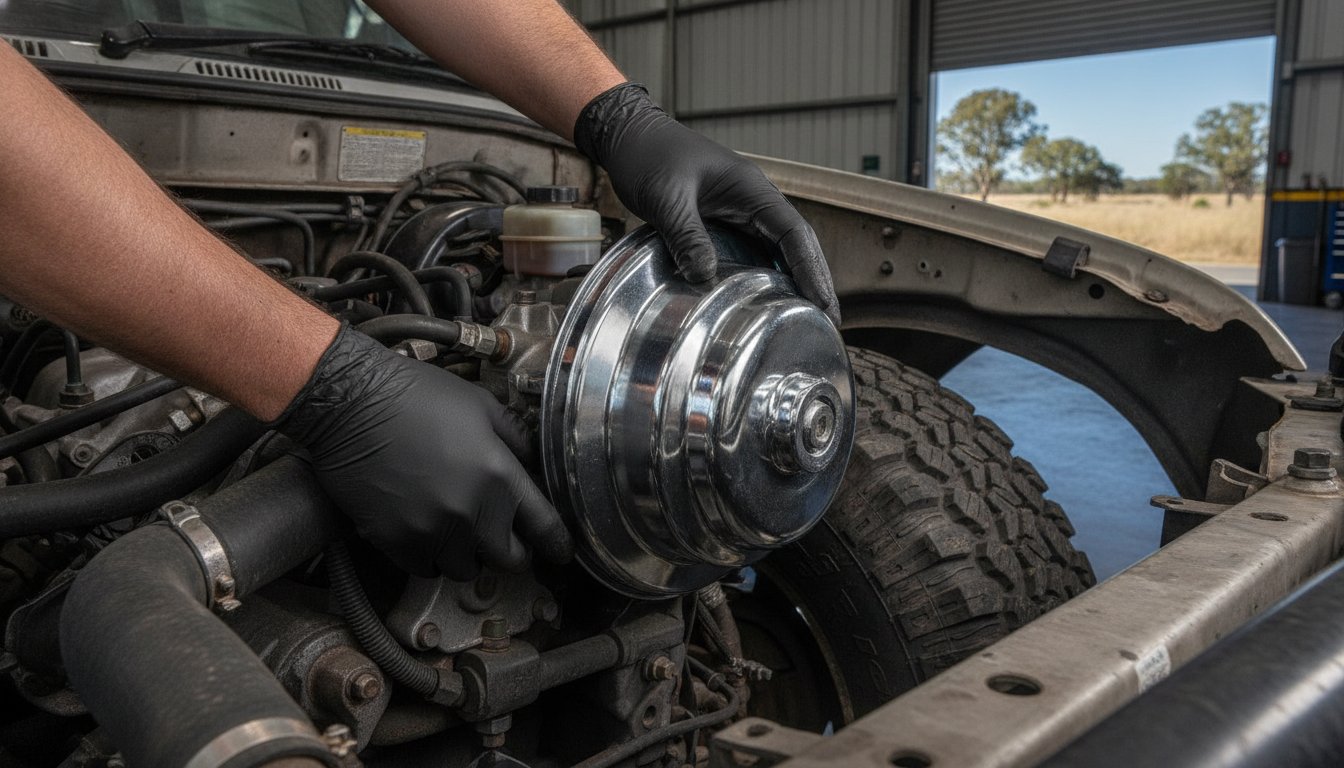
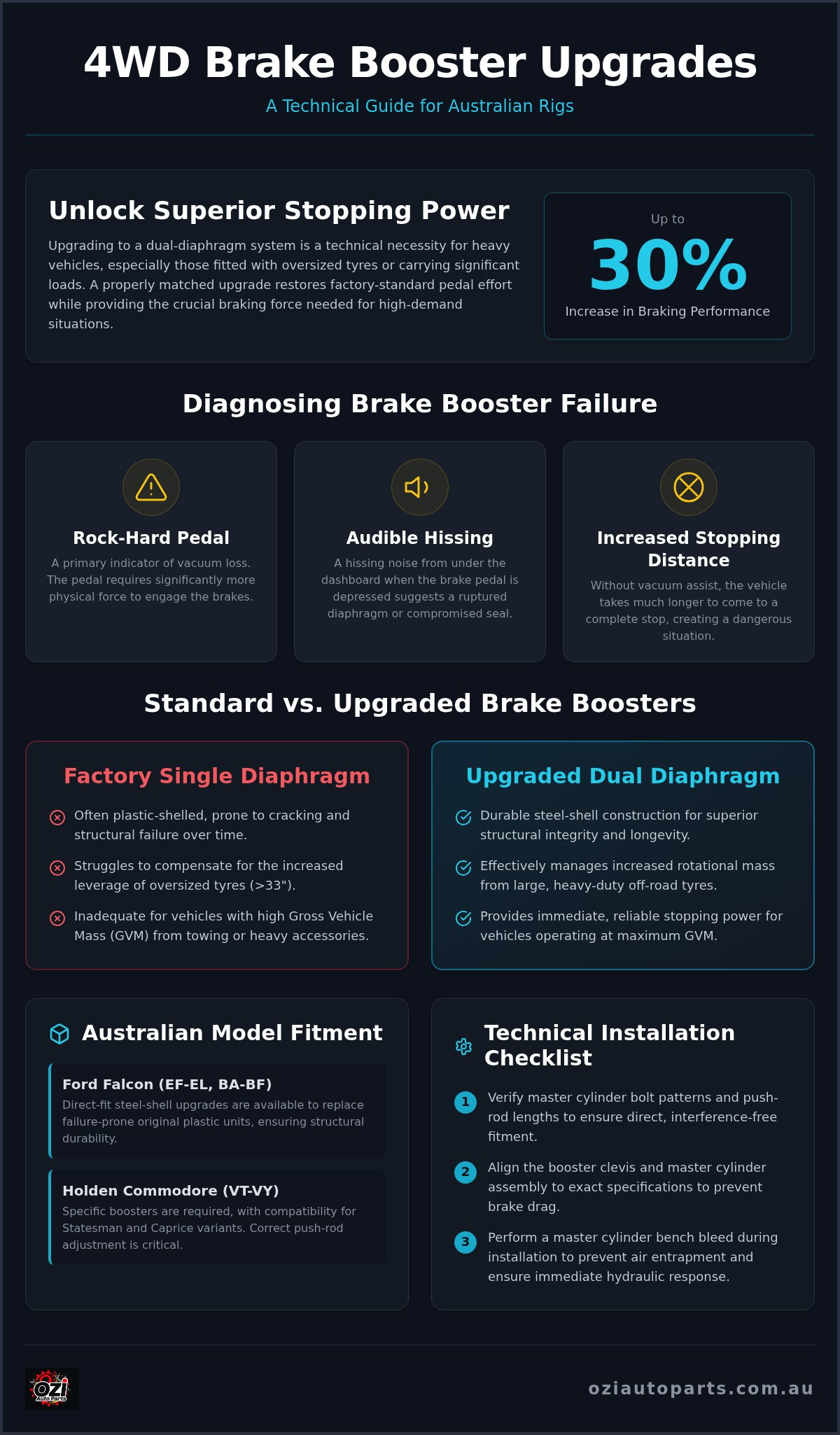
Upgrading to a dual-diaphragm system can increase braking performance by up to 30%. For owners of heavy Australian rigs, a 4wd brake booster upgrade is a technical necessity. You've likely experienced that rock-hard pedal feel when towing or noticed 35-inch tyres overworking your factory vacuum system. Older Ford and Holden models frequently face plastic shell failures, leading to immediate loss of assist. This creates a dangerous situation on the road or track, especially when your GVM is pushed to the limit.
We understand the need for immediate, reliable stopping power. This guide identifies vacuum failure symptoms and outlines how to select the correct dual-diaphragm or steel-shell upgrade for your specific application. You'll learn about ADR 31/04 compliance, technical fitment requirements for passenger and commercial vehicles, and how to secure a high-durability replacement with fast Australian delivery. We focus on restoring factory-standard pedal effort and ensuring your brake system handles the increased leverage of oversized tyres and heavy loads.
Key Takeaways
- Recognise vacuum failure symptoms including rock-hard pedal feedback and audible hissing under the dashboard to avoid loss of assist.
- Select a dual-diaphragm 4wd brake booster upgrade to effectively manage increased GVM and the mechanical leverage of oversized tyres.
- Access direct-fit steel-shell replacements for local Australian models like the BA-BF Falcon to ensure structural durability and ADR compliance.
- Maintain technical precision during fitment by aligning the booster clevis and master cylinder assembly to exact specifications.
- Perform a master cylinder bench bleed during the installation process to prevent air entrapment and ensure immediate hydraulic response.
Identifying Brake Booster Failure and Technical Specifications
The brake booster, or master vac, is a critical pressure-multiplier in the hydraulic system. It utilizes engine vacuum to amplify the force applied to the brake pedal, ensuring safer stopping under load. A single vacuum diaphragm inside the unit creates a pressure differential that generates mechanical advantage for the driver, significantly reducing the physical effort required to engage the calipers. Understanding how a vacuum brake booster works is the first step in diagnosing why your rig isn't stopping as it should.
Identifying failure requires attention to pedal feedback and acoustic cues. Common symptoms include a rock-hard brake pedal feel, noticeably increased stopping distances, and audible hissing noises under the dashboard when the pedal is depressed. These signs often point to a compromised internal seal or a ruptured diaphragm. If you're running heavy loads or 33-inch tyres, these symptoms are often magnified. A 4wd brake booster upgrade becomes essential when the factory unit can no longer compensate for the increased rotational mass of larger wheels.
Before condemning the booster, conduct a technical diagnostic of the peripheral components. Inspect the vacuum check valve for one-way flow and check the vacuum hose integrity for cracks or collapses. A simple leak in a hose can mimic a total booster failure. If the vacuum supply is consistent but the pedal remains hard, the internal components have likely failed.
Vacuum Leak Diagnostics and Internal Diaphragm Wear
Perform a vacuum hold test using a hand pump to verify internal diaphragm integrity. The unit must hold a steady vacuum; any drop indicates a slow internal leak. External housing cracks are also a prevalent issue, particularly in older plastic-cased units found in local Australian models. For example, the EF-EL Falcon steel shell upgrade is a common fix for these structural failures. These cracks cause atmospheric pressure to bleed into the vacuum chamber, leading to erratic engine idle and poor braking performance. For those demanding more assist, a 4wd brake booster upgrade to a dual-diaphragm steel unit solves these structural weaknesses while providing the necessary power for high-demand scenarios.
Selecting Replacement Brake Boosters for Australian 4WDs and Local Models
Australian-delivered vehicles often require specific booster configurations not found in international catalogues. Generic units frequently fail to meet the mounting tolerances required for local Ford and Holden master cylinders. Select the Ford Falcon BA-BF brake booster for 2003–2008 models to restore original equipment performance. Precision fitment is vital; verify master cylinder bolt patterns and push-rod lengths to ensure direct fitment without mechanical interference. Consult the Buying Online Auto Parts in Australia: 2026 Specialist Buying Guide for logistics and fitment verification.
Ford Falcon and Holden Commodore Fitment Solutions
Original plastic booster units in older Ford models are prone to splitting under pressure, leading to sudden vacuum loss. Replace these with the Ford Falcon EF-AU steel-shell upgrade for superior structural integrity. For GM builds, utilise specific requirements for Holden Commodore VT-VY boosters, which include compatibility for Statesman and Caprice variants. Ensure correct push-rod adjustment to maintain consistent pedal height and prevent brake drag. Adhering to Technical Installation Standards ensures these modifications remain legal and safe on Australian roads.
4WD Brake Booster Upgrades for Heavy-Duty Applications
Standard boosters struggle with 33-inch or larger tyres and heavy off-road accessories like steel bullbars and winches. The increased rotational mass requires significantly higher hydraulic pressure than a factory single-diaphragm unit can provide. Benefits of a 4wd brake booster upgrade featuring a dual-diaphragm design include increased clamping force and reduced driver fatigue during technical descents or heavy towing. These units use two vacuum chambers to nearly double the assistance force without increasing the booster diameter. Refer to the 4WD Brake Booster Upgrade: Specialist Buying Guide for performance-specific data. If you need immediate assist, check our range of upgrade brake boosters today.
Technical Installation Standards and System Integration
Installing a 4wd brake booster upgrade requires rigorous attention to mechanical alignment. The booster unit must interface perfectly with the brake pedal clevis and the master cylinder assembly. Misalignment leads to side-loading on the master cylinder seals, causing premature hydraulic failure. Bench bleed the master cylinder if it was removed during the booster swap. This is a critical step to prevent air entrapment within the hydraulic circuits. Failing to do so results in a spongy pedal, regardless of the booster's vacuum capacity.
Operational efficiency depends on a stable vacuum supply. Ensure the supply line from the intake manifold is clean and free of oil contamination. The check valve must be operational to maintain maximum assist during low-vacuum events, such as heavy acceleration. For those sourcing components nationwide, read the Brake Parts Delivery Australia guide to understand how to receive your spares safely and efficiently.
Master Cylinder and Check Valve Compatibility
Verify compatibility with related components like caliper sleeve slide pins for a complete system refresh. Worn pins cause uneven pad wear and mechanical drag, which can mask the benefits of a new booster. A high-ratio 4wd brake booster upgrade significantly alters pedal travel and modulation. You'll experience a shorter, firmer stroke that requires less physical effort during emergency braking scenarios. These performance benchmarks often align with international safety protocols, including the Federal Motor Vehicle Safety Standard for brake systems, ensuring your rig remains controlled under extreme stress.
Finalise the installation by adjusting the brake light switch. Changes in push-rod length or booster depth often shift the rest position of the pedal. Accurate switch adjustment is mandatory to maintain safety and ensure ADR compliance on public roads. Test the system for vacuum leaks at the firewall seal before completing the final road test. For those who appreciate specialist care for premium automotive systems, you can learn more about Ace Auto Clinic.Secure Reliable Stopping Power for Your Rig
Precision diagnostics and correct component selection are vital for vehicle safety. Technical identification of vacuum leaks and the transition to dual-diaphragm technology solve the performance gaps found in factory systems. Upgrading to a high-durability steel-shell unit eliminates structural risks associated with older plastic housings in local Ford and Holden models. These technical steps restore hydraulic efficiency and ensure consistent pedal modulation under heavy loads.
Executing a 4wd brake booster upgrade allows your vehicle to manage the increased rotational mass of 33-inch tyres and heavy towing requirements. Ozi Auto Parts offers specialist technical support for Australian models with direct nationwide shipping from local warehouses. Our inventory prioritises mechanical durability and precise fitment standards for the Australian market.
Browse the full range of specialist Brake Boosters at Ozi Auto Parts to secure the correct replacement for your application. Restore your stopping power and drive with total technical confidence today.
Frequently Asked Questions
How do I know if my 4WD brake booster is failing?
You'll notice a rock-hard brake pedal that requires excessive physical force to engage the calipers. Audible hissing under the dashboard indicates a ruptured internal diaphragm, while erratic engine idle suggests a vacuum leak affecting the intake manifold pressure. Conduct a vacuum hold test using a hand pump to confirm if the unit maintains pressure; any immediate drop-off necessitates a replacement to ensure vehicle safety.
Can I upgrade my standard brake booster for better stopping power when towing?
Yes, installing a dual-diaphragm 4wd brake booster upgrade is the most effective way to increase clamping force for heavy loads. These units utilise two internal vacuum chambers to amplify pedal pressure by up to 30% compared to factory single-diaphragm versions. This modification is essential for vehicles with increased GVM or those running 33-inch tyres, as it significantly reduces driver fatigue and shortens emergency stopping distances.
Are plastic and steel-shell brake boosters interchangeable for Ford Falcons?
Steel-shell units are direct-fit replacements for original plastic boosters in EF, EL, and AU Falcon models. While the external material differs, the mounting bolt patterns and master cylinder interfaces remain identical for these specific Australian series. Switching to a steel-shell upgrade prevents the common failure where plastic housings split under high pressure, providing a permanent solution for structural durability in local passenger and utility variants.
Why is my brake pedal hard to press after a booster replacement?
A hard pedal post-installation usually indicates a lack of vacuum supply or an incorrectly adjusted push-rod. Inspect the check valve for one-way flow and ensure the vacuum hose from the manifold hasn't collapsed or developed a leak. If the vacuum supply is verified, the issue likely stems from mechanical misalignment between the booster clevis and the brake pedal assembly, preventing the full range of assist from engaging.