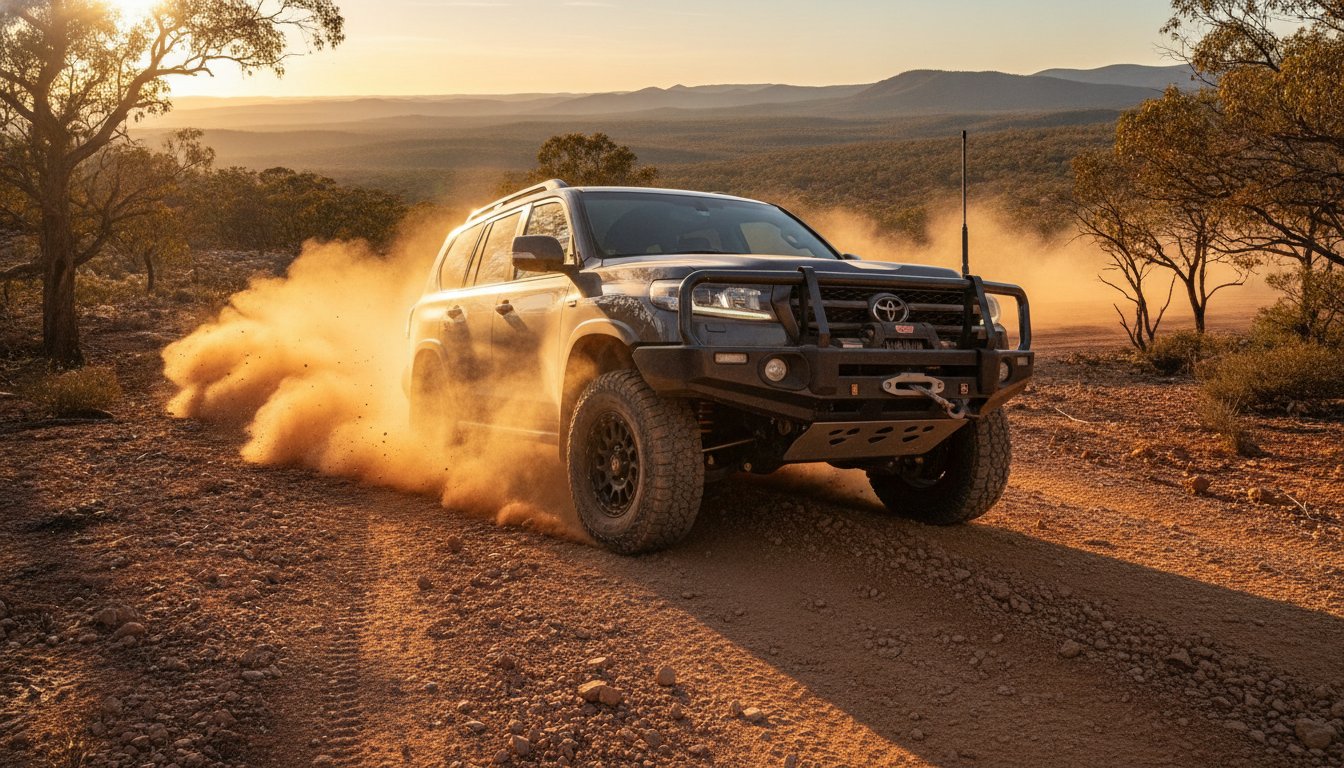
A standard factory brake system isn't engineered to manage the extreme kinetic energy of a fully loaded touring rig or a heavy caravan. If you've fitted a bull bar, winch, and long-range tanks, your stopping distance has already increased to unsafe levels. A 4wd brake booster upgrade represents the most efficient mechanical leverage point for restoring stopping power without a complete caliper overhaul. It's a critical component for maintaining control during steep descents or emergency highway stops.
You've likely felt that unsettling spongy pedal or the lack of bite when your vehicle is at its maximum GVM. We recognize that performance under load is non-negotiable for serious off-roaders. This guide provides the technical specifications and selection criteria needed to master your braking system. We'll examine dual diaphragm technology, which can improve braking performance by up to 30 percent according to industry testing. You'll also find essential details on ADR compliance and the engineering certification requirements mandated across Australian states. This is the definitive resource for selecting reliable hardware that meets strict safety standards and performance demands.
Key Takeaways
- Understand how increased Gross Vehicle Mass and larger tyres compromise factory braking systems and extend stopping distances.
- Compare the mechanical leverage of dual diaphragm designs against the high-pressure force provided by hydraulic brake boosters.
- Identify the essential selection criteria for a 4wd brake booster upgrade to ensure full ADR compliance and insurance validity.
- Verify vehicle-specific fitment requirements to guarantee a direct bolt-in installation without the need for custom fabrication.
- Learn to maintain total system reliability by sourcing professional-grade components and complementary hardware from specialist Australian retailers.
Why Your Rig Needs a 4WD Brake Booster Upgrade
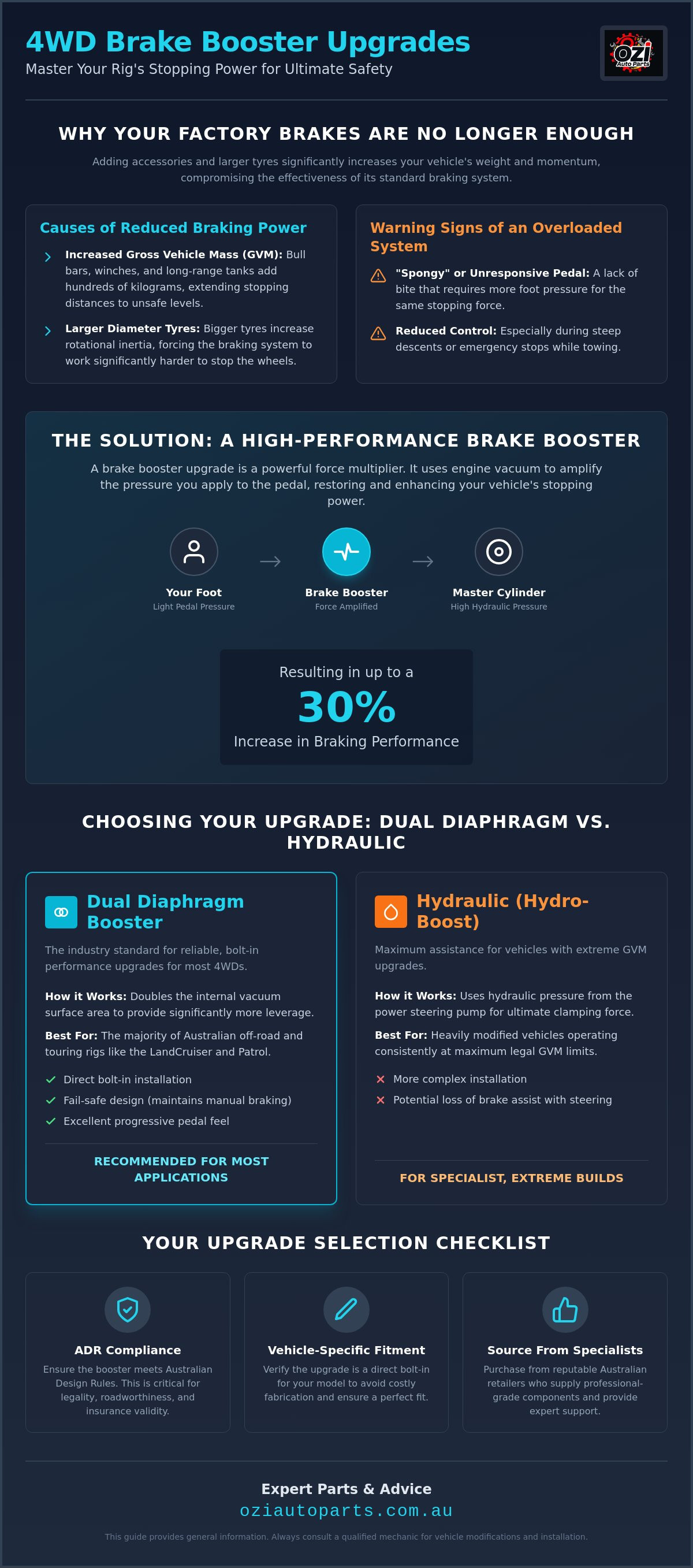
Adding accessories like bull bars, winches, and rear drawers pushes your vehicle toward its legal Gross Vehicle Mass (GVM) limit. Every additional kilogram increases the kinetic energy that must be dissipated during braking. Factory braking systems are typically engineered for unladen stock weights. Once you exceed these parameters, the original equipment lacks the leverage required for rapid deceleration. This is where a 4wd brake booster upgrade becomes essential for safety.
Larger tyres also play a significant role in reducing braking efficiency. Increasing tyre diameter raises rotational inertia, meaning the braking system must work significantly harder to stop the wheels from turning. Heavy accessories and increased rolling mass lead to longer stopping distances and a dangerous lack of response in emergency situations.
To better understand the installation process and technical benefits, watch this helpful video:
The Mechanics of Brake Assistance
The brake booster acts as a force multiplier between your foot and the master cylinder. It utilizes a vacuum to amplify the pressure applied to the brake pedal. For a deeper technical look at the physics involved, you can read about how power brakes work in various automotive applications. In diesel 4WDs, where engine vacuum is lower than in petrol counterparts, the efficiency of this component is paramount. An inadequate booster results in high pedal effort and a distinct lack of bite when you need it most.
Towing and Heavy Load Considerations
Factory boosters often struggle when vehicle weight approaches maximum legal limits, especially when towing a caravan or heavy trailer. This pressure leads to a hard, unresponsive pedal feel that makes modulation difficult. Upgrading to a dual diaphragm unit, such as the Landcruiser master vac upgrade, provides a smoother and more progressive pedal feel. Industry testing indicates that these upgrades can offer up to a 30 percent increase in braking performance. This modification ensures that even under maximum load, your rig maintains predictable stopping power. It's a critical safety step for any Australian off-roader tackling steep descents or high-speed highway towing.
Comparing Dual Diaphragm and Hydraulic Brake Boosters
Selecting the correct 4wd brake booster upgrade requires an understanding of your vehicle's vacuum source and intended load. Most factory systems rely on a single diaphragm vacuum unit. Upgrading involves either increasing the vacuum surface area or switching to high-pressure hydraulic assistance. For common Australian models like the LandCruiser and Patrol, the choice usually settles between a dual diaphragm unit and a full hydraulic conversion.
Dual Diaphragm Vacuum Boosters
These units are the industry standard for bolt-in modifications. By stacking two diaphragms, the unit effectively doubles the internal surface area. This allows atmospheric pressure to exert much greater force against the master cylinder piston. A dual diaphragm brake booster provides superior assistance while maintaining the simplicity of the original vacuum circuit. They are particularly effective for diesel engines that utilise an engine-driven vacuum pump.
- Installation: Direct bolt-in fitment using original mounting points and vacuum hoses.
- Reliability: Fail-safe design ensures manual braking remains if the vacuum source fails.
- Cost: Economical compared to hydraulic alternatives, typically ranging from $700 to $1,300 AUD for high-quality units.
Hydraulic (Hydro-Boost) Systems
Extreme GVM upgrades often demand the performance ceiling of a hydraulic system. Instead of vacuum, these units tap into the power steering pump to generate clamping force. While they offer the highest level of assistance, they introduce significant technical trade-offs. A failure in the power steering belt or pump results in the simultaneous loss of steering and braking assistance. This complexity makes them less common for standard touring rigs.
For the majority of Australian off-roaders, the dual diaphragm vacuum booster offers the best balance of performance and reliability. It provides a progressive pedal feel that is easy to modulate on loose gravel or steep tracks. If your rig is consistently operating at its maximum legal weight, you should browse our range of Brake System Parts to find a reliable solution tailored to your chassis. Vacuum-based upgrades remain the preferred choice for their proven durability in harsh outback conditions.
Key Selection Criteria for Australian 4WD Upgrades
Selecting a 4wd brake booster upgrade requires strict attention to technical specifications. It's not a universal fitment process. You must verify that the replacement unit aligns with your vehicle's hydraulic requirements and legal obligations. Choosing the wrong component leads to poor pedal modulation and potential insurance rejection. Focus on hardware that delivers mechanical leverage without compromising system integrity.
ADR Compliance and Legal Requirements
Australian Design Rules (ADR) 31 and 35 set the national standard for braking safety. Any modification to the booster assembly must comply with these regulations to ensure the vehicle remains roadworthy. In Australia, a booster upgrade is classified as a major modification under Vehicle Standards Bulletin 14 (VSB 14). This means you'll need an engineering certificate from a licensed signatory. Engineering sign-off costs generally vary between $800 and $1,500 AUD depending on your state. Without this certification, your insurance policy is likely void.
- Check for Stamped Details: Look for manufacturer identification and part numbers stamped on the booster shell.
- Verify Documentation: Ensure the supplier provides the technical data needed for your engineer's assessment.
- Insurance Validity: Notify your provider of the modification once the engineering sign-off is complete.
Direct Bolt-In Fitment
Efficiency in the workshop depends on direct bolt-in capability. A high-quality upgrade should utilise the original firewall mounting points and master cylinder studs. This prevents the need for custom fabrication or bending factory brake lines. Preserving original line geometry is critical for preventing hydraulic leaks and fatigue cracks over time. If you're forced to modify the brake lines, the risk of air ingress and system failure increases.
Material choice is another deciding factor for durability. Factory plastic boosters are prone to failure under extreme engine bay heat and off-road vibrations. We recommend upgrading to units with a reinforced steel shell for better structural integrity. For example, our Ford Falcon and 4WD compatible boosters are engineered for a precise fit and long-term reliability. Always check your master cylinder bore size before ordering to ensure a matched pair for optimal fluid displacement.
Ready to improve your stopping power? Explore our full range of Upgrade Brake Boosters today to find the correct fitment for your rig.
Sourcing Reliable 4WD Brake Boosters and Spares
Sourcing a 4wd brake booster upgrade from a specialist Australian retailer ensures you receive components engineered for local conditions. Local providers offer technical support that overseas platforms cannot replicate. This expertise is vital for verifying fitment and ensuring the hardware manages the extreme heat and vibration of outback touring. A reliable supplier understands the functional urgency of getting a touring rig back on the track with improved safety.
Braking system integrity depends on more than just the booster. You must inspect and replace secondary hardware during the installation process to maintain performance. Seized or corroded components negate the benefits of increased vacuum assistance. We recommend installing high-quality caliper pins and bolts to ensure smooth caliper sliding and even pad wear. This holistic approach prevents uneven braking force and premature pad failure under heavy loads.
Maintenance schedules for upgraded systems require stricter intervals in off-road environments. Dust, mud, and water ingress can compromise vacuum seals and degrade hydraulic fluid. Inspect vacuum hoses every 10,000 kilometres or after major off-road excursions. Check the check valve for proper operation to prevent a sudden loss of assistance. Consistent maintenance preserves the 30 percent performance increase provided by your upgrade.
Inventory Depth and Technical Support
A dependable supplier maintains deep stock levels across multiple vehicle makes to reduce downtime. Technical accuracy in online catalogues is essential for correct part identification. For example, identifying the correct Toyota Master Vac and booster units requires precise year and model verification. Access to a specialist database ensures you receive hardware that matches your specific chassis without fitment issues.
Next Steps for Your Brake Upgrade
The path from a spongy pedal to reliable stopping power involves accurate diagnosis, part selection, and professional installation. Follow this checklist to verify your order before checkout:
- Verify vehicle make, model, and production year.
- Confirm the master cylinder bore size aligns with the new booster specifications.
- Check for ADR compliance markings on the product description.
- Include complementary hardware like caliper slide pins to ensure system-wide reliability.
Once your components arrive, coordinate with a licensed mechanic for installation. Secure your engineering certification immediately to maintain insurance validity and roadworthy status. Professional fitment combined with high-grade components delivers the dependable stopping power required for Australian off-roading.
Optimise Your Rig's Stopping Power
Decisive braking performance is the foundation of any safe touring setup. You now understand that ADR compliance and engineering certification are essential for maintaining legal and insurance status on Australian roads. Choosing a dual diaphragm unit provides the necessary force multiplication to manage increased GVM and larger rotational masses effectively. Reliability in the bush depends on precise fitment and high-grade materials that withstand extreme heat and vibration.
A 4wd brake booster upgrade ensures your vehicle responds predictably during emergency highway stops or steep technical descents. As a specialist Australian mechanical part supplier, we provide comprehensive vehicle fitment data to eliminate technical guesswork. Our inventory features robust steel-shell units designed to replace vulnerable factory plastic components across major 4WD makes. We offer nationwide delivery on heavy-duty components to ensure your rig is ready for the next adventure.
Browse our full range of ADR-compliant 4WD Brake Boosters and Upgrades to secure the hardware your vehicle deserves. Equip your rig with the stopping power required for total confidence on and off the track.
Frequently Asked Questions
Is a 4WD brake booster upgrade legal in Australia?
Yes, a 4wd brake booster upgrade is legal provided the component is ADR compliant and certified by a licensed engineer. Vehicle Standards Bulletin 14 (VSB 14) classifies this as a major modification for light vehicles. You must secure an engineering sign-off to maintain your vehicle's roadworthy status and insurance coverage. This process ensures the modification meets national safety standards ADR 31 or 35.
How much difference does a dual diaphragm booster actually make?
A dual diaphragm unit typically delivers up to a 30 percent increase in braking performance by doubling the available vacuum surface area. This design provides much higher mechanical leverage than factory single diaphragm units. You'll notice a significant reduction in pedal effort and a sharper initial bite. It's the most efficient way to restore stopping power for heavy 4WDs carrying winches, bull bars, or towing caravans.
Can I install a 4WD brake booster upgrade myself?
While direct bolt-in units allow for DIY installation, the requirement for engineering certification usually makes professional fitment the more practical choice. A licensed engineer must inspect the modification to issue the necessary compliance certificate. Incorrect installation can lead to vacuum leaks or hydraulic failure. Most Australian off-roaders prefer professional installation to ensure the system meets strict safety and insurance requirements.
Do I need to upgrade my master cylinder at the same time?
You don't always need to replace the master cylinder, but it must be compatible with the new booster's pushrod and mounting pattern. Some 4wd brake booster upgrade kits are engineered as a matched pair to ensure optimal fluid displacement. If you've upgraded to larger calipers, you might need a larger bore master cylinder to maintain a firm pedal. Always check your technical specifications to ensure the components work together harmoniously.
Will a brake booster upgrade fix a spongy brake pedal?
A booster upgrade won't fix a spongy pedal; that issue is typically caused by air in the lines or old fluid. Sponginess indicates a hydraulic problem, whereas a booster addresses mechanical assistance and pedal effort. You should bleed the brakes and inspect the rubber hoses for expansion before upgrading. If the system is healthy but still requires excessive force to stop, then a booster upgrade is the correct solution.