
A worn trailing arm bush is more than a noise issue. A 4x4 trailing arm bush replacement can help address suspension movement that affects steering control, alignment and tyre wear. If your vehicle clunks, creaks or feels unstable, don’t assume it’s safe to keep driving without an assessment.
Off-road driving puts suspension bushes under strain, but it isn’t the only cause of wear. This guide explains how worn bushes can affect alignment and tyres, what may accelerate wear, and when replacing a bush is appropriate instead of the complete arm. You’ll also learn why a wheel alignment follows trailing arm replacement, helping you understand the repair decision and next steps.
Key Takeaways
- Watch for clunks, creaks, loose steering and uneven tyre wear as signs that suspension bushes need attention.
- Replacing the bush can be suitable when the trailing arm is straight and sound; damage to the arm changes the repair decision.
- Off-road conditions, environmental exposure and aftermarket tyres can all contribute to faster bush wear.
- Ozi Auto Parts supplies steering and suspension parts and 4WD upgrade parts to help you choose components for your vehicle.
Effects on steering alignment and tyre wear
A worn trailing arm bush allows unwanted suspension movement. That movement can alter wheel position, affect steering control and contribute to uneven tyre wear. A 4x4 trailing arm bush replacement addresses the worn bush, but alignment still needs assessment after the work.
Alignment changes after replacement
Worn bushes can let suspension components shift under load, changing wheel alignment as the vehicle moves. Premature or uneven tyre wear can signal misalignment. After a 4x4 trailing arm bush replacement, arrange a wheel alignment to measure and correct wheel angles. Replacing the bush restores its support, but doesn’t confirm alignment is within specification. Compare tyre wear patterns and steering response after the repair.
Post-replacement alignment costs
Bush replacement has no single standard cost. The vehicle’s make and model affect the work required, and labour and alignment are separate costs.
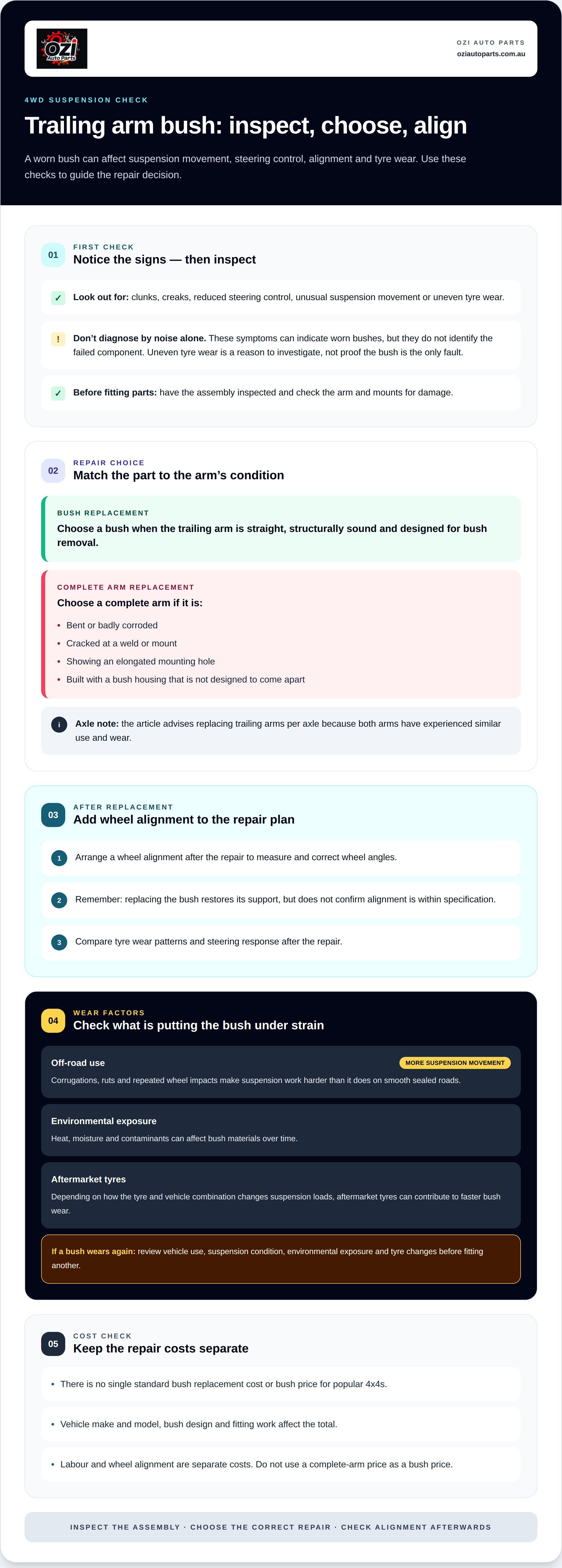
Clunking, creaking or reduced steering control can indicate worn suspension bushes, but noise alone won’t identify the fault. Uneven tyre wear is a reason to investigate, not proof that the bush is the only fault. Follow these steps:
- Inspect the arm and mounts for damage before replacing a bush.
- Have the assembly inspected before fitting parts.
- Complete a wheel alignment after the repair.
Replacing bushes versus replacing the complete arm
The right repair depends on whether the bush has failed, the arm is damaged, or both. A 4x4 trailing arm bush replacement suits an arm that remains structurally sound.
Bushes or a complete arm
Replace bushes when the arm is straight, sound and designed for bush removal. Choose a complete arm if it is bent, cracked at a weld or mount, badly corroded, or has an elongated mounting hole. Some bush housings aren’t designed to come apart. Replace trailing arms per axle because both arms have experienced similar use and wear.
Signs of worn suspension bushes
Clunks, creaks, reduced steering control and unusual suspension movement can indicate worn bushes, but these symptoms don’t identify the failed component by themselves. Inspect the bush and arm before selecting parts. A damaged arm needs more than a bush-only repair, so don’t order a bush based on noise alone.
Bush costs for popular 4x4s
There’s no single bush price for popular Australian 4x4s. The vehicle, bush design and fitting work affect the total. Treat the bush and labour as separate costs, and don’t use a complete-arm price as a bush price. The correct repair depends on the arm’s condition as well as the vehicle.
Home replacement and required tools
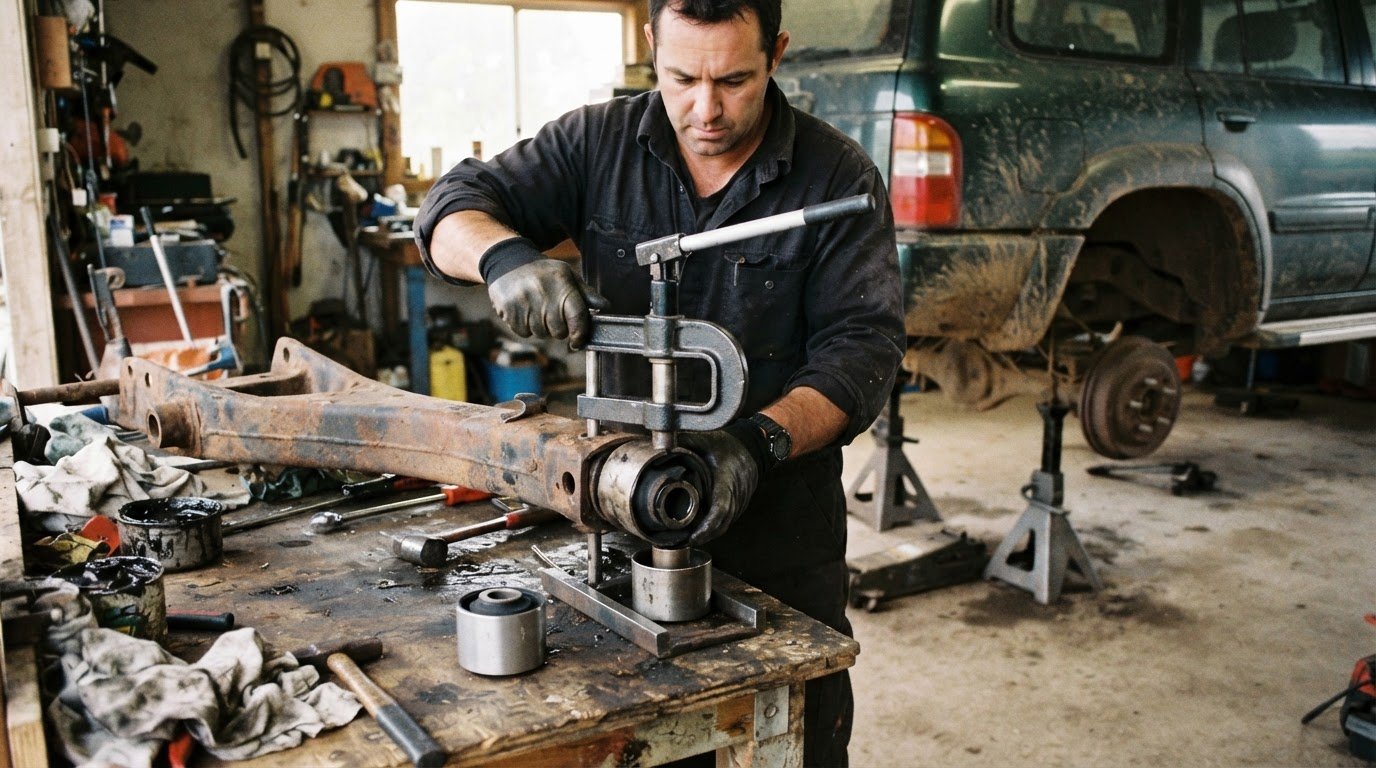
A 4x4 trailing arm bush replacement at home requires secure vehicle support, suitable hand tools, a bush press or removal tool, and a torque wrench. Press-fit bushes often require arm removal. Follow these steps:
- Securely support the vehicle.
- Remove the arm.
- Extract the old bush.
- Fit the replacement bush.
- Refit the arm and tighten the fasteners to the vehicle’s service procedure. For bonded-rubber bushes, follow the specified ride-height tightening procedure to avoid preloading the rubber.
Causes of suspension bush wear
Suspension bushes flex as the wheels move, absorbing bumps and limiting movement between suspension joints. Each compression and rebound cycle strains the rubber or other bush material. Over time, repeated movement can cause deterioration, looseness or cracking. A trailing arm bush also works under load as the axle responds to road surfaces, so its condition reflects how the vehicle is used.
Off-road driving can accelerate wear. Corrugations, ruts and repeated wheel impacts make the suspension move rapidly and work harder than it does on smooth sealed roads. Regular travel over rough tracks, for example, puts bushes through frequent compression and twisting. The bush must control arm movement while absorbing those impacts. Inspect the suspension after demanding off-road use, especially if new noises or handling changes appear.
Environmental exposure is another factor. Heat, moisture and contaminants can affect bush materials over time. Aftermarket tyres can also accelerate suspension bush wear, depending on how the tyre and vehicle combination changes the loads handled by the suspension. Consider tyre changes alongside off-road use and environmental conditions when investigating repeated bush failure.
The practical takeaway is to assess the cause, not just replace the worn component. Look for damage across the suspension and consider the vehicle’s recent use, including rough tracks or a tyre change. If a replacement bush wears again, review those operating conditions before fitting another. Matching the bush to the vehicle and addressing the factors that strain it can help avoid repeating the same repair.
Ozi Auto Parts
Ozi Auto Parts is a practical next step when inspection points to a suspension component replacement. Its parts range helps owners source components for vehicle maintenance and 4WD upgrades. For a trailing arm concern, focus on matching the required component to the vehicle and the repair decision: a sound arm with worn bushes differs from an arm that needs replacement.
Ozi Auto Parts supplies parts across several mechanical systems:
- Steering and Suspension Parts
- 4WD Upgrade Parts
- Driveshafts
- Brake System Parts
For part selection, use the vehicle’s make, model and relevant configuration details. Also identify whether the repair calls for a bush or a complete arm. This helps narrow down the component category before purchase. Ozi Auto Parts offers parts for various vehicle makes, with steering and suspension components relevant to this repair decision. Driveshafts, brake components and 4WD upgrades support other mechanical requirements without confusing them with the trailing arm issue.
Use the inspection findings to guide your next step. If the arm is sound, focus on the bush requirement. If it is damaged, identify the complete-arm requirement instead. Keep the vehicle details and repair decision together when selecting a part. Contact Ozi Auto Parts about the parts you need.
Frequently Asked Questions
Can you drive with a bad trailing arm?
Don’t continue driving if a damaged trailing arm affects steering control or vehicle stability. The arm locates the wheel, so structural damage can compromise suspension behaviour on the road. If handling changes suddenly, follow these steps:
- Pull over safely.
- Arrange transport for inspection.
A minor noise alone doesn’t establish the fault, but it still warrants prompt assessment before further off-road driving.
Is it cheaper to replace the bush or the whole arm?
Replacing only the bush is generally the less extensive repair when the arm is straight, sound and designed for bush removal. A complete arm is necessary when the arm is bent, cracked, badly corroded or otherwise damaged. Compare the required part and labour for your vehicle. A cheaper bush-only repair isn’t suitable if the arm itself is unserviceable.
Should trailing arms be replaced in pairs?
Replace trailing arms per axle when they require replacement. Both sides have experienced similar use and wear, so replacing one can leave an older arm opposite a new component. The decision still depends on inspection: a sound arm doesn’t need replacing solely because the other side is damaged. Assess both sides and distinguish bush wear from arm damage.
What are the consequences of worn out suspension bushes?
Worn bushes can allow excess movement in suspension joints, affecting wheel position and steering response. This movement can contribute to alignment changes and premature or uneven tyre wear. It can also cause noise over bumps. If one tyre develops an unusual wear pattern, for example, inspect the suspension rather than assuming tyre pressure alone is responsible.
What are the symptoms of worn 4x4 trailing arm bushes?
Common signs include suspension clunks or creaks, reduced steering control and unusual vehicle movement. Tyre wear can also offer a clue, particularly when one edge wears faster than the rest. Note when the noise or handling change occurs, such as over bumps or on rough tracks. These observations can help narrow down the inspection, but don’t identify the failed part on their own.