
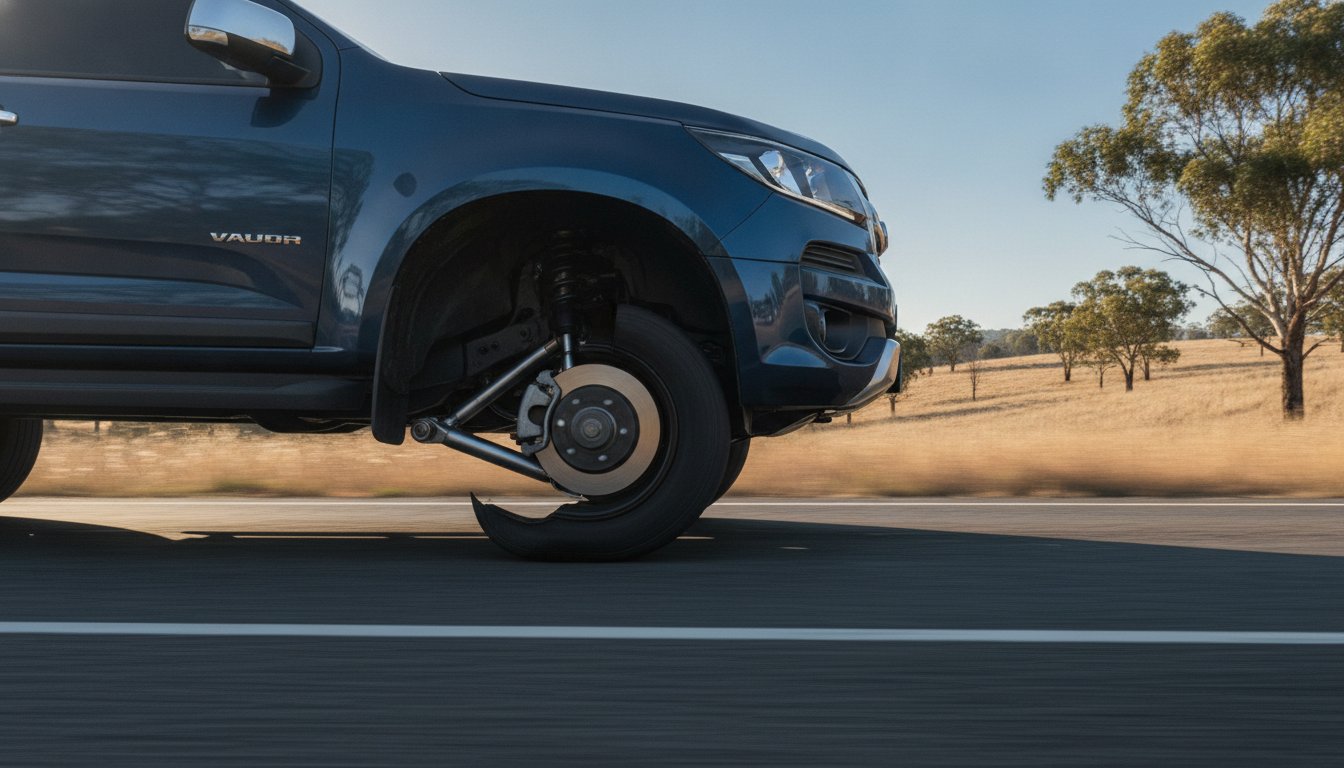
Your vehicle's ability to stop and steer depends entirely on suspension integrity. When dampers fail, tyres lose consistent contact with the road surface; this turns a routine drive into a safety risk. Recognising bad shock absorber symptoms australia is essential for maintaining control on unpredictable regional roads. You likely understand that swaying or a "nose-dive" during braking isn't just an annoyance. It is a sign of critical mechanical fatigue that increases braking distances and accelerates tyre wear costs.
This diagnostic guide provides the technical markers needed to identify failing dampers and restore vehicle stability. We will detail the definitive failure signs, explain how to perform a basic visual inspection, and identify the correct replacement components for your vehicle. Gaining this diagnostic confidence ensures you select the right mechanical spares to maintain safety and performance. Learn to spot the warnings before they lead to costly secondary repairs to your brake system or steering components.
Key Takeaways
- Learn to identify bad shock absorber symptoms australia like excessive body roll on regional highways and nose-diving during heavy braking.
- Master the 'bounce test' and visual inspection techniques to evaluate the rebound efficiency of your steering and suspension parts.
- Understand the critical link between worn dampers and increased braking distances to protect your brake system parts from excessive stress.
- Differentiate between standard OEM replacements and heavy-duty 4WD upgrade parts for specific Australian terrain requirements.
- Gain the technical confidence to source high-quality mechanical spares for common Australian models, including Ford Falcon and Holden Commodore.
Identifying Failing Dampers on Australian Roads
Australian environmental stressors, including extreme heat and corrugated regional road surfaces, significantly accelerate suspension fatigue. These conditions cause internal valving to overheat, leading to hydraulic fluid breakdown and seal rupture. Identifying bad shock absorber symptoms australia involves monitoring specific mechanical failures that compromise vehicle control.
Visual Indicators and Fluid Leaks
A physical inspection often reveals the first signs of damper exhaustion. Focus on the strut housing and mounting hardware. Look for these specific indicators:
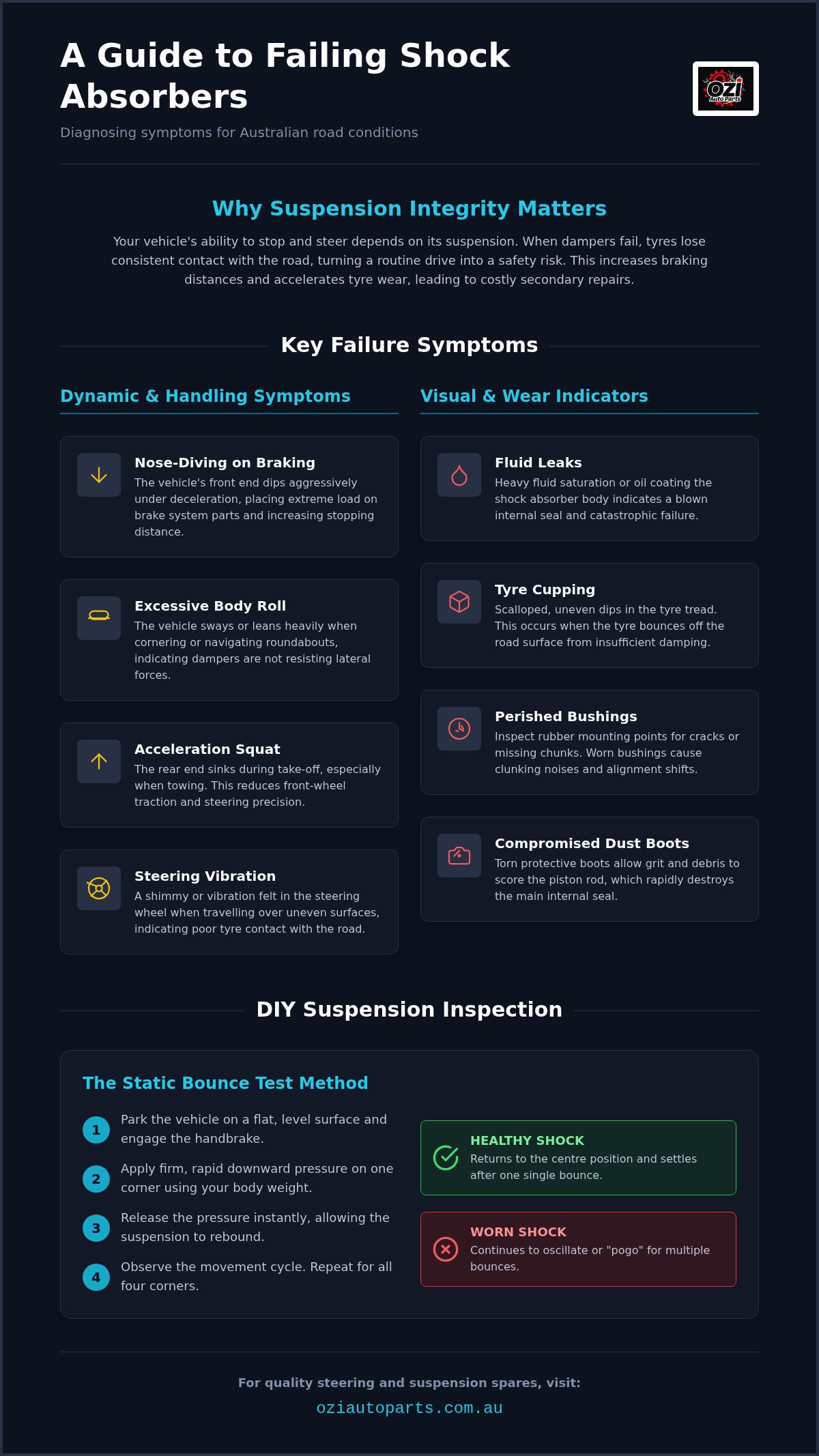
- Misting and Saturation: A light film of oil (misting) is often normal, but heavy fluid saturation indicates a blown internal seal. If hydraulic oil coats the cylinder body, the unit can no longer control spring rebound.
- Perished Bushings: Inspect rubber mounting points for cracking or missing chunks. Worn bushings cause clunking noises and allow excessive movement in the steering and suspension parts.
- Compromised Dust Boots: Check for torn protective boots. Exposed piston rods attract grit, which scores the shaft and destroys the main seal during the stroke.
Dynamic Handling and Braking Symptoms
Mechanical failure manifests most clearly during weight transfer. Worn shocks fail to manage the vehicle's centre of gravity, leading to unpredictable handling. Detecting bad shock absorber symptoms australia early prevents secondary damage to steering racks and driveshafts. Watch for these dynamic red flags:
- Nose-diving: The front end dips aggressively under deceleration. This places extreme load on brake system parts, increasing wear on pads and rotors. For common Australian models like the Holden Commodore or Ford Falcon, maintaining balanced damping is critical for stopping distance.
- Excessive Body Roll: Navigating roundabouts or cornering on regional highways should feel flat. If the vehicle sways or leans heavily, the dampers are no longer resisting lateral force.
- Tyre Cupping: Inspect tread for scalloped dips. This cupping occurs when the tyre bounces off the road surface due to insufficient damping, effectively shaving the rubber at intervals.
- Acceleration Squat: The rear end sinks during take-off, especially when towing. This reduces front-wheel traction and steering precision.
- Steering Vibration: Monitor for a shimmy in the steering wheel when travelling over uneven surfaces. This indicates the tyres are not maintaining consistent contact with the road.
DIY Suspension Inspection and Testing Procedures
Confirming mechanical failure requires active diagnostic steps. Identifying bad shock absorber symptoms australia through static testing allows you to isolate specific component fatigue before purchasing replacements. To see how professionals approach these diagnostics in a dedicated workshop environment, you can explore Car Suspension Repair for further technical insights. Use these methodical procedures to evaluate your vehicle's damping efficiency.The Static Bounce Test Method
This test evaluates the rebound resistance of each individual shock or strut. Follow these sequential steps to perform the test accurately:
- Park the vehicle on a flat, level concrete surface and ensure the handbrake is engaged.
- Position yourself at one corner of the vehicle and apply firm, rapid downward pressure using your body weight.
- Release the pressure instantly to allow the suspension to rebound.
- Observe the movement cycle; a healthy shock should return to the centre position and settle after exactly one bounce.
If the corner continues to oscillate or "pogo," the internal valving is no longer controlling the spring's energy. Repeat this process for all four corners. Inconsistent results across an axle indicate the need for immediate replacement of both units to maintain balanced handling.
Tyre Wear Pattern Analysis
Tyre tread serves as a diagnostic map for suspension health. Evaluate tread depth consistency across the entire width of the tyre and listen for metallic knocking or "clunking" sounds over speed humps. These auditory cues often signal perished bushings or loose mounting hardware in your steering and suspension parts. Check for these wear signatures during your inspection:
- Alignment Shifts: Accelerated wear on the inner or outer edges indicates suspension sag or worn suspension bushings Australia.
- Tread Depth Variance: Significant differences in depth between the front and rear axles often point to uneven component fatigue.
- Physical Damage: Inspect the tyre sidewalls for bulging or cracking that occurs when failed shocks allow the tyre to bottom out against the wheel arch.
Ensuring your steering parts are correctly supported by functional shocks is vital for safety on Australian roads. Proactive testing prevents secondary damage to critical drivetrain components and reduces long-term maintenance costs.
Selecting Replacement Shock Absorbers and Suspension Spares
Once you identify bad shock absorber symptoms australia, selecting the correct replacement hardware is the next technical requirement. Dampers must match the vehicle's specific weight, spring rate, and intended usage profile to ensure safe handling. Modern gas-charged dampers are generally preferred for Australian conditions as they resist fluid aeration and fade during high-temperature operation on corrugated surfaces.
OEM vs Heavy Duty 4WD Upgrades
Selecting between standard and heavy-duty suspension parts depends on your environment. Standard OEM-spec dampers are suitable for sealed urban roads. However, heavy-duty options are necessary for vehicles frequently traversing unsealed tracks or carrying constant loads. Consider these factors:
- Valving Specifications: Ensure the new shock valving is tuned to your existing spring rates to maintain balanced handling.
- Off-Road Durability: Refer to the 4WD suspension upgrade kits Australia guide for detailed specifications on lift heights and load ratings.
- Heat Dissipation: Large-bore dampers provide better cooling for extended regional travel and towing.
Sourcing Reliable Mechanical Components Online
Technical precision is vital when ordering spares. Verify fitment data using AU-spec vehicle catalogues to avoid compatibility issues. If failing dampers have caused excessive nose-diving, inspect associated safety systems. Compromised braking performance often requires an upgrade to high-quality brake boosters for models like the Ford Falcon BA-BF.
Ozi Auto Parts provides direct access to national inventory for critical mechanical spares. Our stock includes precision-engineered steering and suspension parts for common Australian platforms like the Holden Commodore and Ford Falcon. Focus on technical specifications and stock availability to ensure a rapid return to service. Choosing the right components restores vehicle stability and protects your long-term investment in tyres and brake system parts.
Restore Vehicle Stability and Performance
Maintaining suspension integrity is essential for safe operation on Australian roads. Identifying bad shock absorber symptoms australia allows you to address mechanical fatigue before it compromises your brake system parts or accelerates tyre wear. Excessive body roll and nose-diving are definitive indicators of hydraulic failure. Regular static bounce tests and visual inspections of your steering and suspension parts provide the data needed for a confident repair decision.
Ozi Auto Parts is a specialised Australian mechanical part supplier focused on technical precision and reliability. We provide direct access to a national inventory of suspension spares with nationwide shipping on all orders. Our team offers technical support for vehicle fitment to ensure you select the correct dampers for your specific vehicle model. Restore your handling and protect your vehicle's safety by sourcing high-quality components today.
Shop Steering and Suspension Parts at Ozi Auto Parts to secure the hardware required for your next mechanical service. Take control of your vehicle's performance today.
Frequently Asked Questions
How long do shock absorbers typically last in Australian conditions?
Shock absorbers generally last between 80,000 and 100,000 kilometres, though Australian environmental stressors often accelerate wear. Frequent travel on corrugated regional roads or heavy towing can reduce this lifespan to 50,000 kilometres. Regular inspections are necessary to identify bad shock absorber symptoms australia before internal seals fail completely and compromise vehicle control.
Can I replace just one shock absorber, or do they need to be replaced in pairs?
You must always replace shock absorbers in pairs across the same axle to ensure balanced damping and vehicle stability. Fitting a single new unit alongside a worn one creates inconsistent rebound rates; this compromises emergency handling and increases tyre wear. Maintaining axle symmetry is critical for the correct operation of your steering and suspension parts and overall road safety.
What is the difference between a shock absorber and a strut?
A shock absorber is a standalone component that only controls spring oscillation, while a strut is a structural part of the suspension system. Struts support the vehicle's weight, house the coil spring, and often serve as the upper pivot point for steering. Replacing struts is more complex than standard dampers because they directly affect wheel alignment and chassis height.
Will bad shock absorbers affect my car's braking distance?
Worn shock absorbers can increase braking distances by up to 20 percent at highway speeds. This occurs because failing dampers allow the tyres to bounce, reducing the consistent friction required for effective deceleration. Identifying bad shock absorber symptoms australia is essential for safety, as consistent road contact allows your brake system parts to function at maximum efficiency during emergency stops.