

In 2026, safety inspections revealed that over 14% of vehicles were ordered off the road due to critical brake system failures. You've likely experienced the high-pitched squeal or steering wheel vibration that signals the primary symptoms of worn brake pads. These mechanical alerts aren't just nuisances; they indicate compromised stopping power and potential rotor damage. Ignoring these signs leads to increased stopping distances and reduced 4WD reliability during heavy towing or off-road use.
It's understandable that choosing between ceramic and semi-metallic friction materials feels complex given the latest 2026 environmental regulations. This technical guide identifies specific wear patterns and helps you select the correct friction material to ensure your braking system operates at peak efficiency. We'll examine the performance differences between material types, 4WD-specific requirements, and the new Euro 7 standards for particulate emissions. Restore your factory stopping distances and eliminate brake noise with precise component selection and diagnostic accuracy.
Key Takeaways
- Identify the specific symptoms of worn brake pads, including high-pitched mechanical screeching and pedal vibration, to prevent costly rotor damage.
- Select the optimal friction material by matching ceramic pads for quiet urban commuting or semi-metallic options for high-heat, heavy-duty towing stability.
- Execute a comprehensive hardware audit to detect brake booster vacuum leaks and master cylinder contamination that compromise pedal effort and safety.
- Diagnose the technical difference between physical rotor runout and uneven pad material transfer to eliminate persistent vehicle vibration during deceleration.
- Ensure 2026 regulatory compliance by choosing copper-free friction components that meet the latest Australian safety and environmental standards.
Brake Pad Wear Checklist: Identifying Critical Symptoms
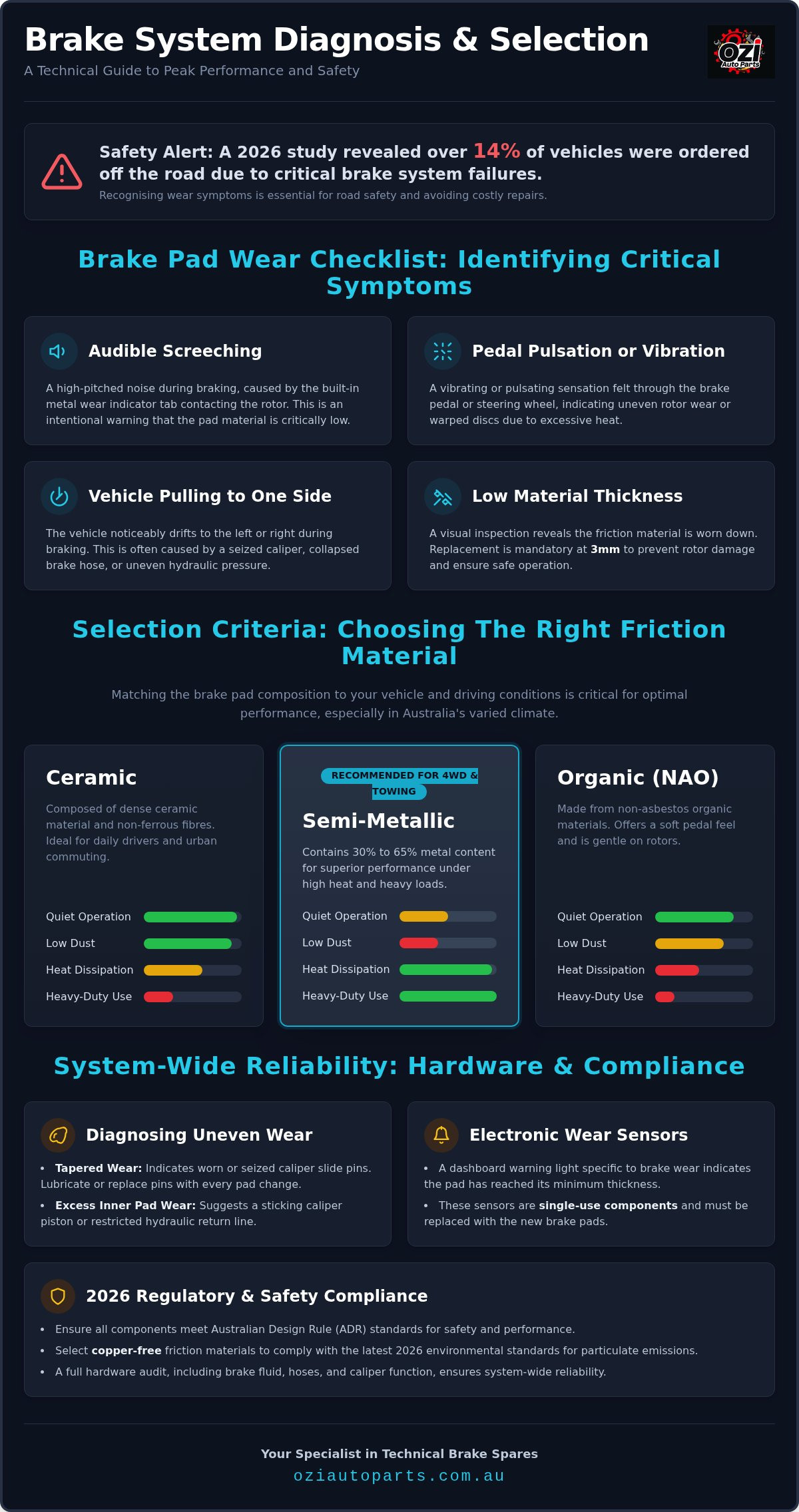
Early detection of the symptoms of worn brake pads is essential for maintaining vehicle safety and avoiding expensive rotor machining. Mechanical and hydraulic signals provide clear diagnostic data before total system failure occurs. Drivers must monitor these indicators to ensure Australian Design Rule (ADR) compliance and consistent stopping distances.
- Audible Screeching: Brake pad wear indicators consist of small metal tabs that contact the rotor when friction material is low. This produces a high-pitched warning sound designed to alert the driver before metal-on-metal grinding begins.
- Pedal Pulsation: Vibration during deceleration indicates rotor runout or uneven cementite formation on the disc surface. This often results from pads failing to release heat correctly.
- Vehicle Pulling: If the car drifts to one side under braking, it indicates seized caliper components or uneven hydraulic line pressure. This requires immediate mechanical intervention.
- Material Thickness: Use a digital calliper to measure remaining friction material. Replacement is mandatory at 3mm to prevent thermal damage to the rotors and ensure hydraulic piston stability.
Technical Breakdown of Uneven Wear Patterns
Tapered wear indicates the caliper isn't sitting parallel to the rotor. This is frequently caused by worn or corroded caliper sleeve slide pins that prevent smooth movement. Inner pad wear that exceeds outer pad wear suggests a sticking caliper piston or restricted hydraulic return. Inspect and lubricate all slide pins with high-temperature silicone grease during every pad swap to maintain balanced clamping force.
The Dashboard Alert: Electronic Wear Sensors
Modern Australian vehicles often feature electronic sensors that trigger dashboard warnings. Don't confuse these with brake fluid level lamps. Low fluid often indicates pad thinning as pistons extend further, but a dedicated sensor means the friction material has reached its physical limit. These sensors are single-use components. You must install new sensors with your pad set to clear the fault codes and ensure the electronic stability control system functions correctly.
Selection Criteria: Choosing Friction Materials for Local Conditions
Selecting the correct friction material is the final step after diagnosing the symptoms of worn brake pads. Australian drivers face unique challenges. High ambient temperatures and heavy towing loads require specific pad compositions. Choosing the wrong material leads to accelerated wear or dangerous brake fade during summer peaks. Matched components ensure maximum reliability.
- Ceramic Pads: Composed of dense ceramic material and copper fibres. They provide quiet operation and minimal dust. Ideal for urban passenger vehicles and standard daily commutes.
- Semi-Metallic Pads: Contain 30% to 65% metal. These offer superior heat dissipation. They are the preferred choice for heavy-duty towing and performance driving.
- Organic (NAO) Pads: Manufactured from fibres, high-temperature resins, and fillers. They offer a soft initial bite. Use these for older vehicles with specific rotor requirements.
Friction Material Comparison for Australian Drivers
The coefficient of friction determines stopping power. Cold-bite performance is critical for safety in southern Australian winters. Match your pad compound to your rotor type. Slotted or drilled rotors benefit from semi-metallic compounds to maintain surface integrity. Consult a professional brake system inspection checklist to evaluate your total system health before purchasing spares.
4WD and Heavy Towing Considerations
Outback driving demands high metallic content. Sustained downhill braking generates extreme thermal energy. Semi-metallic pads prevent the binding resins from outgassing; this prevents pedal fade. Proper bedding-in procedures are mandatory. This process transfers a uniform layer of friction material to the rotor. It ensures reliability on dusty, unsealed tracks. Once you identify the symptoms of worn brake pads on your 4WD, source technical brake spares from a specialist Australian retailer to ensure ADR compliance.
The Hardware Audit: Ensuring System-Wide Reliability
Successful brake maintenance requires a total system evaluation. While identifying the symptoms of worn brake pads is the first step, ignoring the booster or hydraulics leads to suboptimal performance. A comprehensive hardware audit ensures that new friction materials operate within their designed thermal and pressure parameters. Don't assume new pads will fix every deceleration issue.
- Brake Booster Inspection: Listen for vacuum leaks under the dash. Internal seal failure increases pedal effort and reduces safety margins.
- Hydraulic Integrity: Check the master cylinder for external weeping or internal fluid bypass. Contaminated fluid causes pedal sponginess and hardware corrosion.
- Caliper Maintenance: Remove all glaze and oxidation from the brackets. Lubricate slide pins to ensure the caliper floats correctly over the rotor.
Booster Performance and Pedal Feel
A wooden or hard brake pedal signals a failing master vac unit. If the symptoms of worn brake pads are resolved but the vehicle still requires excessive leg force, the booster is the likely culprit. Upgrading to a high-performance Falcon or Commodore booster restores vacuum assistance. This is critical for maintaining control during heavy towing or long-distance Australian road trips where driver fatigue must be managed. 4WD owners should also consider upgrade boosters to compensate for larger tyre diameters and increased GVM.
Final Installation Checklist
Adhere to these technical directives to complete the replacement process safely:
- Torque Specifications. Fasten all caliper mounting bolts to the exact Newton-metre rating specified by the manufacturer. Incorrect torque leads to hardware shear or loosening under vibration.
- Fluid Flush. Replace old, moisture-laden brake fluid. Moisture lowers the boiling point and causes internal corrosion in high-heat environments.
- System Bleeding. Remove all air bubbles from the hydraulic lines. Trapped air compresses under pressure, resulting in dangerous pedal travel and reduced clamping force.
- Bedding-In. Perform a series of controlled stops to transfer a layer of friction material to the rotors. This ensures maximum stopping power and noise reduction.
Restoring Precision Braking and System Reliability
Braking efficiency demands more than a simple pad swap. Early detection of the symptoms of worn brake pads prevents rotor scoring and expensive caliper damage. Match friction materials to specific Australian driving conditions. Use ceramic compounds for urban transit. Select semi-metallic options for heavy-duty towing stability. A complete hardware audit ensures your vehicle operates at peak safety levels.
Don't ignore the hydraulic system or booster health. Inspecting the master vac and flushing old fluid eliminates pedal sponginess; it restores the firm, predictable response required for long-distance travel and off-road reliability. Browse our full range of professional-grade brake system parts at Ozi Auto Parts to secure the correct components for your next service. We provide specialised technical support for 4WD upgrades and fast nationwide Australian shipping on all mechanical spares. Accurate component selection is the foundation of a dependable braking system. Take control of your vehicle's safety today.
Frequently Asked Questions
How often should I replace my brake pads in Australia?
Brake pads typically last between 30,000 and 70,000 kilometres depending on your vehicle type and driving habits. Heavy-duty 4WD vehicles and cars used for consistent towing will experience faster friction material depletion. Monitor for the symptoms of worn brake pads during every scheduled service to ensure the material thickness stays above the 3mm safety threshold.
Can I replace just the front brake pads and not the rear?
You can replace pads on a single axle rather than all four wheels simultaneously. Front brakes generally handle 70% of the braking force and wear out significantly faster than rear components. Always replace both sets on the same axle at the same time to maintain balanced clamping force and prevent the vehicle from pulling during deceleration.
What is the average cost of a brake pad replacement in 2026?
Replacement costs fluctuate based on vehicle weight, friction material composition, and whether the rotors require machining. The 2026 shift toward copper-free and low-emission materials, such as those meeting Euro 7 standards, has influenced component pricing across the industry. Performance-oriented semi-metallic pads and specialised 4WD sets generally represent a higher investment than standard organic passenger vehicle options.
Why are my new brake pads squealing after installation?
New pads often squeal if the mandatory bedding-in procedure was not performed or if the anti-squeal shims lack proper lubrication. This high-pitched vibration occurs when the pad moves against the caliper piston. If the noise persists, it may indicate that the rotors were glazed by previous symptoms of worn brake pads and now require a fresh surface to mate correctly with the new friction material.