
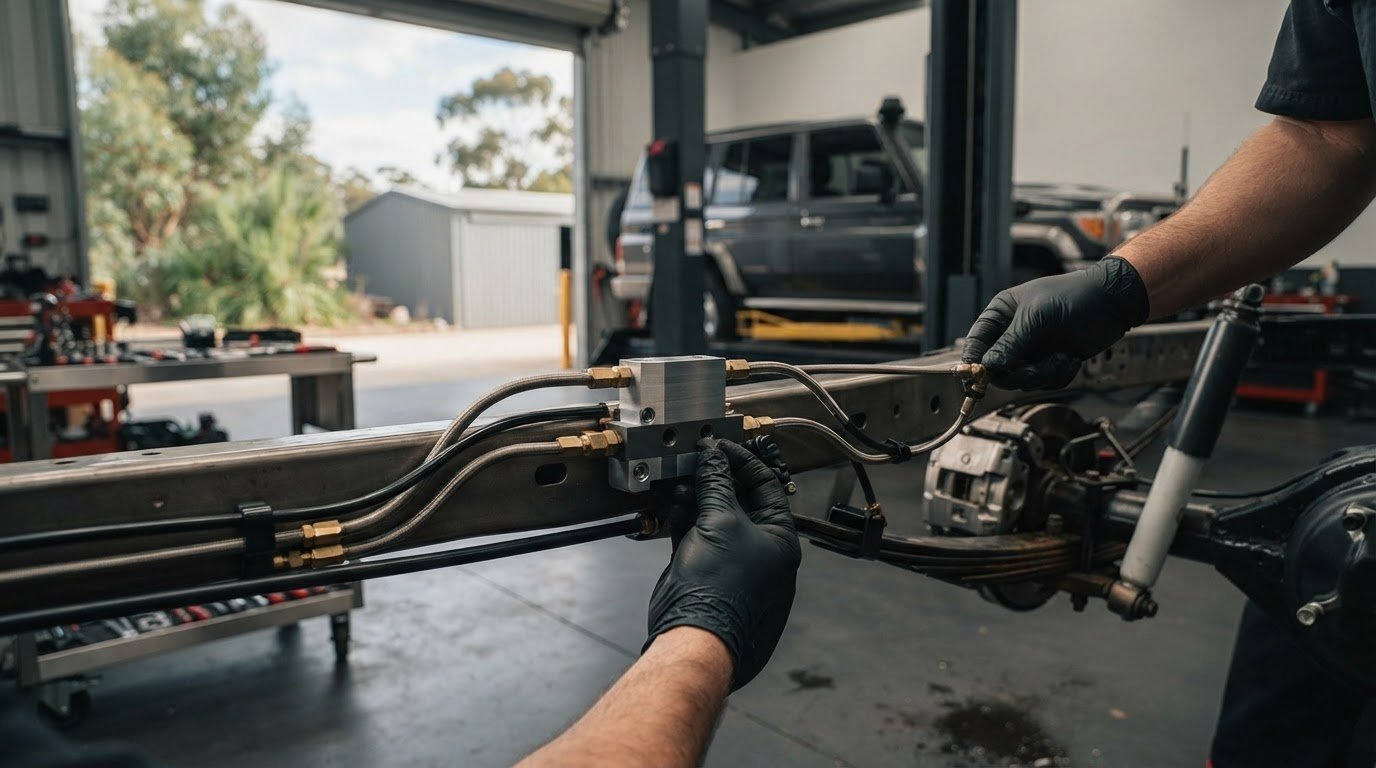
The valve style is only part of the match. This brake proportioning valve australia guide explains how to compare a valve with the complete hydraulic system, including the front and rear brake types. A proportioning valve, which controls rear brake pressure, is easy to confuse with a residual-pressure valve, which serves a different function.
Start with the vehicle’s brake arrangement and any modifications that could affect brake balance. This guide compares fixed, adjustable and load-sensing valves, then outlines the specifications and fitment details to review before ordering. It also explains when professional installation and brake-balance assessment are appropriate, so you can avoid choosing by appearance alone.
Key Takeaways
- Match the proportioning valve to the full brake layout, including front and rear brake types and existing hydraulic components.
- Compare vehicle details, connections, mounting position and brake-line routing before ordering.
- Choose between fixed and adjustable valves based on whether the brake configuration is defined or requires adjustment.
- Consider changes to vehicle weight distribution, axle loads or brake hardware, as these can affect brake balance.
Brake proportioning valves in Australia: what they control and why they matter
A proportioning valve is a hydraulic control component that limits pressure to the rear brakes during braking. This helps manage front-to-rear brake balance as weight transfers towards the front of the vehicle. The Proportioning valve overview explains the component’s role in a braking system. When selecting a brake proportioning valve australia drivers should start with the complete brake layout, not the valve’s appearance alone.
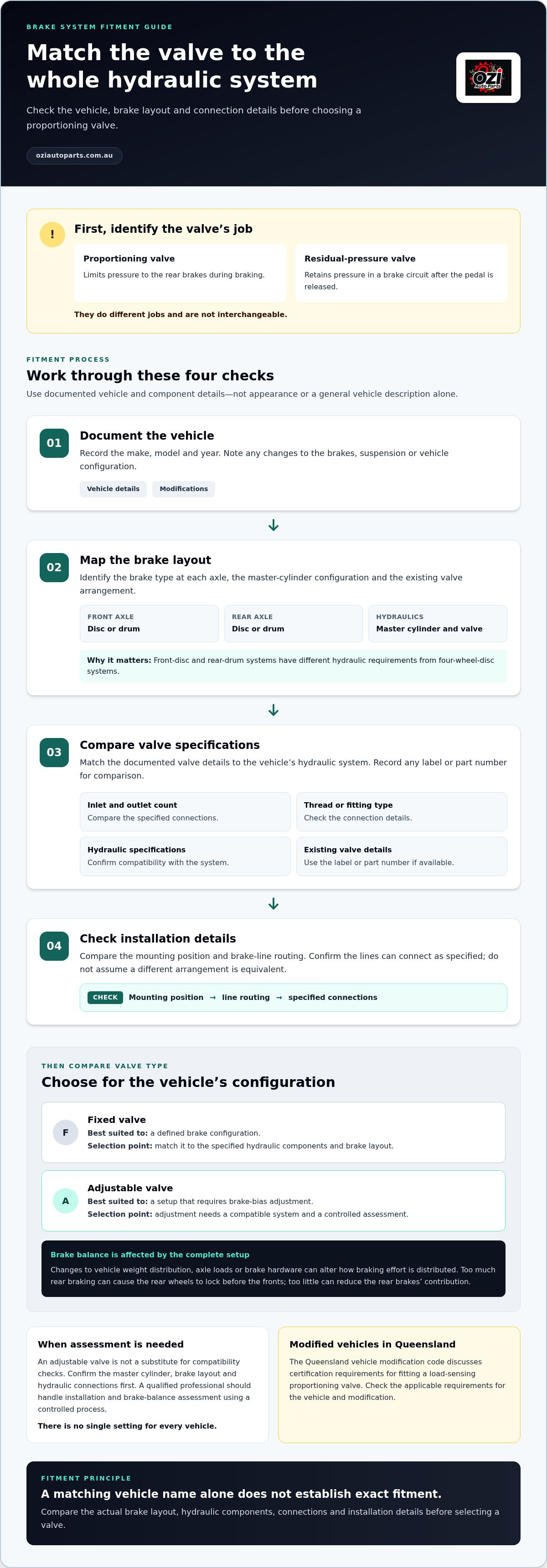
A proportioning valve and a residual-pressure valve do different jobs. A proportioning valve limits rear brake pressure during braking. A residual-pressure valve retains pressure in a brake circuit after the pedal is released. They aren’t interchangeable, so identify the existing hydraulic arrangement before choosing a replacement or adding a valve.
How brake layout affects proportioning valve selection
Front-disc and rear-drum systems have different hydraulic requirements from four-wheel-disc systems. The correct valve depends on the combination of brakes, master cylinder and other components, not simply the axle position or vehicle model.
Brake bias describes how braking effort is distributed between the front and rear wheels. Too much rear braking can cause the rear wheels to lock before the fronts; too little can reduce the rear brakes’ contribution. There’s no single setting for every vehicle. Changes to brake hardware or vehicle configuration can alter the balance, so don’t assume a valve calibrated for one layout suits another.
For broader context on braking components and system layouts, see All Brake Systems: The Master Guide to Automotive Braking and Spares. Considering the complete system helps distinguish the valve’s function from the rest of the hydraulic setup.
How to check brake proportioning valve fitment before ordering in Australia
Use documented vehicle and component details to confirm fitment. The checklist below helps identify mismatches before ordering. Don’t rely on a general vehicle description or assume a valve is universal.
Which vehicle and brake-system details should you compare?
Record the make, model and year, plus any changes to the brakes, suspension or vehicle configuration. Note whether each axle has disc or drum brakes, the master-cylinder configuration and the existing valve arrangement. If the valve has a label or part number, record it for comparison. For broader parts-buying guidance, see Buying Online Auto Parts in Australia: 2026 Specialist Buying Guide.
- Document the vehicle: Record its identifying details and brake-system modifications.
- Map the brake layout: Identify front and rear brake types, and note the master cylinder and existing valve setup.
- Compare connections: Match the valve’s documented inlet and outlet count, thread or fitting type, and specifications to the vehicle’s hydraulic system.
- Check installation details: Compare the mounting position and brake-line routing. Confirm the lines can connect as specified. Don’t assume a different arrangement is equivalent.
Every detail matters. A matching vehicle name alone doesn’t establish exact fitment, particularly if the hydraulic components or brake layout have changed. For modified vehicles in Queensland, the Queensland vehicle modification code discusses certification requirements for fitting a load-sensing proportioning valve. Check the applicable requirements for the vehicle and modification.
Once you’ve compared the specifications, browse brake-system parts with your fitment details in hand.
Fixed or adjustable brake proportioning valve: choose for your Australian vehicle setup
Choose based on the vehicle’s brake configuration and whether the setup is expected to change. A fixed valve suits a defined arrangement. An adjustable valve allows brake-bias changes when the system and assessment call for them. This brake proportioning valve Australia guide compares the practical differences.
| Valve type | Best suited to | Selection point |
|---|---|---|
| Fixed | A defined brake configuration | Match the valve to the specified hydraulic components and brake layout. |
| Adjustable | A setup that requires brake-bias adjustment | Adjustment needs a compatible system and a controlled assessment. |
Vehicle changes can shift brake balance. Added or removed weight, altered axle loads, or different brake hardware can change how braking effort is distributed. Choosing a valve based only on whether it’s fixed or adjustable overlooks these system-level factors.
When is an adjustable valve appropriate?
An adjustable valve is relevant when a modified brake system needs its bias assessed and set for the vehicle’s configuration. It isn’t a shortcut around compatibility checks. First confirm that the valve suits the master cylinder, brake layout and hydraulic connections. Have installation and brake-balance assessment handled by a qualified professional using a controlled process. Don’t rely on a generic adjustment value.
Compare the complete brake arrangement before choosing. Browse Ozi Auto Parts brake-system parts to explore relevant components.
Choose with fitment and brake balance in mind
The right valve depends on the complete hydraulic setup, not just whether it’s fixed or adjustable. Confirm the front and rear brake types, master cylinder, existing valve arrangement and connection details before ordering. Changes to vehicle weight distribution, axle loads or brake hardware can affect brake balance. An adjustable valve still needs compatibility checks and a controlled assessment.
Use this brake proportioning valve australia guide to compare documented specifications with your vehicle’s actual configuration. If installation or brake-balance setup is required, use a qualified automotive professional.
Ozi Auto Parts is an Australian online retailer specialising in brake-system parts, with nationwide delivery for Australian customers. Browse brake-system parts and use your fitment details to guide your selection. A careful match is a practical first step towards a properly configured braking system.
Frequently Asked Questions
What does a brake proportioning valve do?
A brake proportioning valve controls hydraulic pressure to the rear brakes relative to the front, helping manage brake balance during braking. Its required function and setup depend on the vehicle’s brake configuration, including the brake types and other hydraulic components. It isn’t a residual-pressure valve. That component retains pressure in a brake circuit after the pedal is released, serving a different hydraulic purpose.
How do I know which brake proportioning valve fits my vehicle?
Start with the vehicle’s make, model and year, then record the front and rear brake types, master-cylinder configuration and existing valve arrangement. Compare the proposed valve’s port count, fitting or thread type, and line routing with the documented application. For brake proportioning valve Australia fitment, every listed specification must match. Don’t rely on appearance or a general “universal” description alone.
Should I choose a fixed or adjustable brake proportioning valve?
A fixed valve suits a defined brake configuration when its specifications match the vehicle’s hydraulic system. An adjustable valve is appropriate when the system requires brake-bias adjustment and the setup can be properly assessed. Neither type is right for every vehicle. Confirm component compatibility first, especially after brake-system modifications, and have brake balance assessed by a qualified professional.
Can I install or adjust a brake proportioning valve myself?
Use a qualified automotive brake professional for installation, bleeding and setup. A proportioning valve connects to the hydraulic brake system, so incorrect installation or adjustment can affect front-to-rear braking balance. The correct process depends on the vehicle and its components. Don’t apply generic adjustment values. Use a controlled, vehicle-specific brake-balance assessment before the vehicle returns to service.