
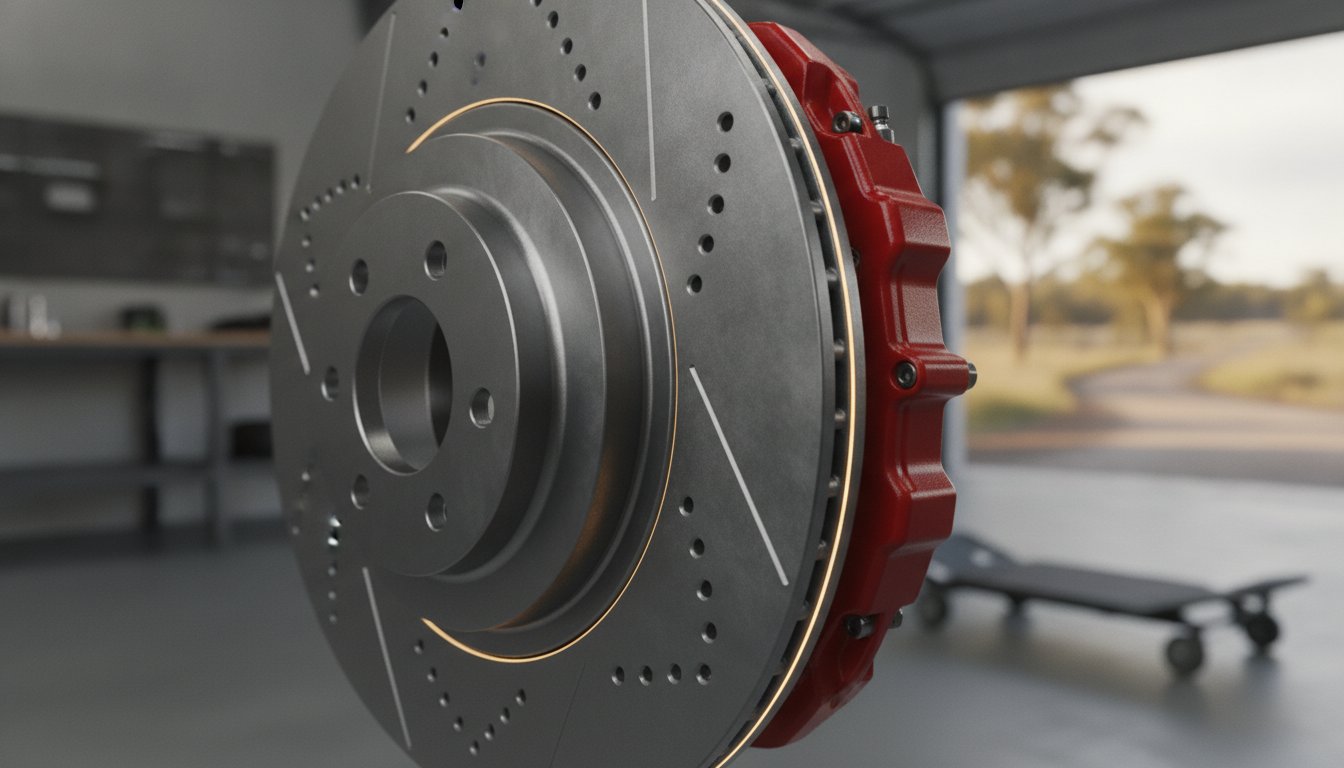
That steering wheel shudder under heavy braking isn't just an annoyance. It's a critical failure in heat management. Most drivers suspect warped discs. The reality is usually uneven pad deposit or thermal fatigue. Selecting high-quality brake rotors is the only way to ensure consistent stopping power and safety. You need components rated for specific Australian conditions. This applies whether you are commuting in Melbourne or towing heavy loads in the heat. Reliable braking depends on hardware that handles the thermal load effectively.
We recognise the confusion surrounding slotted versus drilled styles. Finding the correct fitment for Australian vehicle variants shouldn't be a guessing game. This guide provides the technical data you need to make an informed decision. You will learn to identify genuine wear signs and understand the selection criteria for peak performance. We preview the impact of current regulations and the latest visual wear indicator technology. Gain the confidence to source the right parts online with precision. This is your technical reference for maintaining maximum braking efficiency and vehicle safety.
Key Takeaways
- Master the technical relationship between metallurgy and energy conversion for peak deceleration performance.
- Evaluate vented, slotted, and drilled brake rotors to optimise thermal management and debris clearance.
- Identify critical wear indicators including minimum thickness (Min TH) and disc thickness variation (DTV).
- Verify precise fitment data for Australian vehicle models via diameter and stud pattern confirmation to ensure correct sourcing.
Understanding Brake Rotors: Function, Metallurgy, and Friction
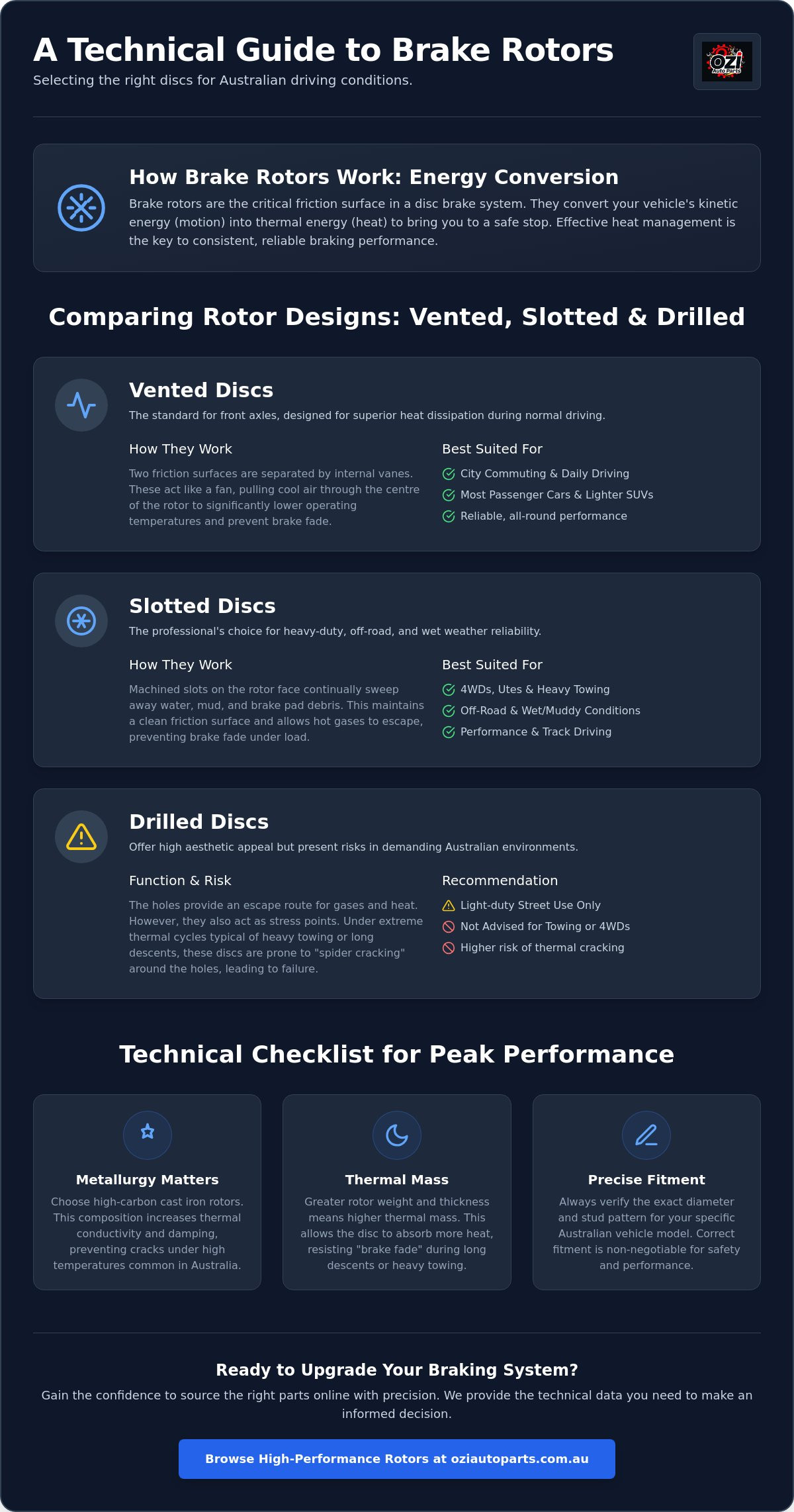
A brake rotor is a circular mechanical component that provides the friction surface for brake pads. These units serve as the primary interface within a disc brake system. Their operation relies on the fundamental principle of energy conversion. As you apply the pedal, the system transforms the vehicle's kinetic energy into thermal energy through intense friction. This process generates extreme heat that the rotor must manage to ensure safe deceleration.
Metallurgical integrity determines how well brake rotors handle these thermal cycles. High-carbon cast iron is the preferred material for premium aftermarket spares. This specific composition increases thermal conductivity and enhances damping capacity. Higher carbon levels allow the disc to absorb rapid temperature spikes without structural fatigue. This prevents thermal cracking, which is a common failure point in heavy-duty 4WDs or performance vehicles operating in high-ambient Australian temperatures.
To better understand the practical application and replacement of these components, watch this helpful video:
The Role of Thermal Mass in Braking
Rotor weight and thickness are critical performance metrics. They define the component's thermal mass. A greater mass improves "brake fade" resistance by absorbing more heat before reaching a failure threshold. Effective heat dissipation is mandatory. It prevents brake fluid from reaching its boiling point. If the system exceeds these limits, you'll experience pedal sponginess and a dangerous loss of stopping power during long descents or heavy towing.
Friction Management and Bedding-In
Stopping power depends on the transfer layer. This is a microscopic film of pad material that embeds into the rotor face. New brake rotors require a specific bedding-in procedure to establish this layer correctly. This process involves a series of controlled stops to heat the components gradually. Proper bedding ensures even material distribution. It prevents lateral runout and maximises the service life of your new braking hardware.
Comparing Rotor Designs: Vented, Slotted, and Drilled Discs
Rotor geometry dictates how your braking system sheds heat. Standard solid discs are common on the rear axle of lighter vehicles where braking loads are lower. In contrast, front brake rotors are almost always vented. This design features two friction surfaces separated by internal vanes. These vanes act as a centrifugal pump, pulling cool air through the centre of the disc to lower operating temperatures. Choosing the correct design depends entirely on your vehicle's weight and intended application.
Technical performance relies on more than just surface area. Recent advancements in brake rotor metallurgy have improved the structural integrity of these designs. While drilled rotors offer high aesthetic appeal and initial bite, they present risks in heavy-duty Australian environments. The holes act as stress concentrators. Under the extreme thermal cycles of towing or mountain descents, drilled discs are prone to "spider cracking" around the holes. For utes and SUVs, slotted designs provide a more robust alternative.
Venting Patterns for Australian 4WDs
Vane design is critical for heavy vehicles. Traditional straight pillar vanes are adequate for city commuting. However, high-performance brake rotors often use kangaroo paw or diamond pillar patterns. These designs increase the internal surface area and improve structural support between the disc faces. This is essential for utes carrying constant GVM loads or those towing caravans across the Nullarbor. Better airflow prevents fluid boil and maintains a firm pedal feel.
When to Choose Slotted Discs
Slotted rotors are the professional choice for off-road and wet weather reliability. The machined slots serve two technical purposes. They clear pad debris and water from the friction interface. They also allow "gassing off," preventing the cushion of hot gases that causes brake fade. If you frequent muddy tracks or require consistent performance under load, upgrading your brake system parts to slotted variants is a logical step. You can browse our range of high-performance discs to find the exact fitment for your driving profile.
Identifying Wear: When to Replace Your Brake Discs
Identifying brake rotors that require replacement is a matter of precise measurement. Every disc features a stamped Minimum Thickness (Min TH) limit on the hub or outer edge. This figure represents the legal safety threshold for thermal mass. If a rotor is worn below this specification, it cannot effectively dissipate heat. This leads to rapid fade and potential structural failure. Discarding a disc that has reached this limit is mandatory for vehicle safety.
Steering wheel shudder usually results from Disc Thickness Variation (DTV) rather than warped metal. Uneven pad material transfer creates high spots that cause the pads to skip during engagement. Visual inspection may reveal blue heat spots or deep scoring. These indicate localised overheating and surface fatigue. Such irregularities compromise the friction coefficient and require immediate technical attention.
For drivers of precision-engineered European models, specialised facilities like Euro Performance Auto Shop LLC provide the technical expertise required to diagnose and rectify these complex braking issues correctly.
Technical Inspection Procedure
Follow these steps to verify the serviceability of your braking hardware:
- Clean the rotor surface and hub mounting face thoroughly to remove debris.
- Measure the disc thickness at eight equidistant points around the circumference using a calibrated micrometer.
- Compare the lowest recorded measurement against the stamped Min TH specification.
- Mount a dial indicator to the suspension upright to check for lateral run-out while rotating the disc by hand.
- Scrap the component if measurements fall below the safety limit or if run-out exceeds 0.05mm.
Performance Red Flags During Driving
Active driving symptoms provide immediate diagnostic data. Pedal pulsation or "judder" during high-speed braking is a primary indicator of DTV. Excessive squealing or grinding suggests the rotor surface is glazed or the pads have reached the metal backing. If your inspection confirms the discs are beyond the safety limit, immediate replacement is required to maintain stopping performance. You can find precision-engineered brake rotors designed for Australian vehicle specifications in our online store.
Selecting the Right Rotor for Australian Vehicles
Australia's vehicle fleet features unique model variations that demand precise part matching. Sourcing brake rotors requires more than just identifying a make and model. You must verify specific engineering data to ensure safe fitment. "Close enough" is a dangerous standard in braking. Even minor discrepancies in disc offset or the centre hole diameter can lead to caliper misalignment. This causes uneven wear and compromises the structural integrity of the entire assembly.
For maximum stopping power, consider the entire hydraulic circuit. Upgrading your friction surfaces is only half the solution. Pairing new rotors with high-output brake boosters significantly improves pedal feel. This is especially relevant for 4WD owners who've added significant weight through bull bars or winches. Maintaining this investment involves regular inspections for debris and ensuring the hub face remains free of corrosion during every pad change.
The Importance of Precise Fitment Data
Technical accuracy is non-negotiable for Australian-specific builds. Local models like the Ford Falcon or Holden Commodore underwent multiple braking system revisions within a single series. A BA Falcon rotor differs significantly from an AU variant in both diameter and hat height. Ozi Auto Parts maintains a database of verified specifications to eliminate fitment anxiety. We focus on several critical data points:
- Total disc diameter (mm)
- Stud pattern and pitch circle diameter (PCD)
- Centring hole diameter for hub-centric alignment
- Total height and plate thickness
Sourcing Quality Mechanical Components
Reliability depends on the quality of your supply chain. Choosing specialised Australian retailers ensures you receive brake system parts engineered for local heat cycles and road conditions. Direct-to-consumer supply models provide better transparency regarding metallurgy and manufacturing tolerances. You can Browse the range of high-performance brake rotors at Ozi Auto Parts to secure the correct components for your vehicle. Precision sourcing is the final step in ensuring peak braking performance.
Secure Your Stopping Distance with Precision Hardware
Effective braking relies on technical precision. You now understand the role of high-carbon metallurgy and vented versus slotted designs. Monitoring minimum thickness and identifying disc thickness variation are non-negotiable safety requirements. These diagnostic steps ensure systems operate within established thermal limits during heavy-duty use. High-carbon composition prevents thermal cracking while specific venting patterns manage the extreme heat generated during deceleration.
Selecting components requires verified fitment data for the Australian market. We provide specialised 4WD and mechanical expertise to ensure accuracy. Our extensive catalogue covers Falcon, Commodore, and major 4WD makes with nationwide delivery on heavy mechanical spares. Eliminate guesswork regarding offsets or stud patterns by sourcing from a dependable industry resource. We prioritise stock availability and technical accuracy for every order.
Upgrade your stopping power with premium brake rotors from Ozi Auto Parts.
Maintain your vehicle with confidence. High-quality hardware ensures peak stopping performance in local conditions. Drive with the certainty of professional-grade equipment engineered for the task.
Frequently Asked Questions
How long do brake rotors typically last on Australian roads?
Lifespan typically ranges between 50,000 and 70,000 kilometres depending on vehicle load and driving conditions. Heavy-duty 4WDs or vehicles used for constant towing will experience accelerated wear. Stop-start metropolitan traffic in Sydney or Melbourne increases thermal cycling. Always measure the disc thickness against the stamped minimum limit during every pad change to ensure safety.
Can I replace just the brake pads and keep my old rotors?
You can replace pads only if the existing brake rotors remain above the minimum thickness and show no surface irregularities. The disc face must be free of deep scoring, glazing, or heat spots. Professional practice suggests measuring lateral run-out before fitting new pads. Worn discs with high Disc Thickness Variation (DTV) will cause premature pad wear and reduced stopping efficiency.
What causes brake rotors to turn blue or show dark spots?
Blue discolouration indicates the metal has reached extreme temperatures, causing a metallurgical change. Dark spots usually signify uneven cementite formation or pad material transfer. These "hot spots" create a hard surface that the brake pad cannot grip effectively. This condition often leads to pedal pulsation and requires a thorough technical inspection of the caliper and hydraulic system.
Is it better to machine old rotors or buy new ones?
Buying new components is generally superior to machining for maintaining maximum thermal mass. Machining removes material, which reduces the rotor's ability to absorb and dissipate heat. If the machining process brings the disc close to its minimum thickness, the risk of brake fade increases. Modern aftermarket spares are often more cost-effective than the labour required for precision on-car machining.
Why does my car shake when I apply the brakes at high speeds?
Shaking or shuddering is primarily caused by Disc Thickness Variation (DTV) or uneven pad deposits on the rotor surface. As the pads pass over these variations, they create a vibration that transmits through the steering column. This is rarely caused by "warped" metal. It's usually a result of improper bedding-in or seized caliper slide pins. Identifying the root cause is essential before installing new brake rotors.