Inaccurate component identification results in immediate project delays and increased freight overheads. Single-digit errors in VIN decoding or misinterpreted engine variants lead to fitment rejection and stalled repairs. This car part identification guide establishes a technical framework for precise mechanical spare selection. It eliminates the logistical friction caused by ordering incompatible brake boosters, clutch kits, or driveshafts. Reliable data is the only safeguard against project downtime and unnecessary expenditure.
Professional identification requires a methodical multi-point verification process. This article details the methodology for locating Australian compliance plates, interpreting manufacturer-specific option codes, and measuring critical physical specifications like spline counts and flange diameters. Learn to achieve successful first-time fitment through data-driven selection and professional cross-referencing protocols. Precise identification. Technical accuracy. Maximum efficiency. Accurate sourcing starts with correct data.
Key Takeaways
- Identify precise vehicle build dates and engine variants by cross-referencing VIN data with Australian Compliance Plate specifications.
- Distinguish between manufacturing casting marks and actual spare part numbers to ensure accurate component selection.
- Use this car part identification guide to verify critical technical requirements such as ABS compatibility for brake boosters and master cylinders.
- Confirm 100% fitment for driveshafts and 4WD upgrades through physical spline counts and flange-to-flange measurements.
Locating Your Vehicle Identifiers: VIN, Rego, and Compliance Plates
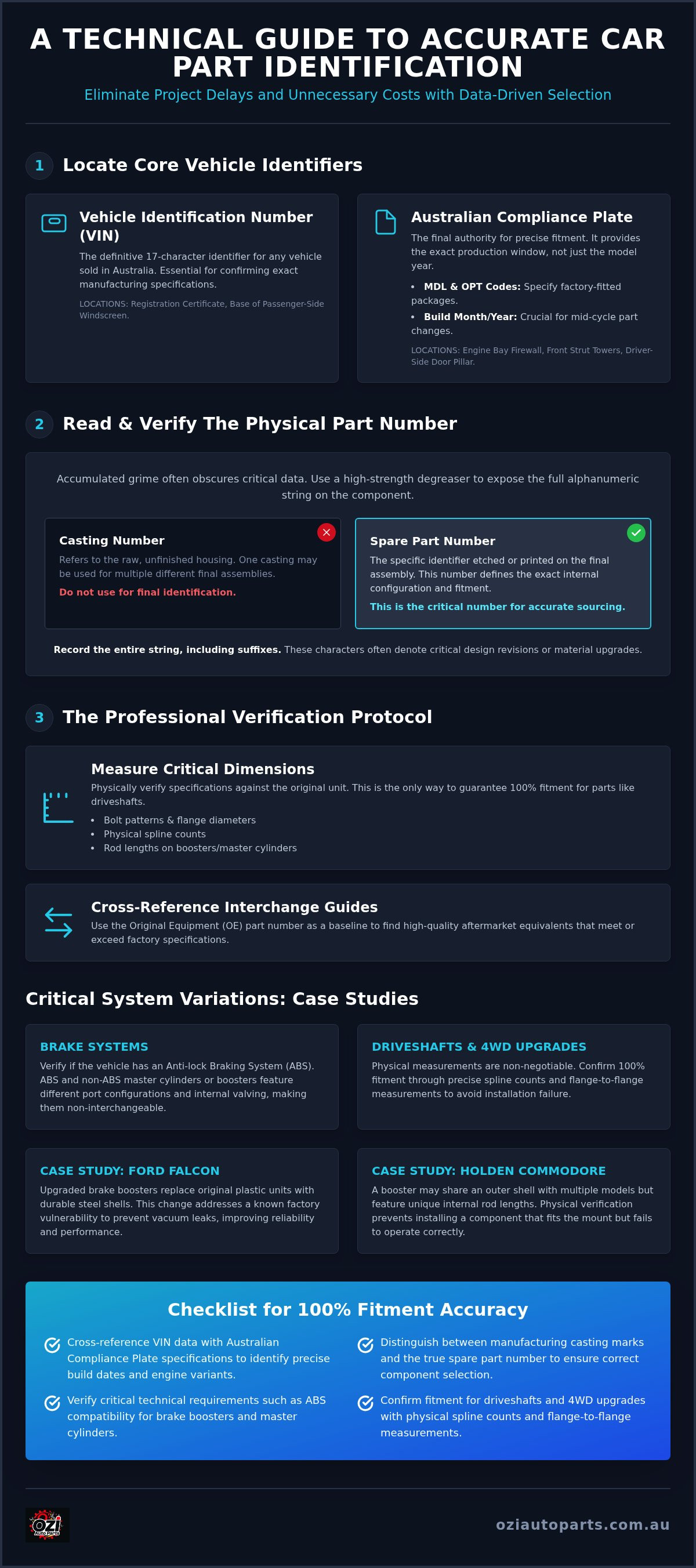
Accurate component sourcing begins with the Vehicle Identification Number (VIN). This 17-character sequence is the definitive identifier for any vehicle sold in Australia. Locate it on your registration certificate or the passenger-side base of the windscreen. While registration searches provide a baseline, they often fail to account for grey imports or modified utes. A technical car part identification guide relies on the VIN to confirm the exact manufacturing specification of your vehicle.
Narrow your search by identifying the vehicle 'Series'. Australian manufacturers, particularly Ford and Holden, frequently implemented mid-generation updates. A BA Falcon brake booster may differ from a BF variant despite sharing the same model year. Verify the specific engine code and transmission type. These variables dictate the specific clutch kits or cooling system components required for your build.
Finding the Compliance Plate on Australian Vehicles
Search the engine bay firewall, front strut towers, or the driver-side door pillar for the silver or coloured metal plate. This data source is the final authority for precise fitment. It provides the exact production window rather than a broad model year.
- MDL and OPT Codes: These identifiers dictate specific brake or suspension packages fitted at the factory.
- Build Month and Year: Essential for sourcing parts that changed during a production cycle.
- Paint and Trim: Relevant for identifying specific chassis-mounted mechanical spares.
Cross-reference the build date with the VIN. This verification ensures your replacement component matches the factory configuration exactly. It eliminates the risk of ordering parts for a similar but incompatible engine variant.
How to Read and Verify Car Part Numbers
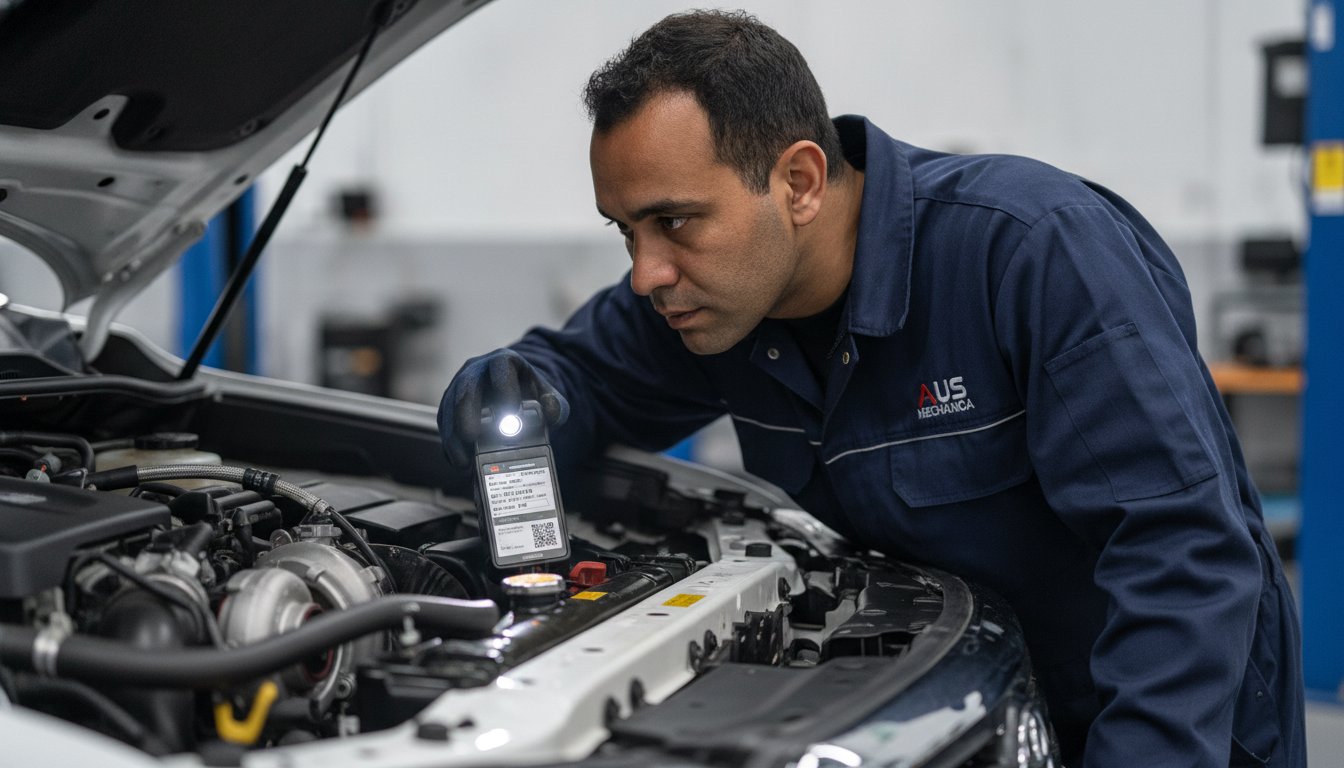
Successful component verification requires a clear view of physical identifiers. Apply a high-strength degreaser to the component surface to expose stamped or printed alphanumeric strings. Accumulated grime often obscures the critical data required for this car part identification guide. Focus on the manufacturer's logo to determine if the part is Original Equipment Manufacturer (OEM) or a previous aftermarket replacement.
Distinguish between the casting number and the actual spare part number. Casting numbers refer to raw housings that fit multiple final assemblies. The spare part number is typically etched or printed later to identify the specific internal configuration. Record the entire string, including suffixes. These characters often denote superseded designs or material upgrades, which are vital for ensuring compatibility with technical mechanical spares.
Decoding OEM and Aftermarket Interchange Codes
OE numbers serve as the baseline for cross-referencing equivalent aftermarket components from brands like Bendix or DBA. When an OE number is superseded, the manufacturer replaces the old identifier while maintaining mechanical interchangeability. Follow these sequential steps to verify fitment when part numbers are missing or superseded:
- Measure critical dimensions: Verify bolt patterns, flange diameters, and spline counts against the original unit.
- Identify design suffixes: Check the final alphanumeric character for revisions that indicate a change in fitment or material specification.
- Cross-reference interchange guides: Use the OE number to locate performance-grade alternatives that meet or exceed factory specifications.
For example, a Holden Commodore brake booster may share a shell with multiple models but feature unique rod lengths. Physical verification prevents the error of installing a component that fits the mount but fails to operate correctly. Accuracy ensures efficiency.
Identifying Critical Mechanical Spares for Your 4WD or Car
System-level variations dictate mechanical integrity. For brake systems, verify if the vehicle utilises an Anti-lock Braking System (ABS). ABS and non-ABS master cylinders or boosters feature different port configurations and internal valving. Owners of older Australian sedans should identify factory vulnerabilities. For example, upgraded brake boosters for Ford Falcons replace original plastic units with durable steel shells to prevent vacuum leaks. This car part identification guide prioritises these technical distinctions to eliminate fitment rejection.
Driveshaft identification requires physical verification over database searches. Measure the total length from flange to flange and count the splines on the yoke. This car part identification guide provides the metrics needed to confirm compatibility for modified 4WDs. Inspect suspension components for lift kit markings or aftermarket branding. Factory specifications are often irrelevant once a vehicle has been modified for off-road use. Precise measurement ensures the replacement handles the required torque and articulation while avoiding driveline vibration.
Verifying Brake Boosters and Driveshaft Specifications
Fitment for replacement brake boosters depends on shell diameter and mounting bolt patterns. Check the pushrod type. Fixed and adjustable rods are not interchangeable. For a comprehensive technical breakdown, consult the All Brake Systems guide. It provides data on secondary components, including caliper slide pins and hydraulic assemblies. Follow these sequential steps to maintain high-performance standards:
- Verify Booster Shell: Match the mounting pattern and diameter to your firewall.
- Count Splines: Confirm the yoke matches the transmission output splines exactly.
- Identify Lift Height: Determine aftermarket suspension brands to source correct shock absorbers for modified height.
Ensure Accurate Fitment for Your Mechanical Repairs
Accurate part selection reduces vehicle downtime and eliminates the logistical burden of returns. By cross-referencing VIN data with Australian compliance plates and physically verifying component dimensions, you ensure every mechanical spare matches your vehicle's specific production window. This car part identification guide provides the technical foundation required for confident purchasing. Focus on distinguishing between manufacturing casting marks and actual part numbers to maintain repair accuracy.
Once you've identified your requirements, source your identified mechanical spares at Ozi Auto Parts. As a specialist Australian stockist, we provide technical expertise in brake and drive line systems to support your maintenance and 4WD upgrade projects. Utilise our technical catalogue for specific Ford and Holden models and benefit from fast nationwide shipping. Get your vehicle back on the road with the right components today.
Frequently Asked Questions
Where is the part number usually located on a car part?
Part numbers are typically stamped directly into metal surfaces, printed on adhesive labels, or cast into the component housing during manufacturing. Look for alphanumeric strings on the flat faces of brake boosters or the cylindrical barrels of driveshafts. Use a degreaser to uncover numbers obscured by oil or road grime. This physical data is the most reliable way to confirm fitment.
Can I identify a car part using only my rego number?
Registration numbers provide a baseline for model identification but don't guarantee part accuracy for modified vehicles or mid-year production updates. This car part identification guide recommends cross-referencing rego data with physical VIN and compliance plate details. Physical verification ensures the component matches your vehicle's specific hydraulic or mechanical configuration and avoids the risk of incorrect data from generic databases.
What should I do if the part number is worn off or missing?
Use physical measurements and visual identifiers when part numbers are illegible. Measure critical dimensions such as booster shell diameters, mounting bolt spacing, and driveshaft spline counts. These technical specifications allow you to cross-reference replacement components against original equipment manufacturer (OEM) standards. Consult a specialist catalogue to match these dimensions to specific vehicle variants and ensure a successful first-time fitment.
Are part numbers the same for OEM and aftermarket parts?
OEM and aftermarket parts utilise different numbering systems, though aftermarket manufacturers often print the original OE number on the packaging for reference. An aftermarket part number identifies the specific brand's replacement unit. Use the original factory number to search for equivalent high-performance alternatives that maintain identical mounting points and functional specifications for your specific Australian vehicle model.
How do I know if a part from a different car model will fit mine?
Fitment across different models is only confirmed through shared platform data or verified interchange codes. While many Australian-built sedans share chassis components, subtle differences in rod lengths or port sizes prevent direct swaps. Check the specific model series and build date on the compliance plate to verify if a component is mechanically identical to your original factory unit.
What is an interchange code in car parts?
An interchange code is a standardised identifier that confirms different part numbers refer to the same physical component. These codes allow mechanics to source identical spares from various manufacturers or vehicle models. Utilising a car part identification guide to find these codes expands your sourcing options while ensuring the replacement component meets the required technical tolerances for your vehicle.