
An engine temperature gauge climbing into the red is a sight no Australian driver wants to see, especially on a hot day. More often than not, the culprit is a malfunctioning or inefficient car radiator. An overheating engine isn't just an inconvenience; it can lead to catastrophic and expensive damage. But when faced with a replacement, the confusion begins. Do you need a standard or heavy-duty unit? What's the difference between aluminium and copper-brass? Choosing the wrong part can waste money and fail to solve the problem.
This comprehensive guide is designed to provide clear, direct answers. We will break down exactly how your car’s radiator works to protect your engine from damaging heat. You will learn to identify the signs of a failing radiator, understand the critical differences between the types available, and discover the key specifications to check for your specific vehicle model. By the end, you’ll have the technical knowledge to confidently select the correct, high-performance radiator to keep your car running cool and reliably on the road.
What is a Car Radiator and How Does It Work?
The car radiator is the core component of your vehicle's cooling system. Its primary function is to dissipate the immense heat generated by the internal combustion engine, preventing it from overheating. In simple terms, it operates as a heat exchanger. Engine coolant, or antifreeze, circulates through the engine block, absorbs thermal energy, and then flows to the radiator to be cooled before repeating the cycle. A failure in this critical part will lead to engine overheating, which can cause severe and costly damage.
This video provides a visual overview of the process:
The Radiator's Role in Preventing Engine Overheating
An internal combustion engine produces extreme temperatures during operation. To manage this, a liquid coolant is pumped through passages in the engine block, where it absorbs excess heat. This hot fluid is then routed to the radiator. The design of the unit maximises its surface area to the air, allowing it to efficiently transfer heat from the coolant to the atmosphere. The fundamental principles of how car radiators work involve convection and radiation to cool the fluid before it is sent back to the engine to absorb more heat.
The Step-by-Step Cooling Cycle
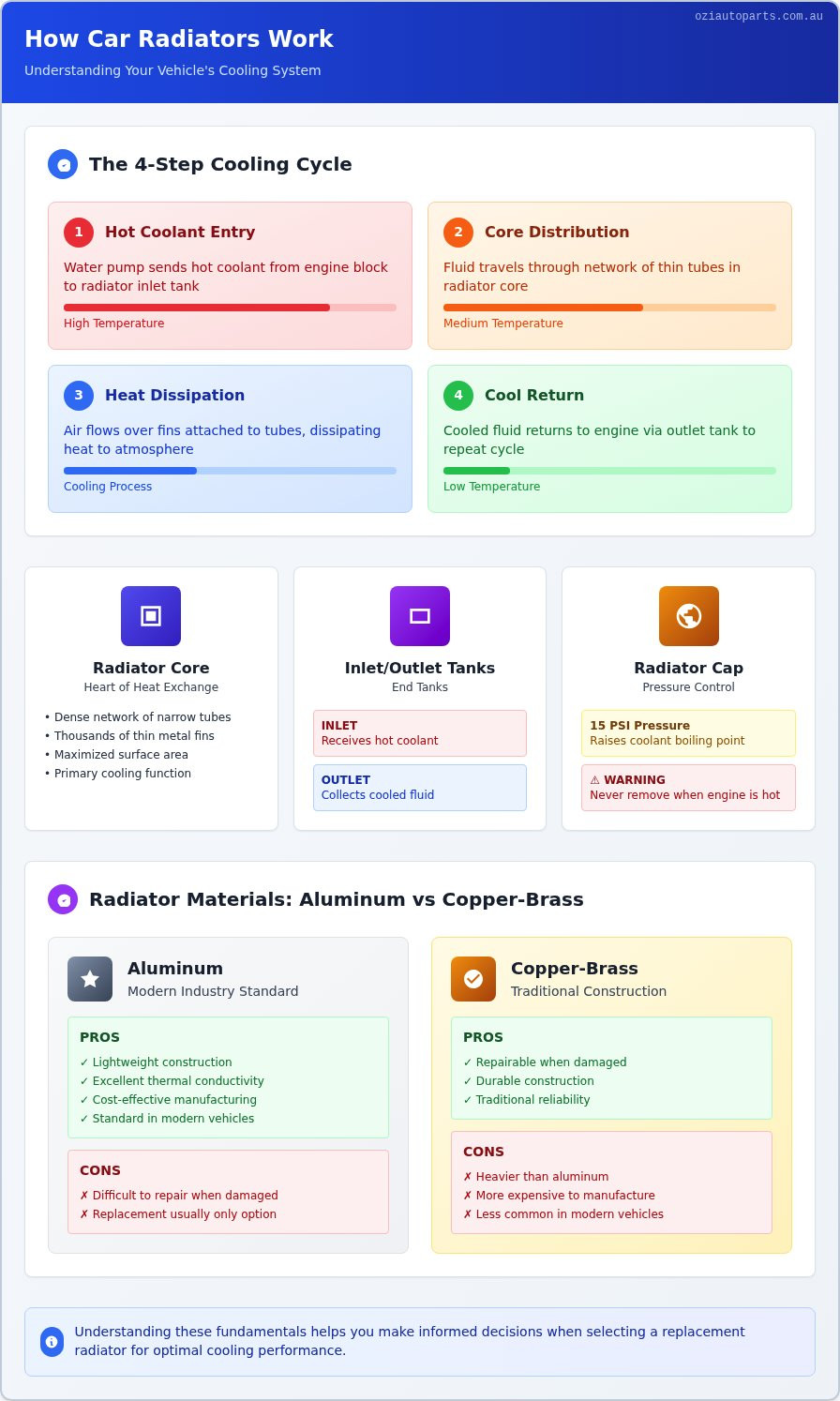
The cooling process is a continuous loop. The key components involved include the coolant, water pump, thermostat, hoses, and the radiator itself. The cycle can be broken down into four main steps:
- Step 1: The water pump sends hot coolant from the engine block through a hose to the radiator's inlet tank.
- Step 2: The fluid travels through a network of thin tubes that run through the radiator's core.
- Step 3: As air flows over the radiator (either from the vehicle's movement or a dedicated fan), thin metal fins attached to the tubes dissipate the heat from the coolant into the surrounding air.
- Step 4: Now significantly cooler, the fluid collects in the outlet tank and is pumped back to the engine to begin the cycle again.
The Core Components of a Radiator System
To effectively diagnose a potential failure, it is critical to understand the primary components of your vehicle's cooling system. The radiator operates as the central heat exchanger, working in tandem with the water pump and thermostat to regulate engine temperature. Visually, a typical unit consists of a large, finned central section (the core) connected to tanks on either side (inlet/outlet), with a pressure cap on top. A detailed understanding of How a Car Radiator Works reveals how these parts function as a single, efficient unit to prevent overheating.
Radiator Core: The Heart of Heat Exchange
The core is the largest component and performs the primary cooling function. It is constructed from a dense network of narrow tubes through which hot engine coolant flows. Attached to these tubes are thousands of thin metal fins. While the tubes transport the fluid, the fins dramatically increase the surface area exposed to airflow from the grille or cooling fan, allowing heat to dissipate from the coolant into the atmosphere efficiently.
Inlet & Outlet Tanks (End Tanks)
Located on the sides (or top and bottom) of the core, the end tanks manage the flow of coolant. These tanks are typically made from high-strength, heat-resistant plastic or aluminum.
- Inlet Tank: Receives hot coolant directly from the engine and distributes it across the core's tubes.
- Outlet Tank: Collects the cooled coolant after it has passed through the core and sends it back to the engine. In vehicles with automatic transmissions, this tank often houses an integrated transmission fluid cooler.
The Radiator Cap: More Than Just a Lid
The radiator cap is a critical safety and performance component with a dual purpose. Its primary function is to seal the cooling system, preventing coolant evaporation and loss. Secondly, it is engineered to maintain a specific pressure level within the system (e.g., 15 PSI). This pressure raises the boiling point of the coolant, allowing the engine to operate at higher, more efficient temperatures without boiling over.
WARNING: Never attempt to remove the radiator cap from a hot or warm engine. The system is under high pressure, and opening the cap can release a violent spray of scalding coolant and steam, causing severe burns.
Types of Car Radiators: Materials and Construction
Not all car radiators are created equal. The primary differences lie in their material composition and coolant flow design. These factors directly influence a radiator's cooling efficiency, lifespan, weight, and replacement cost. Understanding the core principles of how car radiators work helps clarify why these construction details are critical for your vehicle's performance. The right radiator must be compatible with your vehicle's specific engineering and cooling system demands.
Material Showdown: Aluminum vs. Copper-Brass
The material used for the radiator core is a critical factor in its performance. The choice between aluminum and copper-brass often depends on the vehicle's age and design priorities.
Aluminum Radiators
The current industry standard, aluminum radiators are found in virtually all modern production vehicles. Their popularity stems from a superior combination of performance and manufacturing efficiency.
- Pros: Lightweight, excellent thermal conductivity (heat transfer), and cost-effective to mass-produce.
- Cons: Difficult and often impossible to repair when damaged; replacement is usually the only option.
Most modern units feature plastic end tanks crimped onto an aluminum core. This hybrid construction significantly reduces weight and manufacturing costs compared to all-metal alternatives, making it the preferred choice for original equipment manufacturers (OEMs).
Copper-Brass Radiators
Common in classic, vintage, and some heavy-duty applications, copper-brass radiators were the standard for decades. While heavier, they offer unique advantages.
- Pros: Highly durable and can often be repaired by a specialist using soldering techniques, extending their service life.
- Cons: Significantly heavier than aluminum and less efficient at heat dissipation for a given size.
Design & Flow: Cross-Flow vs. Down-Flow
The orientation of the core and tanks determines how coolant moves through the radiator. This design choice is dictated by the vehicle's engine bay layout and cooling requirements.
Down-Flow Radiators
This traditional design features an inlet tank on the top and an outlet tank on the bottom. Coolant flows downwards, assisted by gravity and the water pump. This configuration was common in older vehicles with taller, narrower engine compartments.
Cross-Flow Radiators
The modern standard, cross-flow radiators have their tanks positioned on the sides of the core. Coolant flows horizontally from one side to the other. This wider, shorter profile allows for lower hood lines, which is essential for modern vehicle aerodynamics and styling. Neither design is inherently superior; the optimal flow type is determined by the vehicle manufacturer to maximise cooling within the available space.
How to Choose the Right Radiator for Your Vehicle
Selecting the correct replacement radiator is critical for your vehicle's cooling system performance and ensures a straightforward installation. An incorrect fit can lead to mounting issues, hose connection problems, and inefficient cooling, potentially causing further engine damage. The primary goal is to match or exceed the original factory specifications for a reliable repair.
Ensuring Perfect Fitment: OEM vs. Aftermarket
The most reliable method for finding a compatible part is to use your vehicle's make, model, and year. This information narrows down the options to parts guaranteed to fit. You will encounter two main types of parts: OEM (Original Equipment Manufacturer) and aftermarket. OEM parts are identical to the one installed at the factory, while quality aftermarket parts are engineered by third-party brands to meet or exceed OEM standards, often at a more competitive price. Reputable aftermarket brands provide excellent value and reliability. Use our vehicle finder to see radiators that fit your car.
Standard vs. Performance & Heavy-Duty Radiators
Your driving needs determine the best type of radiator for your vehicle. Understanding the difference is key to making the right choice.
- Standard Replacement: Designed to meet factory specifications, these are ideal for daily driving and standard vehicle use.
- Performance: Often featuring all-aluminum construction and more efficient cores, these are built for modified engines or performance driving where superior heat dissipation is required.
- Heavy-Duty: Built with thicker cores and increased fluid capacity, these are essential for vehicles used for towing, hauling heavy loads, or operating in harsh Australian conditions.
Key Specifications to Check
When comparing options, verify these technical details to ensure compatibility and performance. Always cross-reference these specifications with your vehicle's requirements.
- Core Thickness: A thicker core generally provides a larger surface area and higher coolant capacity, resulting in better cooling efficiency.
- Fin Density (Fins Per Inch): A higher fin density increases the surface area for heat to dissipate into the air, improving heat exchange.
- Inlet/Outlet Hose Positions: The location and diameter of the inlet and outlet ports must precisely match your car's existing hose setup to prevent leaks and installation problems.
Essential Radiator Maintenance to Prevent Failures
Proactive maintenance of your car's cooling system is significantly more cost-effective than addressing major engine damage from overheating. A regular inspection and service schedule is the best way to prevent component failure and extend the life of your vehicle. Follow this simple checklist to keep your cooling system in optimal condition.
Regular Coolant Level and Condition Checks
Performing a quick visual inspection every few weeks can help you spot potential issues before they escalate. It is a critical step in proper radiator care.
- Safety First: Always check coolant levels when the engine is completely cool. Never attempt to open a hot radiator cap.
- Check the Level: Locate the translucent coolant overflow tank. The fluid level should be between the 'MIN' and 'MAX' indicator lines.
- Inspect the Condition: Healthy coolant is brightly coloured (e.g., green, pink, orange) and clear. If the fluid appears rusty, murky, or has particles floating in it, it is contaminated and needs to be replaced.
- Use the Correct Type: Using the specific antifreeze/coolant recommended by your vehicle manufacturer is non-negotiable. The wrong formula can cause corrosion and internal damage.
The Importance of Radiator Flushing
Over time, coolant loses its protective properties, and contaminants like rust and scale can build up inside the cooling system. A complete system flush removes this harmful debris, protecting all components. Most manufacturers recommend a flush every 5 years or 100,000 kilometres, but you should always consult your owner's manual for precise service intervals. This procedure extends the life of the water pump, thermostat, hoses, and the radiator itself.
Keeping External Radiator Fins Clean
The external fins on your radiator are designed to dissipate heat efficiently. When they become clogged with bugs, leaves, and road grime, airflow is restricted, which reduces cooling performance. Periodically inspect the front of the radiator and gently clean it with a soft brush and a low-pressure stream of water. Important: Never use a high-pressure washer, as the force can easily bend and permanently damage the delicate fins.
For quality coolants, flushing kits, and replacement cooling system parts, find everything you need for your vehicle at oziautoparts.com.au.
Secure Your Engine's Health with the Right Radiator
Understanding your car's cooling system is essential for any Australian driver. This guide has shown that knowing the core components, performing consistent maintenance, and selecting the correct type for your vehicle are critical to preventing catastrophic engine failure. A high-performance radiator is not just another part; it is the core of your engine's temperature regulation system, safeguarding it against the demanding Australian climate and ensuring longevity.
When it's time for a replacement, trust the experts at Ozi Auto Parts. With over 20 years of industry experience, we stock a huge range of quality radiators suitable for most makes and models. We make it easy with Australia-wide shipping on all parts, ensuring you get the exact component you need, delivered efficiently to your door. Find the perfect radiator for your vehicle in our online store.
By investing in the right parts and proper care, you can drive with complete confidence. Keep your vehicle running at its best and stay cool on the road, no matter the conditions—and for similar comfort at home, you can discover QLD Shade for high-quality outdoor blinds and awnings.
Frequently Asked Questions
How much does a new car radiator cost in Australia?
A new car radiator in Australia typically costs between $150 and $600 for the part alone. The final price depends on your vehicle's make, model, and year, as well as the radiator's brand and material composition. Labour costs for professional installation can add an extra $200 to $500, depending on the complexity of the job and your mechanic's rates. Ozi Autoparts stocks a wide range of quality radiators to suit various budgets and vehicle specifications.
What is the difference between a radiator and a condenser?
The radiator and condenser are both heat exchangers but serve different systems. The radiator is part of the engine's cooling system, dissipating heat from the coolant that circulates through the engine. The condenser is part of the air conditioning system, responsible for cooling hot, high-pressure refrigerant gas and turning it into a liquid. While they often look similar and are mounted near each other at the front of the vehicle, they are not interchangeable parts.
Can I drive my car with a leaking radiator?
Driving with a leaking radiator is not recommended. A leak allows coolant to escape, which will inevitably lead to your engine overheating. Continuing to drive can cause severe and expensive engine damage, including a warped cylinder head or a blown head gasket. If you must move the vehicle a very short distance in an emergency, do so with extreme caution while monitoring the temperature gauge. Address the leak and replace the faulty part immediately.
Is an all-aluminum radiator better than a plastic and aluminum one?
All-aluminum radiators generally offer superior performance and durability. They dissipate heat more efficiently and are more resistant to damage from vibration. They can also be repaired by welding if a leak develops. In contrast, plastic and aluminum radiators, standard on most modern vehicles, are more cost-effective and lighter. However, the plastic end tanks can become brittle over time and crack, and they cannot be repaired, requiring a full replacement.
How often should I flush my car's radiator and change the coolant?
It is recommended to flush your cooling system and replace the coolant according to your vehicle manufacturer's service schedule. As a general guideline, older vehicles using traditional coolant may require a flush every 2 years or 50,000 kilometres. Modern vehicles often use long-life coolants that can last up to 5 years or 150,000 kilometres. Regular flushing prevents internal corrosion, removes sediment, and maintains optimal cooling system performance.
What are the first signs that my radiator might be failing?
The first signs of a failing radiator are often clear and should not be ignored. Look for a consistently high reading on your engine's temperature gauge or visible coolant leaks on the ground beneath your car. You may also notice your coolant level is frequently low, or the coolant itself appears discoloured, rusty, or sludgy. Steam coming from under the bonnet while driving is another critical indicator that your cooling system requires immediate inspection.