
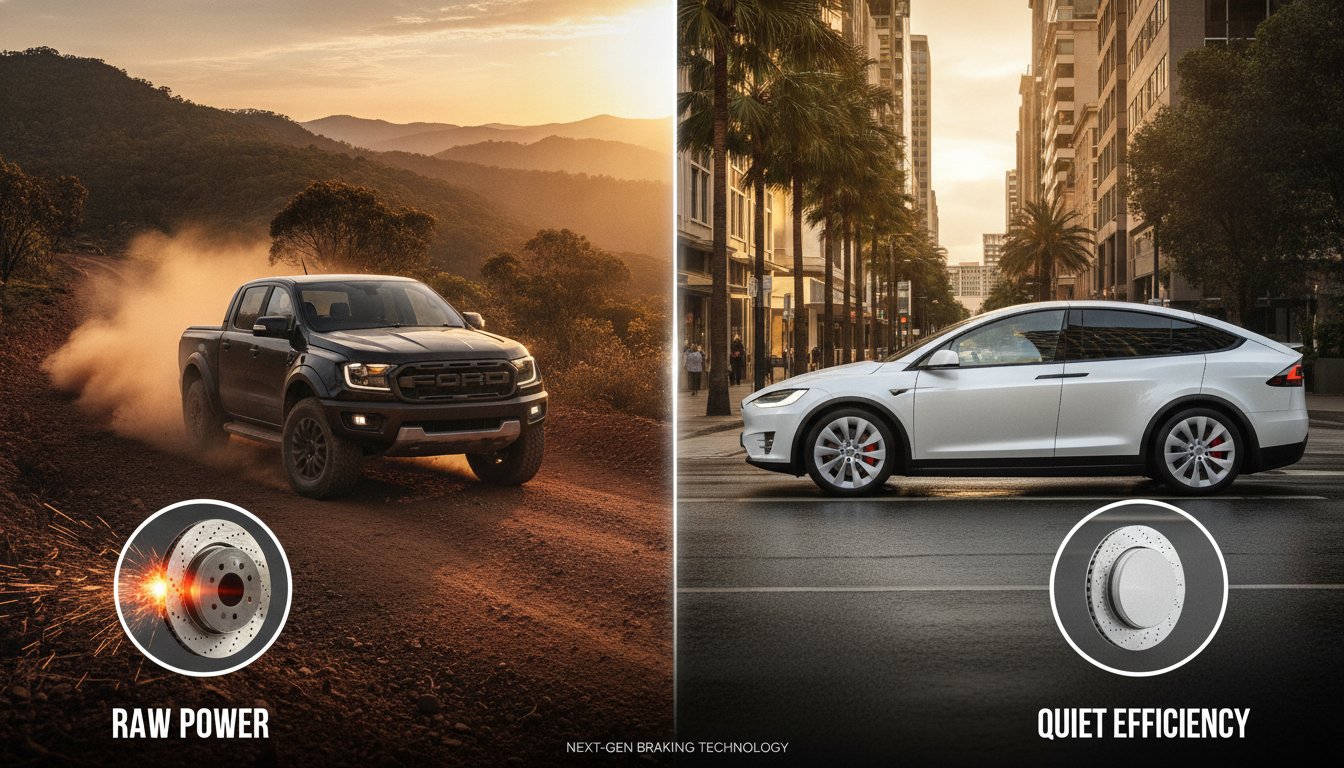
Choosing the most expensive brake pad might actually compromise your vehicle's safety during a heavy-duty descent in the Victorian High Country. You want a braking system that handles harsh Australian conditions without constant squealing or dust-covered alloy wheels. Deciding between ceramic vs metallic brake pads australia requires a technical understanding of friction coefficients and thermal thresholds. This analysis identifies the optimal material for your specific vehicle and driving environment using detailed material data. We compare heat dissipation, abrasive wear, and ADR-compliant performance standards. Ensure your next fitment provides maximum stopping power. Whether you are managing stop-start city traffic or heavy-duty 4WD tracks, the right component is critical. Expect a direct breakdown of service life, rotor impact, and noise suppression. Maximise braking performance. Reduce maintenance frequency. Secure the correct fitment for Australian road environments.
Key Takeaways
- Compare the technical composition of semi-metallic alloys against glass-ceramic fibres to determine heat dissipation and friction stability for your specific vehicle.
- Select the optimal material for ceramic vs metallic brake pads australia based on specific road environments, from metropolitan commuting to heavy-duty towing.
- Determine why 4WD upgrades and performance driving on coastal or alpine roads require the aggressive bite and high-torque capacity of semi-metallic compounds.
- Assess critical system compatibility, including high-carbon rotor requirements and caliper hardware condition, to prevent premature wear and surface scoring.
Technical Material Analysis: Ceramic vs Semi-Metallic Brake Pads
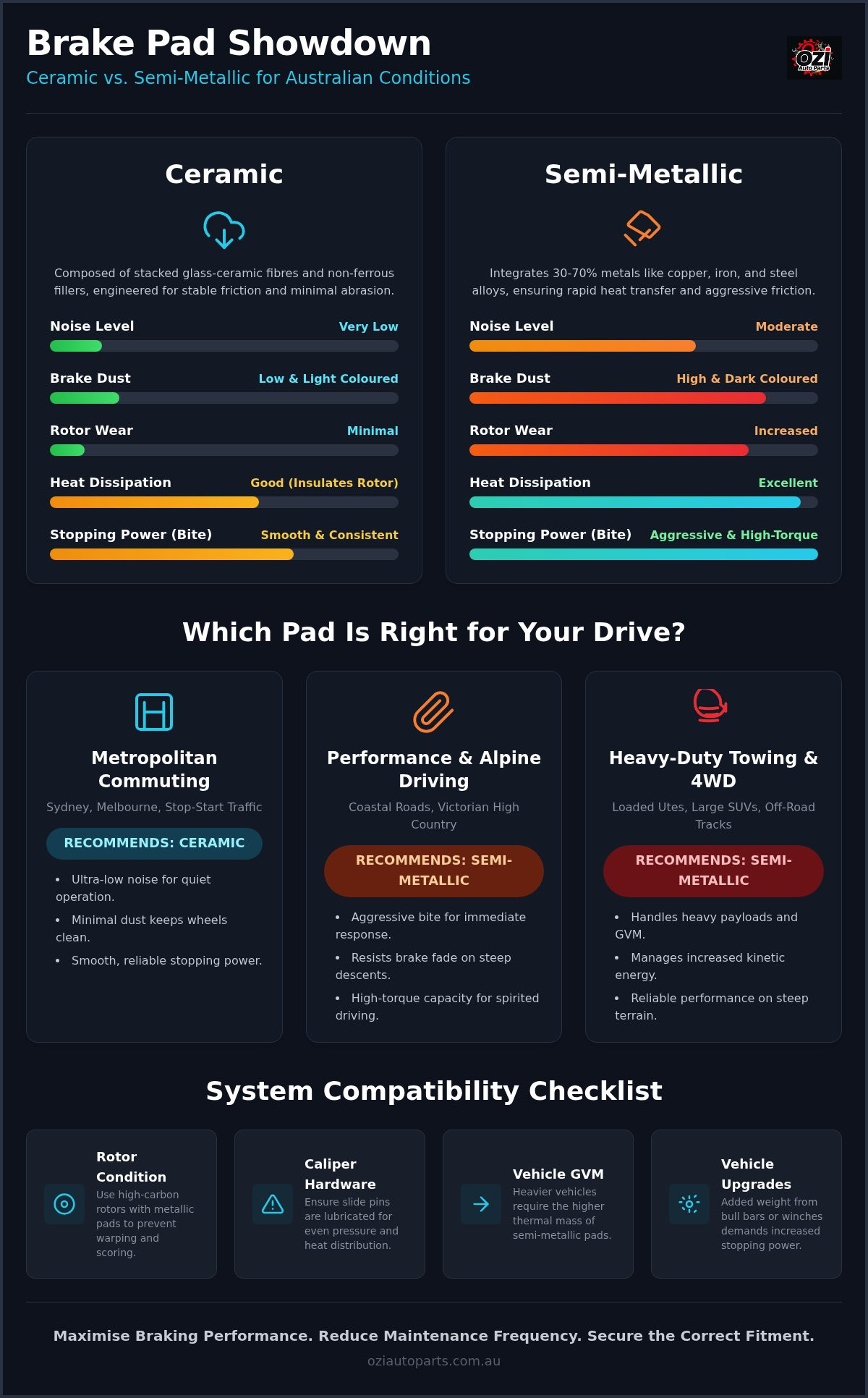
Selecting the correct compound for ceramic vs metallic brake pads australia depends on friction material composition. Semi-metallic pads integrate 30-70% metals. These typically include copper, iron, and steel alloys. This high metallic volume ensures rapid thermal conductivity. It moves heat away from the rotor face quickly. Conversely, ceramic compounds utilise stacked glass-ceramic fibres and non-ferrous fillers. These materials are engineered for stable friction at lower operating temperatures. A technical overview of brake pads confirms that material density directly dictates the rate of rotor surface abrasion. High-density metallic pads offer aggressive bite but increase particulate generation. Ceramic pads provide a sacrificial transfer layer that protects the rotor surface and minimises visible dust on alloy wheels.
Friction Coefficients and Heat Fade Dynamics
Stopping power consistency relies on the Mu (µ) rating. Metallic pads maintain mechanical integrity during extreme heat cycles. They resist structural breakdown at high temperatures. Ceramic pads offer superior performance in urban environments but experience glazed surfaces if over-stressed. This glazing reduces the friction coefficient significantly. In high-ambient Australian temperatures, thermal recovery is a critical safety metric. Metallic pads dissipate heat through the pad structure and into the atmosphere. Ceramic pads act as thermal insulators. This keeps heat within the rotor, which requires high-carbon steel to prevent warping. Efficient heat management also depends on hardware condition. Ensure caliper slide pins and bolts are lubricated to prevent uneven pad pressure and localised overheating during emergency braking manoeuvres.
Performance Selection for Australian Road Environments
Daily commuting in metropolitan centres like Sydney or Melbourne prioritises comfort. Ceramic pads excel in these environments. They provide low noise and minimal dust. This keeps alloy wheels clean during constant stop-start cycles. Conversely, performance driving on coastal or alpine roads demands the aggressive bite of semi-metallic compounds. These environments generate significant friction heat. Metallic pads offer the high-torque capacity required for safe navigation on steep descents. When evaluating ceramic vs metallic brake pads australia, driver environment is the primary variable.
Vehicle weight is a critical technical factor. Always verify your vehicle's GVM (Gross Vehicle Mass) before selecting friction materials. Heavier vehicles require pads with higher thermal mass to absorb and dissipate energy. The brake pad composition determines how the system manages this load. If you operate a loaded work ute or a large SUV, metallic pads are often necessary to prevent dangerous brake fade.
Heavy-Duty Towing and 4WD Requirements
Semi-metallic pads are the industry standard for Australian 4WDs. They handle steep terrain and heavy payloads effectively. Analyse the interaction between friction materials and Bendix brake pads to identify the friction level required for performance upgrades. Vehicles equipped with 4WD suspension upgrade kits often carry additional weight from bull bars and winches. These modifications increase kinetic energy during deceleration. Specialised metallic pads manage this increased load without structural failure. Consult the specialists at Ozi Auto Parts to ensure your braking system matches your vehicle's upgraded specifications.
System-Wide Compatibility and Maintenance Spares
Effective braking requires more than just high-quality friction material. When evaluating ceramic vs metallic brake pads australia, you must consider the condition of supporting hardware. Seized or worn caliper slide pins and bolts cause uneven pad wear and reduced efficiency. Ensure these components move freely to maintain consistent clamping pressure across the rotor face. Rotor compatibility is equally vital. Harder metallic pads exert higher abrasive force. This necessitates high-carbon rotors to prevent premature surface scoring or heat-induced warping. Ceramic pads are gentler on standard rotors but require a perfectly flat surface for effective material transfer.
Monitor hydraulic performance via the brake booster. Adequate clamping force ensures the selected material operates within its designed friction range. If the hydraulic system is compromised, even the highest Mu-rated pads will fail to provide safety. Proper maintenance prevents the glazing of ceramic surfaces and the excessive heat soak associated with metallic compounds.
Critical Components for Brake System Integrity
Upgrading to a high-performance Falcon or Commodore booster is recommended when switching to aggressive metallic pads. This enhancement provides the necessary vacuum assistance for a firm, predictable pedal feel. It is a logical step when choosing pads for your driving style, particularly for heavy-duty 4WD applications. Comprehensive inspection of all brake system parts is essential during replacement. Focus on vacuum hose integrity and brake fluid boiling points. Maintain mechanical reliability by sourcing online auto parts from specialised Australian distributors. This ensures all spares meet ADR performance standards for local road environments and demanding off-road use.
Optimise Your Braking Configuration
Selecting the correct friction material ensures safety across diverse Australian road environments. Ceramic compounds provide quiet, low-dust performance for metropolitan commuting. Heavy-duty 4WD applications and towing require the superior thermal capacity of semi-metallic pads. When deciding on ceramic vs metallic brake pads australia, prioritise your vehicle's GVM and typical operating temperatures. Always verify the condition of secondary components like caliper hardware and brake boosters to maintain peak hydraulic efficiency. Ozi Auto Parts is a specialist supplier of 4WD mechanical upgrades with an expert-vetted mechanical component catalogue. We provide nationwide Australian shipping for all brake spares to keep your vehicle ADR-compliant and reliable. Browse professional-grade brake system parts and upgrades at Ozi Auto Parts today. Secure the stopping power your vehicle demands.
Frequently Asked Questions
Do ceramic brake pads last longer than semi-metallic pads in Australia?
Yes. Ceramic pads typically last between 60,000 and 100,000 kilometres under standard Australian driving conditions. Semi-metallic pads generally require replacement after 40,000 to 70,000 kilometres. This extended service life justifies the higher initial purchase cost for metropolitan commuters. The durability of ceramic vs metallic brake pads australia depends on heat management and the density of the friction material used.
Are metallic brake pads better for towing caravans and heavy trailers?
Yes. Semi-metallic pads are the recommended choice for towing caravans and heavy trailers because of their superior heat dissipation. They maintain a stable friction coefficient at high temperatures where ceramic pads might suffer from surface glazing. This is a critical safety feature for heavy-duty 4WD use. The metallic content ensures reliable stopping power during long descents on rural or alpine roads.
Why do my metallic brake pads squeal more in cold Australian mornings?
Metallic pads often squeal when cold because the metal fibres require heat to reach their optimal operating temperature. This noise results from high-frequency vibrations between the pad and the rotor surface. Once the brakes reach a standard thermal range, the noise usually subsides. Ceramic pads are engineered with non-ferrous fillers specifically to provide quieter operation in stop-start city traffic regardless of the ambient temperature.
Will ceramic brake pads damage my standard car rotors?
No. Ceramic pads are typically less abrasive than metallic alternatives and cause less wear on standard cast-iron rotors. They use transfer film technology that protects the rotor surface rather than grinding it down. However, you must ensure rotors are within thickness specifications before fitting new pads. Using high-quality ceramic vs metallic brake pads australia ensures compatibility with OEM braking systems while reducing your long-term maintenance frequency.