
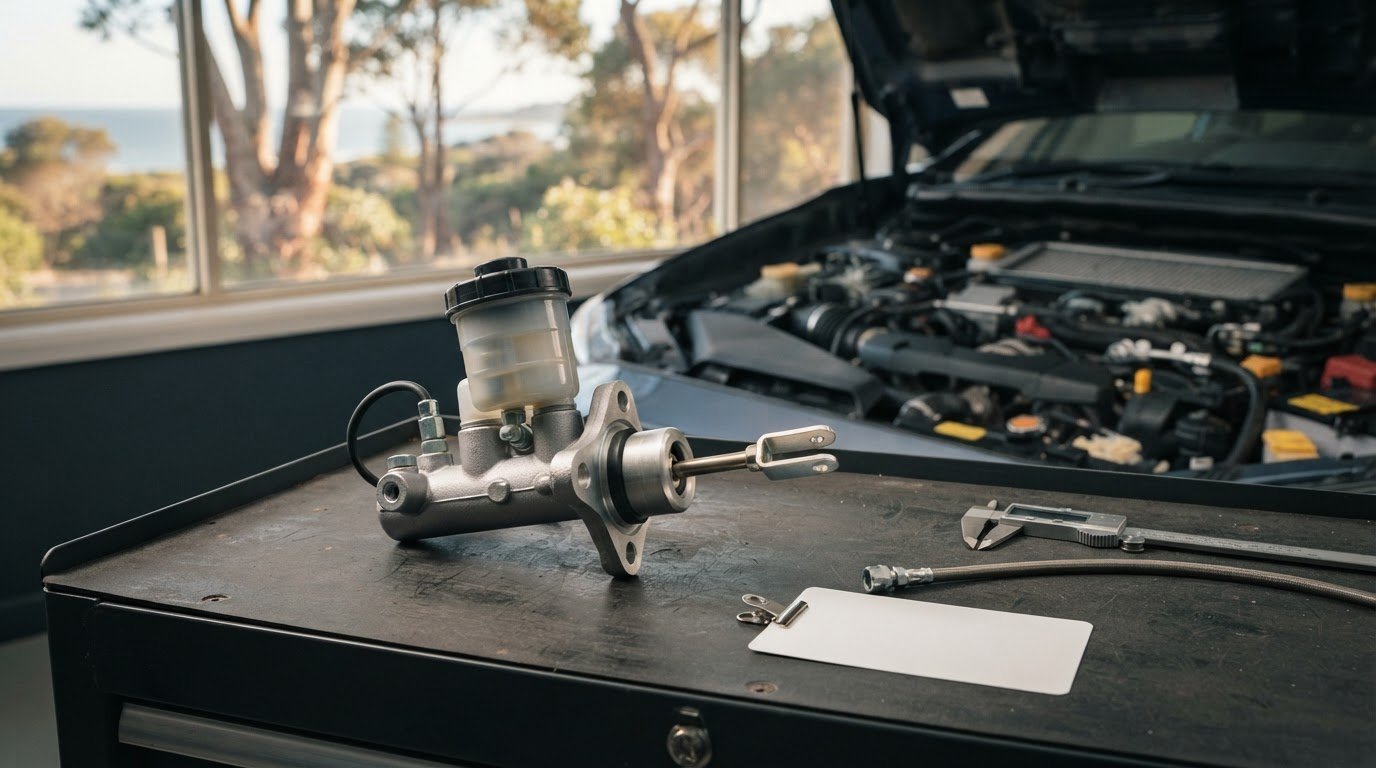
A clutch symptom doesn’t confirm the master cylinder is at fault. A soft pedal, difficult gear selection or fluid loss can point to a hydraulic problem, but the correct replacement depends on your vehicle and the part’s specifications. This clutch master cylinder australia guide explains how the cylinder transfers pedal force through the hydraulic system and what to check before ordering.
Start by recording your vehicle’s make, model, year, engine and transmission. Then compare the listing with the original part’s bore size, pushrod length and mounting layout. This guide covers those fitment checks, when to seek a mechanic’s diagnosis and how to source parts through an Australian online retailer. Ozi Auto Parts supplies automotive parts to Australian customers but doesn’t offer fitting services. Use the checks below to reduce the risk of ordering the wrong component, such as a brake hydraulic part instead of a clutch part.
Key Takeaways
- This clutch master cylinder australia guide explains how pedal input creates hydraulic pressure to operate the clutch slave cylinder.
- Check your vehicle’s make, model, year, engine and transmission before comparing parts.
- Use build details, the VIN or the existing part number to distinguish between vehicle variants.
- Get a professional diagnosis before choosing a replacement. Pedal or shifting symptoms alone don’t confirm which component has failed.
What does a clutch master cylinder do, and what symptoms can it cause?
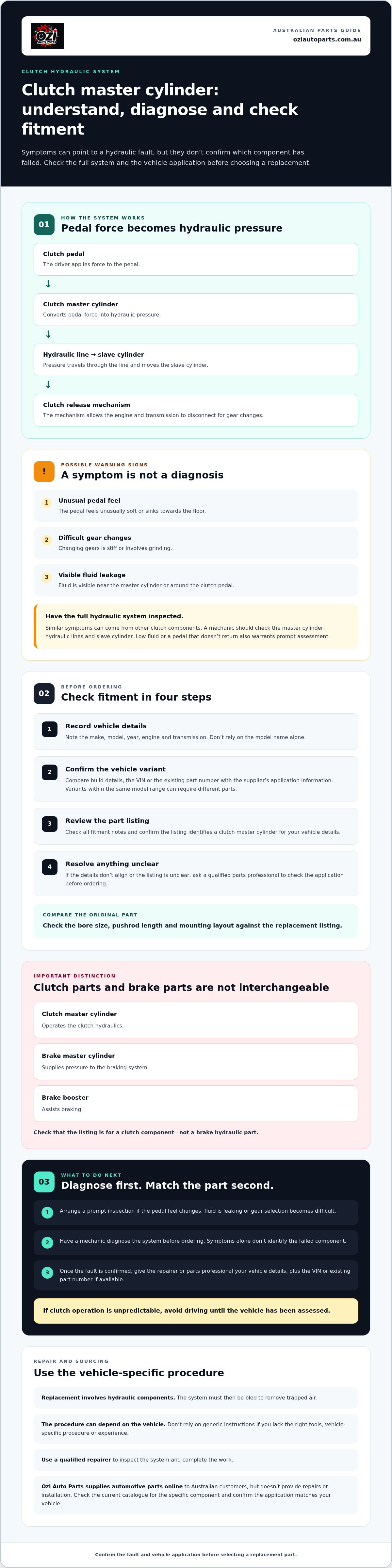
In a manual vehicle, the clutch master cylinder converts force from the clutch pedal into hydraulic pressure. That pressure travels through the clutch hydraulic line to the slave cylinder, which moves the clutch release mechanism so the engine and transmission can disconnect for gear changes. This is the clutch application of the master cylinder principle: converting applied force into hydraulic pressure.
If you’re researching a clutch master cylinder australia replacement, knowing the possible symptoms can help you decide when to arrange an inspection. Symptoms alone, however, can’t identify the failed component.
How can you tell whether the clutch master cylinder needs inspection?
Arrange an inspection if clutch operation changes. Watch for these possible warning signs:
- A pedal that feels unusually soft or sinks towards the floor.
- Difficulty changing gears, including stiffness or grinding.
- Visible fluid leakage near the master cylinder or around the clutch pedal.
These signs can point to a hydraulic fault, but other parts of the clutch system can cause similar problems. A mechanic should inspect the full hydraulic system, including the master cylinder, lines and slave cylinder, before attributing the fault to one component. Low fluid or a pedal that doesn’t return also warrants prompt assessment.
The clutch master cylinder uses pedal force to create hydraulic pressure that operates the clutch slave cylinder. Confirm the cause before selecting a replacement. A diagnosis helps avoid ordering a part when the fault lies elsewhere.
How to check clutch master cylinder fitment in Australia?
Correct fitment depends on the vehicle application, not just the part name. Before ordering a clutch master cylinder in Australia, match the listing to your vehicle and check that it identifies a clutch component. A clutch master cylinder operates the clutch hydraulics. A brake master cylinder supplies pressure to the braking system, while a brake booster assists braking. These parts aren’t interchangeable.
- Record the vehicle details: Confirm the make, model, year, engine and transmission.
- Check the variant: Compare build details, the VIN or the existing part number with the supplier’s application information. Variants within the same model range can require different parts.
- Review the listing: Read all fitment notes and verify that the listing identifies a clutch master cylinder for your vehicle details.
- Resolve uncertainty before ordering: Ask a qualified parts professional to check the application if the details don’t align or the listing is unclear.
Which vehicle details help identify the correct clutch master cylinder?
Use the identification details requested by the supplier, then compare each one against the listing. Don’t rely on the model name alone. For background on a different component, How master cylinders work explains the brake master cylinder and its circuits. This can help clarify the distinction, but it doesn’t confirm clutch-part fitment.
When searching for a clutch master cylinder in Australia, check the application notes before ordering. Ozi Auto Parts is an Australian online parts retailer. Review its automotive parts catalogue and compare your vehicle details with the relevant listing. Check the current catalogue to confirm whether the specific component is listed and whether the application matches.
What should you do next if the clutch master cylinder may have failed?
Arrange a prompt inspection if the clutch pedal changes feel, fluid is leaking or selecting gears becomes difficult. These symptoms can point to a hydraulic fault, but they don’t identify the failed part by themselves. Have a mechanic diagnose the system before ordering a replacement. If clutch operation is unpredictable, avoid driving the vehicle until it’s been assessed.
Once the fault is confirmed, match the replacement to the vehicle’s exact application. Give the repairer or parts professional the make, model, year, engine and transmission details, along with the VIN or existing part number if available. The clutch system connects and disconnects the engine and transmission, as explained in how clutches connect the engine and transmission. Diagnosis still determines which component needs replacement.
Can you replace a clutch master cylinder yourself?
Replacement involves hydraulic components, followed by bleeding the system to remove trapped air. The correct procedure can depend on the vehicle. Don’t rely on generic instructions if you lack the right tools, vehicle-specific procedure or experience. Use a qualified repairer to inspect the system and complete the work. Ozi Auto Parts supplies automotive parts online to Australian customers but doesn’t provide repairs or installation.
For clutch master cylinder australia searches, confirm the diagnosis and exact fitment before selecting a part. Browse the Australian automotive parts catalogue, then check the relevant listing for the component and its application before ordering.
Confirm the fault, then source the right part
A change in pedal feel, fluid leakage or difficult gear selection calls for a professional inspection. These symptoms don’t confirm that the master cylinder has failed. Once the cause is diagnosed, match the replacement to your vehicle’s make, model, year, engine and transmission. Check the listing against the build details, VIN or existing part number before ordering.
Use this clutch master cylinder australia guide as a fitment checklist. Confirm the component and vehicle application, then resolve any mismatch with a qualified parts professional. Ozi Auto Parts is an Australian online parts retailer with nationwide delivery. Its catalogue includes clutch kits, but clutch master cylinder availability isn’t confirmed, so check current listings and application details.
Browse the Australian parts catalogue and check the listing against your vehicle details before ordering.
Frequently Asked Questions
What does a clutch master cylinder do?
A clutch master cylinder converts force from the clutch pedal into hydraulic pressure. That pressure travels through the hydraulic line to the slave cylinder, which moves the clutch release mechanism. This lets the engine and transmission disconnect so the driver can change gears. It’s part of the clutch hydraulic system, not the vehicle’s braking system.
What are the signs of a failing clutch master cylinder?
Possible warning signs include a soft or sinking clutch pedal, difficulty changing gears, fluid leakage near the cylinder or clutch pedal, and a pedal that doesn’t return. These symptoms can indicate a hydraulic fault, but they don’t confirm the master cylinder is the cause. A mechanic should inspect the full hydraulic system before you choose a replacement.
How do I find the correct clutch master cylinder for my car in Australia?
Start with your vehicle’s make, model, year, engine and transmission. Compare these details with the supplier’s listing and application notes. If variants differ, check the build details, VIN or existing part number as well. This fitment check for a clutch master cylinder in Australia helps distinguish the correct clutch component from a brake master cylinder or brake booster.
Can I drive with a faulty clutch master cylinder?
Driving with a suspected faulty clutch master cylinder isn’t recommended. A soft or sinking pedal, fluid leak or difficulty selecting gears can make clutch operation unpredictable. Arrange a prompt inspection by a qualified mechanic. If the clutch response has changed or you’re unable to select gears reliably, don’t continue driving the vehicle; organise appropriate assistance instead.