
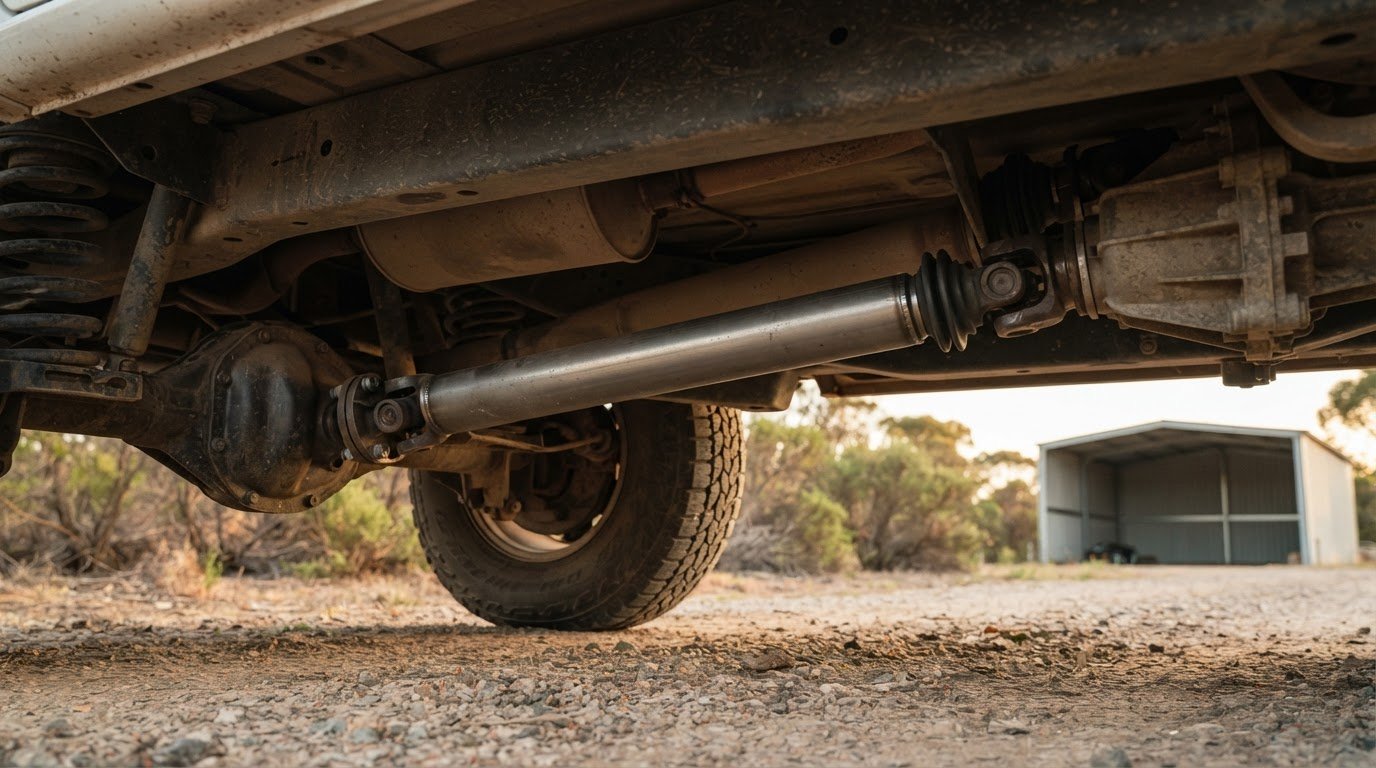
A tailored tailshaft starts with the required fit, not a catalogue guess. Custom tailshaft components in Australia can be specified for a shaft that needs shortening, lengthening, re-tubing or complete manufacture. The right option depends on the vehicle’s drivetrain, required length and connection points.
Getting those details right is central to placing an effective order. This guide explains what each type of tailshaft work involves, which specifications shape the finished component and what information helps define your order. You’ll also learn what to expect as a custom tailshaft moves from requirements to manufacture, so you can make a more informed decision for your vehicle.
Key Takeaways
- Identify whether the tailshaft needs shortening, lengthening, re-tubing or full manufacture before defining the order.
- Accurate length measurements and drivetrain connection details help specify a tailshaft for the vehicle.
- Match the universal joint and yoke specifications to the application; joint series differ in dimensions and use.
- Ozi Auto Parts supplies driveshafts and related automotive parts to help with your component selection.
Tailshaft shortening, lengthening and re-tubing
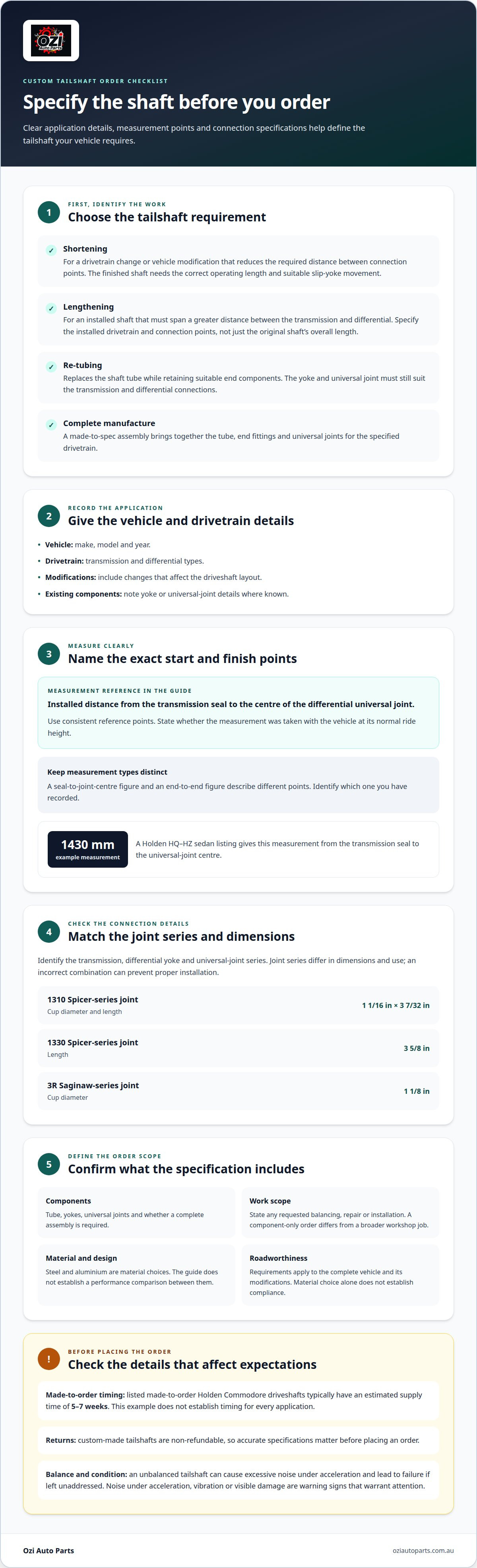
Shortening adjusts a tailshaft when a drivetrain change or vehicle modification reduces the required distance between connection points. The finished shaft needs the correct operating length, with suitable movement at the slip yoke. A measurement between the transmission seal and universal joint centre provides a clear reference. A Holden HQ-HZ sedan listing, for example, gives 1430 mm for this measurement.
Lengthening is needed when the installed shaft must span a greater distance between the transmission and differential. The required length depends on the installed drivetrain and connection points, not simply the original shaft’s overall length. Record the measurement reference clearly: a seal-to-joint-centre figure and an end-to-end figure describe different points.
Re-tubing replaces the shaft tube while retaining suitable end components. It may be relevant if the tube is damaged or a changed length requires a different tube. The yoke and universal joint must still suit the transmission and differential connections. An incorrect combination can prevent proper installation.
Joint dimensions help identify the correct connection:
- A 1310 Spicer-series universal joint has a cup diameter of 1 1/16 inches and a length of 3 7/32 inches.
- A 1330 Spicer-series joint measures 3 5/8 inches long.
- A 3R Saginaw-series joint has a 1 1/8-inch cup diameter.
Before selecting custom tailshaft components in Australia, identify the transmission, differential yoke, joint series and measurement points. These details help distinguish a shortened shaft from a lengthened or re-tubed assembly. Correct balance also matters: an unbalanced tailshaft can cause excessive noise under acceleration and lead to failure if left unaddressed.
Custom order process
Start by recording the vehicle and drivetrain details: make, model, year, transmission and differential. Then describe whether the shaft needs shortening, lengthening or replacement. For a modified vehicle, include changes that affect the driveshaft layout. This establishes the intended application rather than relying on the original factory configuration.
Measure the installed distance from the transmission seal to the centre of the differential universal joint. Use consistent reference points and state whether you measured with the vehicle at its normal ride height. Identify the points clearly, since a seal-to-joint-centre figure differs from an end-to-end measurement.
- Provide the vehicle and drivetrain details, including transmission and differential types.
- Give the measurement and identify its exact start and finish points.
- Describe the required change and any existing yoke or joint details.
These details help define shaft length, connection ends and components. They also help narrow suitable options in the driveshaft range. Listed made-to-order Holden Commodore driveshafts typically have an estimated supply time of 5-7 Weeks. That example does not establish timing for every application. Custom-made tailshafts are non-refundable, so accurate specifications matter before placing an order. Include any drivetrain changes in the order details, so the intended setup is clear.
Custom tailshaft manufacturing
Custom manufacture brings together a tube, end fittings and universal joints for the specified drivetrain. Select components by application and connection dimensions, not by material name alone. While passenger and light commercial builds rely on tailored component fabrication, heavy industrial operations face similar demands when maintaining driveline assemblies and plant machinery; organisations managing heavy fleets abroad can consult mining equipment suppliers Zambia for heavy machinery, utility vehicles, and specialised equipment solutions.
Materials and design options
Steel and aluminium are material choices, but the supplied facts do not establish a performance comparison between them. Specify the material required for the application alongside the shaft design and connection details. Joint series also affects fit: the listed 1310 Spicer and 3R Saginaw joints have different cup diameters. Roadworthiness requirements apply to the complete vehicle and its modifications, so a material choice alone does not establish compliance.
Component costs
Custom tailshaft costs depend on the parts and work required. The tube, yokes, universal joints and whether you need a complete assembly all affect the component scope. Compare like-for-like specifications, including connection types and any requested balancing, repair or installation. A component-only order differs from a broader workshop job, so define the scope before comparing options.
Manufacturing and delivery time
Manufacturing and delivery timing depends on the shaft specification, component selection and destination. Provide complete vehicle and drivetrain details to keep the order specification clear. Noise under acceleration, vibration or visible damage are warning signs that warrant attention; a damaged driveshaft can place pressure on other vehicle parts. When replacing surrounding wear items or sourcing related spares, suppliers such as cantonautoparts.com.au provide a wide range of aftermarket automotive parts. Balancing, repairs and installation are workshop tasks, distinct from buying driveshaft components. For parts selection, use the specified vehicle application and connection details.
Ozi Auto Parts
Ozi Auto Parts is a practical next step when you need automotive components for a tailshaft project. Its range includes driveshafts, 4WD upgrade parts, steering and suspension parts, and brake system parts. These categories support broader vehicle component selection alongside a driveshaft requirement.
Start with the application. Note the vehicle make, model and year, plus the transmission and differential details relevant to the driveshaft. This helps narrow the parts selection and distinguish a replacement component from requirements for a modified vehicle. Clear specifications are useful when selecting any vehicle part.
For a 4WD build, the 4WD upgrade parts range is relevant to upgrade planning. Steering and suspension parts address other component needs, while brake system parts support brake-related requirements. Keep these categories distinct: they complement a vehicle project but don’t replace accurate driveshaft specifications or specialist manufacturing, balancing and installation work.
Ozi Auto Parts supplies automotive parts to Australian customers, including driveshafts and related components. Contact Ozi Auto Parts with your vehicle details and the parts requirements you’ve identified.
Move your tailshaft order forward
A tailored tailshaft order is only as useful as the information behind it. Before taking the next step, gather the vehicle details and requirements that define the application. Clear specifications provide a practical starting point and keep the focus on the right component for your setup.
For custom tailshaft components in Australia, match your next step to the work required. If you’re selecting a driveshaft or related automotive parts, Ozi Auto Parts can help you find relevant parts for your vehicle. The catalogue also includes brake system parts and 4WD upgrade parts, supporting broader component requirements without losing sight of the tailshaft application.
Use the details you’ve gathered to start a focused enquiry. Contact Ozi Auto Parts today to discuss the parts you need. A clear starting point makes it easier to move your order ahead with confidence.
Frequently Asked Questions
What custom tailshaft components are available in Australia?
Australian custom tailshaft orders can involve shortening, lengthening, re-tubing or manufacturing a complete shaft. The assembly can include a tube, yokes and universal joints selected for the drivetrain connections. Ozi Auto Parts supplies driveshafts, but component selection should match the vehicle and intended setup. A tailored requirement starts by identifying which shaft or connection needs changing.
What information is needed to order a custom tailshaft in Australia?
Provide the vehicle make, model and year, transmission and differential details, plus the required change. Include the measurement and clearly identify its start and finish points. State whether the details describe the current setup or intended configuration, particularly after a drivetrain modification. Information about the existing yoke and universal joint also helps define the connection requirements.