
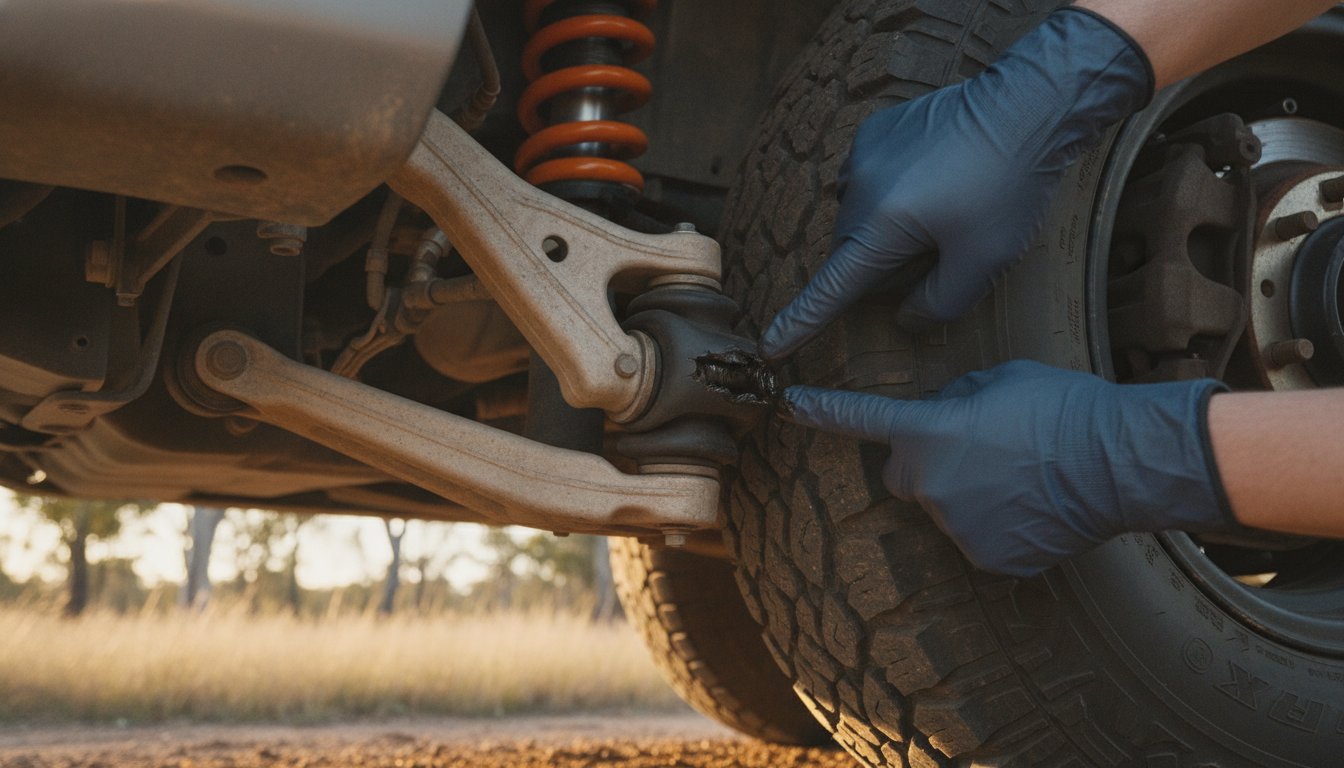
You're navigating a tight turn on a remote track when a rhythmic clicking starts echoing from the front end. This sound isn't just an annoyance; it's a warning of imminent drivetrain failure. Identifying cv joint failure symptoms early is the difference between a controlled DIY repair and a total mechanical breakdown in the middle of the scrub. Most drivers fear being stranded or overcharged by workshops for parts that don't solve the actual problem.
It's difficult to distinguish between a failing wheel bearing and a worn CV joint without a technical breakdown. This guide provides a diagnostic checklist to help you isolate specific wear patterns in your driveshafts with precision. We'll examine the mechanical indicators of inner versus outer joint failure and the urgency of grease leaks. You'll gain the technical insight needed to order the correct replacement components and restore your vehicle's performance without the workshop markup.
Key Takeaways
- Master the mechanics of torque transfer and vertical suspension travel management.
- Identify specific cv joint failure symptoms including low-speed clicking and rhythmic high-speed knocking.
- Differentiate between outer joint steering fatigue and transmission-side inner joint wear.
- Evaluate the cost-efficiency of full driveshaft assembly replacement against labour-intensive individual component repairs.
- Recognise the urgency of grease leaks and boot damage to avoid total drivetrain breakdown on the road.
Understanding CV Joint Function and Failure Modes
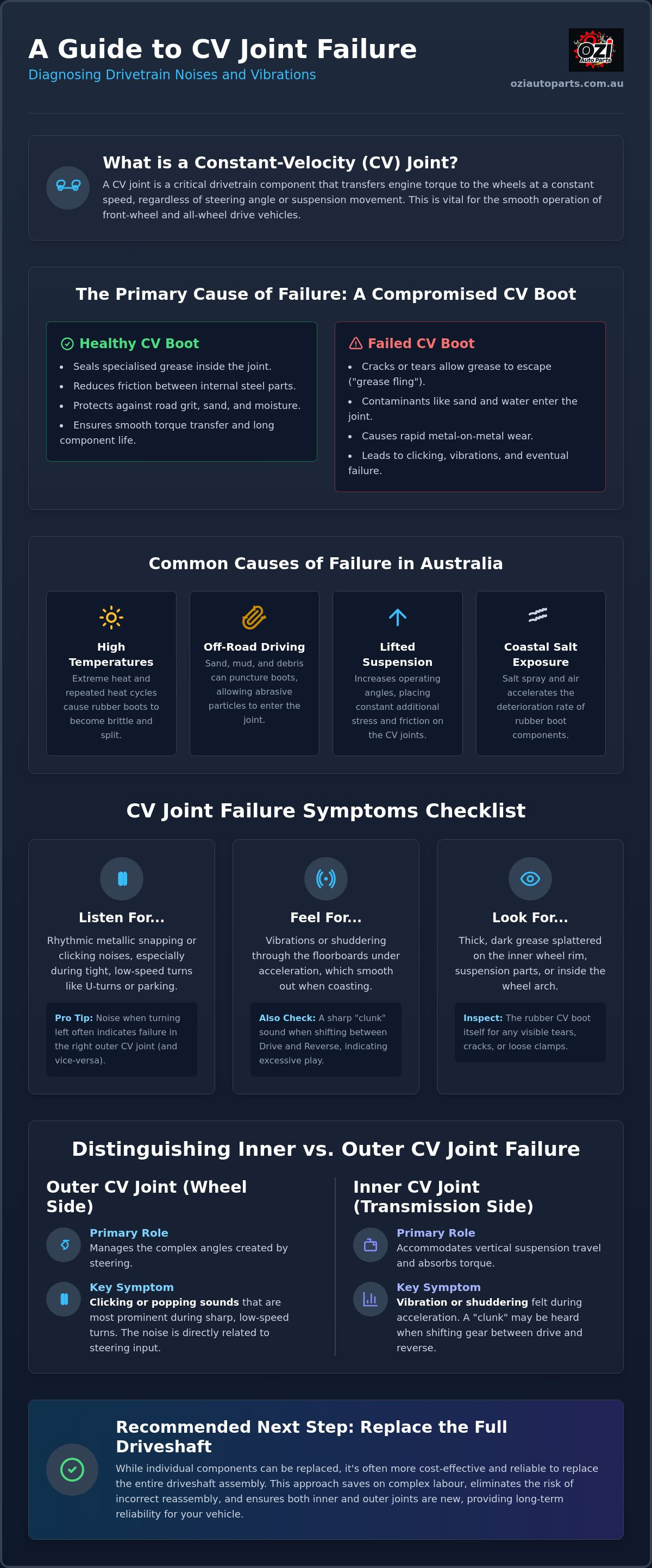
A Constant-velocity joint is a critical drivetrain component. It transfers engine torque from the transmission to the drive wheels at a steady rotational speed. Unlike standard universal joints, these units handle the complex geometry of steering and vertical suspension movement simultaneously. This is vital for front-wheel drive and all-wheel drive systems. Precision engineering ensures power delivery remains smooth even at extreme angles. Constant velocity is maintained throughout the full range of motion.
Mechanical integrity depends on internal lubrication. When components wear, specific cv joint failure symptoms begin to manifest. Most issues originate from the failure of external seals rather than the steel internals themselves. Compromised boots allow critical lubrication to escape while admitting road grit.
To better understand this concept, watch this helpful video:
The Role of the CV Boot
Protective boots seal specialised molybdenum grease inside the joint assembly. This high-viscosity lubricant reduces friction between the steel balls and the housing. Cracks or tears lead to "grease fling." This is often visible as dark residue on the inner wheel rim or suspension components. Once the grease is gone, metal-on-metal contact occurs. The CV boot is the primary line of defence against grit and moisture.
Common Causes of Failure in Australia
Harsh environmental factors dictate the lifespan of Australian driveshafts. High-ambient temperatures and repeated heat cycles cause rubber boots to become brittle and split. This is common in the outback or during long highway hauls. Off-road driving in sand or mud punctures boots frequently. This allows abrasive particles to enter the assembly. For 4WD owners, lifted suspension increases operating angles. This creates additional stress on the joint. Increased friction leads to premature wear and cv joint failure symptoms. Salt exposure in coastal regions also accelerates the perish rate of rubber components.
The CV Joint Failure Symptoms Checklist
Identifying cv joint failure symptoms requires a systematic approach. Drivers often confuse drivetrain issues with suspension or wheel bearing faults. Use this diagnostic checklist to isolate the source of mechanical interference before it leads to a total loss of drive. Early detection is critical for maintaining vehicle safety and avoiding expensive recovery fees.
Auditory Indicators of Wear
Listen for metallic snapping or clicking sounds during tight, low-speed manoeuvres. This typically occurs during U-turns or while parking. The sound intensifies when throttle is applied while the steering rack is at full lock. Distinguish between CV noise and wheel bearing hum. Bearing noise is a constant drone that changes pitch with speed. CV noise is rhythmic and reacts specifically to steering input. Isolate the sound by side. If the noise occurs when turning left, it often indicates the right (outer) joint is under load and failing. Reviewing common faults, causes, and symptoms helps confirm these auditory patterns.
Physical Vibrations and Handling Issues
Vibration under load is a classic indicator of inner CV joint failure. If the floorboards shudder during hard acceleration but smooth out at coasting speeds, the transmission-side joint is likely worn. Check for driveline "clunk." A sharp mechanical sound when shifting from Drive to Reverse suggests excessive play in the joint splines. Seized joints can also cause a binding sensation. This results in a bouncy or stiff driving feel on smooth bitumen. For Australian 4WD owners, lifted suspension geometry puts constant stress on these components. High-angle wear is common in modified rigs. If you notice these handling changes, sourcing reliable driveshafts for a DIY replacement is the most efficient path forward.
Visual Inspection Points
- Check wheel arches for thick, dark grease splattered on the tyre sidewall.
- Inspect the CV boot for tears, cracks, or perishing rubber.
- Look for sand or salt crusting around the boot folds, especially after beach driving.
- Verify the security of the metal boot clamps; loose clamps allow grease to escape under centrifugal force.
Distinguishing Inner vs. Outer CV Joint Failure
Precise diagnosis depends on understanding the specific mechanical role of each joint. Driveshafts feature two distinct CV joints. The outer joint sits at the wheel hub. The inner joint connects to the transmission or differential. While both contribute to cv joint failure symptoms, their failure modes differ significantly. Localising the fault prevents the unnecessary replacement of functional components.
Outer CV Joint: Steering and Turning
Outer CV joints utilize a ball-type design. This configuration handles extreme angles during steering manoeuvres. These components typically fail first because they endure the highest range of motion. The ball tracks are highly sensitive to grit ingress. Once a boot tears, road grime acts as an abrasive paste. This wears down the internal surfaces rapidly. Failure is almost always auditory. Perform a circle test in an empty car park to confirm. Drive in tight circles at low speed. A rhythmic clicking or snapping indicates the outer joint requires immediate replacement. For those weighing up repair paths, see APG Auto Parts: Comparing Aftermarket Driveshafts for Australian Vehicles for technical comparisons.
Inner CV Joint: Acceleration and Load
Inner joints feature a tripod-type assembly. This design allows the driveshaft to change length as the suspension moves vertically. Unlike the outer joint, the inner joint rarely clicks. Instead, wear manifests as "pitting" in the internal housing. This creates a distinct side-to-side shudder. It's most noticeable under heavy acceleration or when towing heavy loads. 4WD owners should inspect inner joints after intense beach driving or mud work. Contaminants bypass even small boot tears easily. While inspecting the driveline, other Brake system parts should be checked for secondary damage. Excessive vibration often loosens caliper bolts or accelerates pad wear. Order high-spec driveshafts to resolve these failure modes permanently.
Outer joints fail from steering fatigue. Inner joints fail from load stress and suspension travel. Identifying the correct failure mode ensures you purchase the exact component needed for your vehicle's drivetrain layout.
Next Steps: Sourcing Quality Driveshaft Components
Ignoring cv joint failure symptoms compromises vehicle safety. A severely worn joint can snap or seize without warning. This results in a total loss of drive to the wheels. In front-wheel drive vehicles, this creates an immediate roadside hazard. Replacing the entire driveshaft assembly is often the most cost-effective solution. The labour required to clean, inspect, and rebuild an old shaft frequently exceeds the price of a brand-new assembly. New units provide fresh boots, grease, and joints in a single pre-assembled package.
Ensure all replacement parts meet or exceed OEM specifications. Australian vehicles often require higher load ratings due to heavy towing and off-road use. Verify fitment by checking the exact make, model, and manufacture year. This ensures the spline count and shaft length match your existing drivetrain exactly. Precision fitment is the only way to prevent driveline vibration and premature wear on the transmission seals.
DIY vs. Professional Installation
Driveshaft replacement is an achievable task for those with intermediate mechanical skills. You will need a heavy-duty jack, stands, and a comprehensive socket set. A torque wrench is mandatory for the hub nut. Incorrect torque settings lead to premature wheel bearing failure or loose assemblies. While the vehicle is raised, take the opportunity to perform a full safety check. Inspect your brake boosters, fluid lines, and steering rack boots for signs of perishing or leaks.
Ordering from Ozi Auto Parts
Browse our extensive catalogue for driveshafts and CV components tailored for the Australian car parc. We focus on providing high-performance parts that withstand local conditions. Direct-to-customer shipping ensures you receive the hardware needed without excessive workshop markups. Our inventory depth allows for rapid dispatch across the country. Address your cv joint failure symptoms today to maintain vehicle reliability.
Shop Driveshafts and Mechanical Spares at Ozi Auto Parts
Restore Drivetrain Performance and Safety
Accurate diagnosis is the first step toward a successful DIY repair. Distinguishing between outer joint clicking and inner joint vibration ensures you order the correct assembly for your vehicle. Addressing these cv joint failure symptoms immediately prevents a total loss of drive while touring or commuting. It's more efficient to replace the entire driveshaft than to struggle with individual joint rebuilds in a home garage. This approach restores your drivetrain to factory standards with minimal downtime.
Ozi Auto Parts provides technical expertise in drivetrain spares to help you select the right components for your specific vehicle. We maintain an extensive inventory of specialised 4WD mechanical components designed for harsh Australian conditions. Benefit from nationwide Australian shipping and get your vehicle back on the road without the workshop markup. Browse our range of Driveshafts and CV Joints to restore your vehicle's reliability today. Proper maintenance keeps your adventures moving forward with confidence.
Frequently Asked Questions
Can I drive with a clicking CV joint?
Driving with a clicking joint is not recommended and poses a significant safety risk. The noise indicates that internal components are already compromised. Total failure can happen at any time; this results in a loss of power to the wheels and can cause the vehicle to pull sharply to one side. If a joint seizes while at highway speeds, it can lead to catastrophic drivetrain damage or an accident.
What noise does a bad CV joint make?
A failing outer joint produces a rhythmic clicking or popping sound specifically during low-speed turns or U-turns. This noise increases in frequency as vehicle speed rises. Conversely, a failing inner joint typically creates a "clunk" when shifting gears or a side-to-side shudder during hard acceleration. Identifying these cv joint failure symptoms early prevents total mechanical breakdown on remote tracks or highways.
Is it better to replace the CV joint or the whole driveshaft?
Replacing the entire driveshaft assembly is generally the most efficient and cost-effective option. Rebuilding a single joint requires extensive labour to clean, inspect, and reassemble the unit. A complete new assembly ensures both inner and outer joints, as well as the protective boots, are fresh and correctly balanced. This reduces the risk of secondary failure and simplifies the DIY installation process.
How much does it cost to fix a CV joint in Australia?
Repair costs vary based on vehicle complexity and the extent of the damage. In Australia, a standard CV joint replacement typically ranges from $350 to $1,300 per side. A full CV shaft replacement often costs between $430 and $800. European models or performance 4WDs usually sit at the higher end of this scale due to more complex suspension geometry and higher component costs.
How long do CV joints usually last on 4WDs?
CV joints on standard vehicles often last between 100,000 and 150,000 kilometres under normal conditions. However, 4WDs used for frequent off-roading or beach driving face a shorter lifespan due to grit ingress and salt exposure. Lifted suspension also increases operating angles, which accelerates internal wear. Regular inspection of the rubber boots is essential to identify cv joint failure symptoms before the internal lubrication is lost.