The stiffest spring isn’t automatically the right spring. Choosing heavy duty leaf springs in Australia starts with the load your vehicle carries, including accessories and the gear you add for work or touring. A spring set matched to that load is a better starting point than simply choosing the heaviest option.
Load changes affect which spring specification suits your setup. This guide explains how to match springs to vehicle loads and accessories, when an extra-leaf helper spring may provide additional support under load, and what affects price. You’ll also learn which vehicle details matter for fitment so you can narrow down the right suspension parts for your application.
Key Takeaways
- Match spring load rating to the vehicle’s carried weight, accessories and intended setup, not just the model name.
- Use vehicle-specific fitment details, including build month and year where relevant, to narrow the spring options.
- Consider an extra leaf helper spring when additional support is needed under load; its suitability depends on the vehicle and setup.
- Compare prices by vehicle application and spring specification, then explore Ozi Auto Parts’ suspension and 4WD upgrade parts for your requirements.
Spring options for vehicle loads and accessories
Choose springs to suit the vehicle’s working load and exact model. A Ford Ranger and a Toyota Hilux need application-specific fitment.
Load ratings and vehicle weight
Match the spring rating to the weight the vehicle carries, including accessories and regular cargo. A light spring for the Ford Ranger Next Gen and second-generation VW Amarok is specified for 0-200 kg. Treat that figure as the spring’s stated load range, not a substitute for checking the vehicle’s total weight and setup.
Model-specific spring fitment and design
Spring dimensions and designs vary between models and generations. For example, Ford Ranger Next Gen and second-generation Volkswagen Amarok applications are listed separately from older Ranger models. Build month and year can also affect fitment. Use the vehicle’s exact model, generation and build details to identify the matching spring.
Standard, heavy duty and parabolic springs
Standard springs suit a vehicle’s original suspension specification. Heavy duty springs are designed for a higher working load, while parabolic springs use tapered leaves rather than a conventional, evenly stepped pack. Compare load requirements, spring design and vehicle fitment together. A higher load rating alone doesn’t make a spring the right choice.
Ride, handling, tyre wear and warranty effects
A stiffer spring can affect ride comfort and handling, particularly when the vehicle is lightly loaded. Incorrect fitment or uneven suspension can contribute to uneven tyre wear. Australian suspension modifications must meet applicable state or territory vehicle requirements. Installation should follow the spring maker’s specifications, with fasteners, bushes and alignment checked afterwards. Warranty effects depend on the warranty terms and the cause of any fault.
Extra leaf helper springs
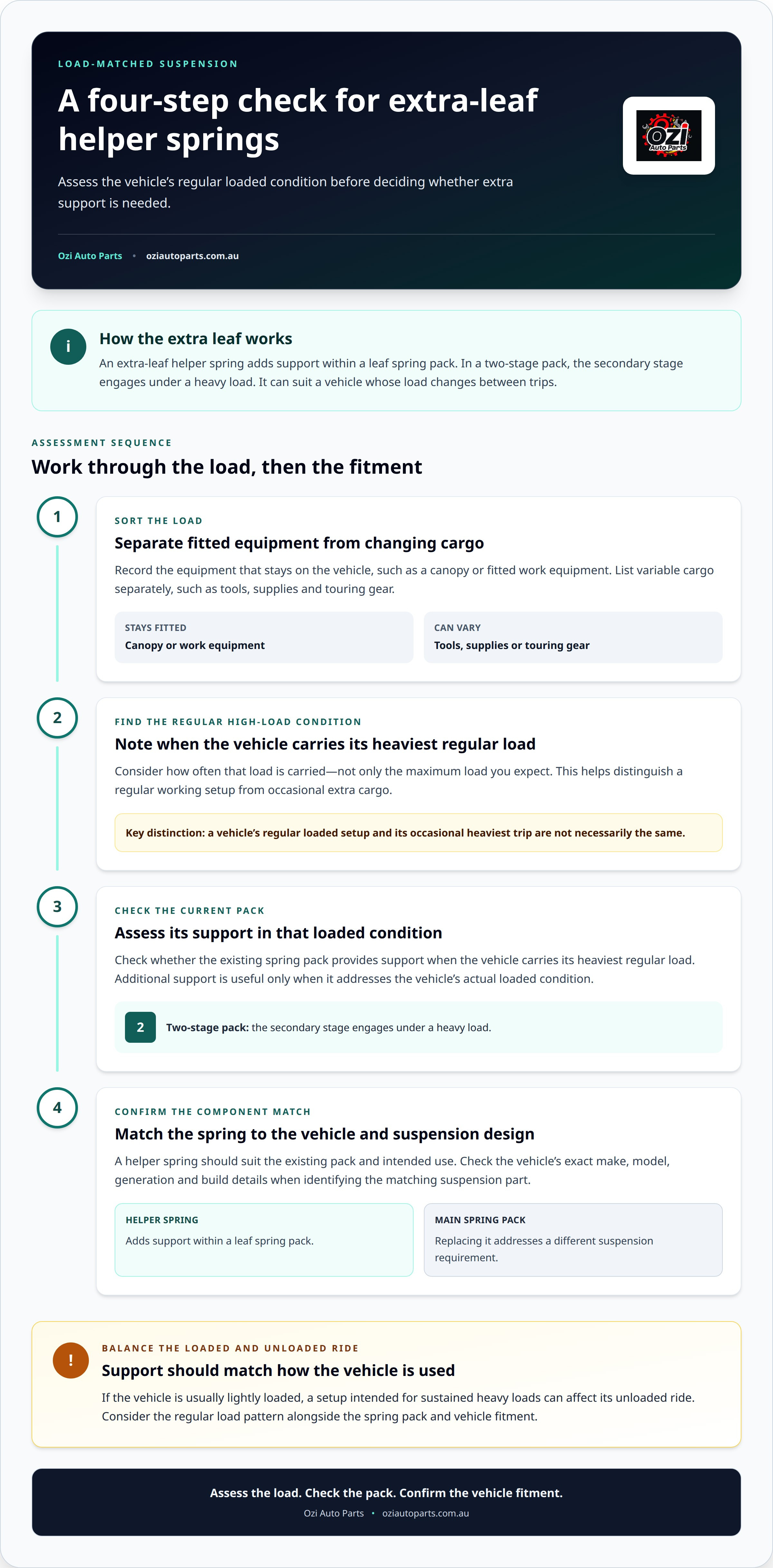
An extra-leaf helper spring provides additional support within a leaf spring pack. In a two-stage pack, the secondary stage engages under a heavy load. This arrangement can suit vehicles whose loads vary between trips. When choosing heavy duty leaf springs in Australia, consider how often the vehicle carries that extra load, not just the maximum load you expect it to carry.
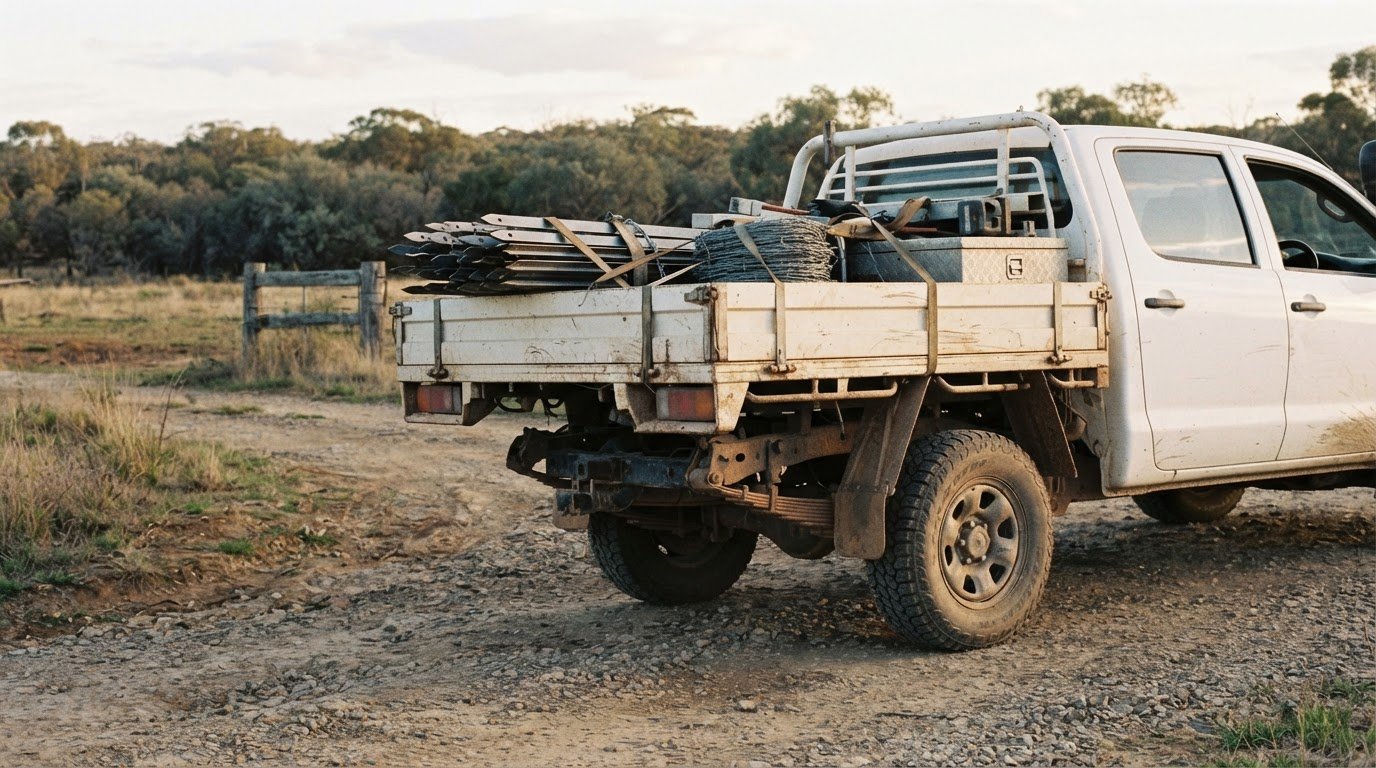
Separate permanent equipment from occasional cargo. A canopy or fitted work equipment stays on the vehicle, while tools, supplies and touring gear may vary. This distinction helps you decide whether the suspension needs support for a regular working setup or occasional loads. A helper spring should suit the existing pack and the vehicle’s intended use.
Use this sequence to assess whether a helper spring suits your setup:
- Record the equipment that stays fitted and the cargo that changes.
- Note when the vehicle carries its heaviest regular load.
- Assess whether the existing spring pack provides support in that loaded condition.
- Match any additional spring component to the vehicle’s suspension design.
Additional support is useful only if it addresses the vehicle’s actual loaded condition. If the vehicle is usually lightly loaded, a setup intended for sustained heavy loads can affect its unloaded ride. When considering heavy duty leaf springs in Australia, distinguish between a helper spring and replacing the main spring pack. They address different suspension requirements.
Leaf spring prices
Leaf spring prices depend on the vehicle application and the specification required. A rear spring for a Nissan D22 Navara is a different part from a front spring for a Toyota LandCruiser. Compare like with like: axle position, vehicle model, generation and spring load rating. A price comparison across different specifications won’t show which option best suits the vehicle.
Model range affects the available choices. For example, rear spring applications include the Mitsubishi Triton ML-MN and MQ/MR, Toyota Hilux IFS, and Isuzu Dmax from 2012 to June 2020. These are separate fitments, not interchangeable price comparisons. The spring type also matters. Light, medium, heavy and extra-heavy options represent different specifications, so compare the same rating across the correct vehicle application.
Use these steps to assess a listed price:
- Match the part to the vehicle make, model and generation.
- Confirm whether the application is front or rear.
- Compare the same load category and spring specification.
- Check whether the listing describes a single spring or a pair.
Price differences between listings can reflect different vehicle applications or specifications. A higher-rated spring isn’t automatically better value if your vehicle doesn’t need that rating. For a useful comparison, identify the correct spring first, then compare equivalent parts. Fitment and load rating matter more than the lowest displayed price alone.
These are distinct fitments.
Ozi Auto Parts
Ozi Auto Parts is a practical next step when you’ve narrowed down your vehicle’s spring requirements and need related automotive components. Its range includes 4WD upgrade parts, steering and suspension parts, brake system parts, and driveshafts. These categories support broader vehicle upgrade and replacement planning alongside suspension decisions.
Use the vehicle details from your fitment assessment to describe the part you need. Include the make, model, generation, build details and whether you need front or rear suspension components. Clear application details help focus your parts enquiry and avoid confusion between model-specific options.
- 4WD upgrade parts for vehicle upgrades.
- Steering and suspension parts for related component requirements.
- Brake system parts and driveshafts for other mechanical needs.
Turn to Ozi Auto Parts when your requirements involve these parts categories. The business supplies automotive parts to Australian customers, with nationwide delivery. Its role is parts supply, not vehicle repair or installation. Keep the spring’s load requirement and vehicle fitment in view when identifying the component your setup needs.
For a parts enquiry, include your vehicle details and the component you’re seeking. Contact Ozi Auto Parts about your parts requirements.
Frequently Asked Questions
What heavy duty leaf springs are available in Australia for different vehicle makes and models?
Options include light, medium, heavy and extra-heavy springs for selected applications. Examples in the Australian market include Ford Ranger, Toyota Hilux, Mitsubishi Triton, Mazda BT-50, Isuzu D-Max and Volkswagen Amarok models. Availability varies by vehicle and spring position. Match the part to the exact model series and front or rear axle, rather than relying on the make alone.
How much do heavy duty leaf springs cost in Australia, including fitting?
The fitted total includes the spring part cost and installation labour, which are separate costs. Part prices depend on the vehicle application, axle position and spring specification. Fitting costs also depend on the vehicle and the work involved. Ozi Auto Parts supplies automotive parts, not installation services.
How do I choose the right leaf spring load rating for towing or carrying payload?
Choose a rating to suit the vehicle’s usual loaded configuration, including accessories, cargo and any towing-related load carried by the vehicle. A trailer’s full weight and the load acting on the tow vehicle are different considerations. Identify what stays fitted, what you carry regularly and how you use the vehicle. Then match those requirements to a spring designed for that application.
Do heavy duty leaf springs increase a vehicle's legal GVM in Australia?
No. Installing heavier leaf springs alone doesn’t establish a higher legal GVM. Treat the vehicle’s approved rating as unchanged unless a separate, compliant GVM change has been completed and documented. Spring capacity and legal vehicle capacity are not interchangeable. Before relying on a different rating, establish which approved configuration applies to the vehicle and its compliance documentation.
How much lift do heavy duty leaf springs provide, and are lift kits required?
There isn’t one lift height that applies to every heavy duty spring. The result depends on spring design, the vehicle’s existing suspension and the load it carries. A load-rated replacement spring doesn’t automatically mean a lift kit is required. If you need a particular ride height, select components designed for that height and vehicle application rather than assuming the spring will provide extra lift.