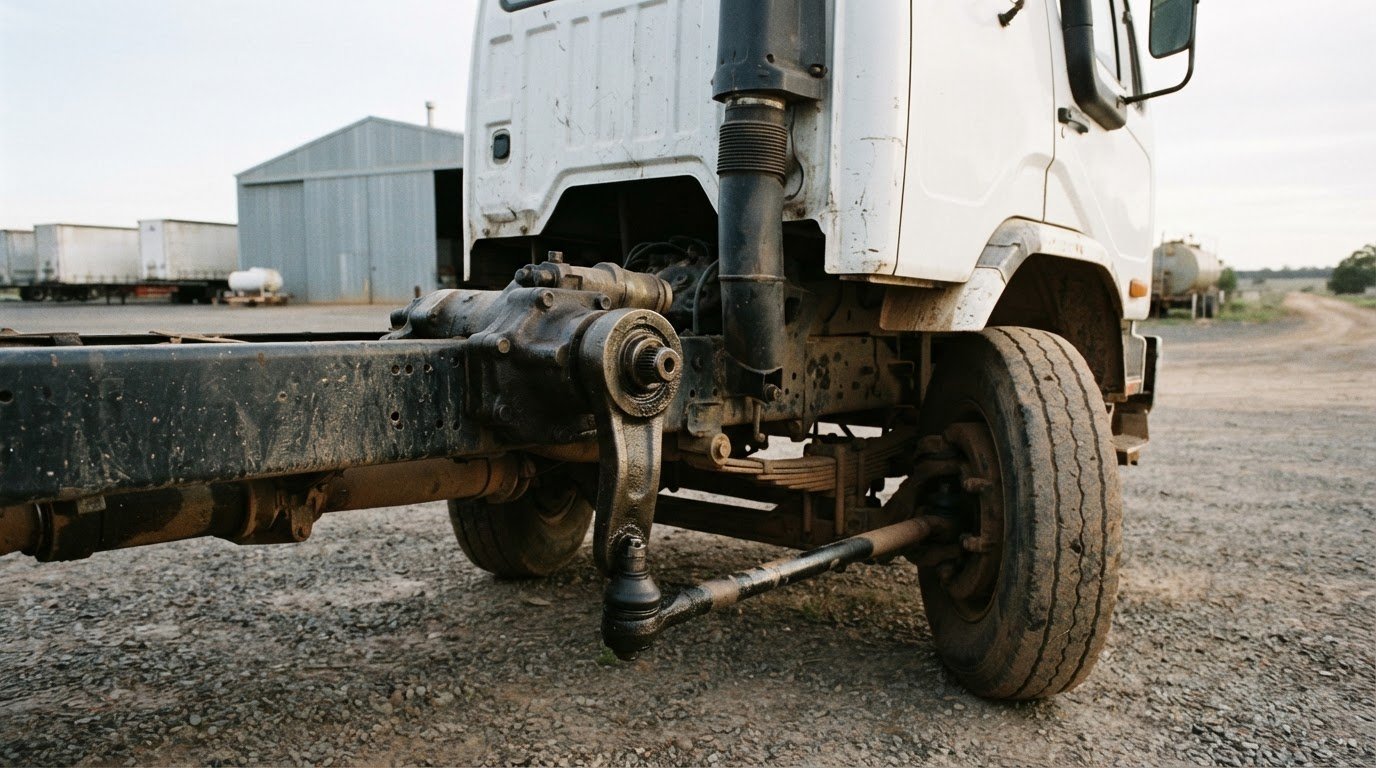
A steering component that looks right can still be the wrong fit for a truck. When sourcing a heavy duty pitman arm in Australia, compatibility with the vehicle and steering system matters more than the “heavy duty” label alone.
Availability can vary, and a backorder can affect how soon a replacement is accessible. Suitability also depends on matching the arm to the truck’s steering gear and linkage. This guide explains what to consider when sourcing a heavy-duty pitman arm for a medium or heavy truck.
You’ll find practical guidance on stock status and backorder timing, which depend on the part and supplier, plus the fitment details that help distinguish a suitable part from one that won’t match. Use these points to narrow down the correct steering component before making a purchasing decision.
Key Takeaways
- Separate current stock from backorder status, and factor supply timing into truck downtime planning.
- Match the arm to the steering box, linkage geometry and suspension lift configuration before selecting a replacement.
- Installation requires suitable removal tools and the correct service procedure; assess access and mechanical capability before starting.
- Steering and suspension parts are relevant when sourcing related components for medium and heavy trucks.
Availability and backorder
Availability depends on the truck’s make, model, year and steering-box configuration. For a heavy duty pitman arm in Australia, distinguish stock available for dispatch from a backorder awaiting supply. Check the listing status and application details before treating a part as suitable. A part described for one truck series can differ from another, even when both are medium-duty vehicles.
Backorders can arise when supplier stock is depleted or a specific application is difficult to source. For a heavy duty pitman arm in Australia, identify the truck details and part reference before planning the repair. If the existing arm has a visible marking, record it alongside the truck’s model and year. Those details help narrow the search and reduce the risk of ordering an incompatible replacement.
Australian roadworthiness and vehicle-modification requirements can vary by state or territory. A like-for-like replacement differs from a change that alters steering geometry, so assess any modification under the rules that apply where the truck is registered.
A worn or damaged pitman arm can contribute to loose steering, excess play, clunks or inconsistent steering response. Cracks, deformation or movement at the arm and linkage are warning signs. Because these symptoms can affect steering control, don’t treat them as a parts-only issue. Have the steering assembly assessed before the truck returns to service.
How do I check pitman arm compatibility with my steering box and suspension lift?
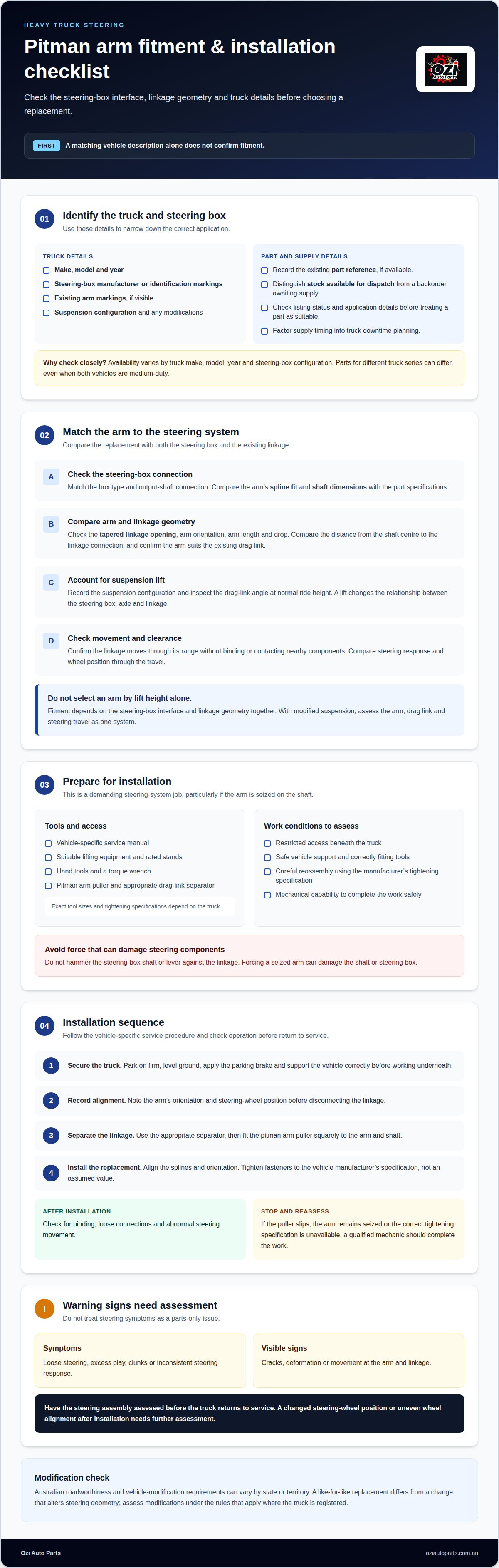
Start with the truck’s make, model, year and steering-box identification. Pitman arms differ in spline count, shaft diameter, taper, arm length and drop. A matching vehicle description alone does not confirm fitment. Compare the replacement’s application details with the existing arm and steering box.
- Identify the steering box. Record its manufacturer or identification markings, then match the box type and output-shaft connection to the part specifications.
- Compare the arm. Check the spline fit, tapered linkage opening, orientation and distance between the shaft centre and linkage connection. The replacement must suit the existing drag link.
- Account for the lift. Record the suspension configuration and inspect the drag-link angle at normal ride height. A lift changes the relationship between the steering box, axle and linkage; an arm’s drop or length can affect that geometry.
- Check movement and clearance. Confirm the linkage travels through its range without binding or contacting nearby components. Compare steering response and wheel position through the travel.
Don’t select an arm by lift height alone. The correct choice depends on both the steering-box interface and linkage geometry. If the truck has modified suspension, consider the arm, drag link and steering travel as one system. A mismatch can create poor steering geometry or restrict movement. The steering system needs assessment after installation to confirm fit and operation.
How difficult is it to install a heavy-duty pitman arm, and what tools are needed?
Installing a pitman arm is a demanding steering-system job, especially if the arm is seized onto the steering-box shaft. Access beneath a medium or heavy truck can also be restricted. Safe vehicle support, correctly fitting tools and careful reassembly matter. Forcing the arm can damage the shaft or steering box.
Typical tools include a vehicle-specific service manual, suitable lifting equipment and rated stands, hand tools, a torque wrench and a pitman arm puller. Use the appropriate separator to disconnect the drag link. Exact tool sizes and tightening specifications depend on the truck.
- Secure the truck. Park on firm, level ground, apply the parking brake and support the vehicle correctly before working underneath.
- Record alignment. Note the arm’s orientation and steering-wheel position before disconnecting the linkage.
- Separate the linkage. Use the appropriate separator, then fit the pitman arm puller squarely to the arm and shaft.
- Install the replacement. Align the splines and orientation. Tighten fasteners to the vehicle manufacturer’s specification, not an assumed value.
Do not hammer the steering-box shaft or lever against the linkage: both methods risk component damage. After installation, check for binding, loose connections and abnormal steering movement. A changed steering-wheel position or uneven wheel alignment needs further assessment. If the puller slips, the arm remains seized, or the correct tightening specification is unavailable, stop the job. A qualified mechanic should complete the installation and confirm steering operation before the truck returns to service.
Ozi Auto Parts
Contact Ozi Auto Parts with truck and part details to help identify relevant steering and suspension components. Its listed range includes steering and suspension parts, 4WD upgrade parts, brake system parts and driveshafts. For heavy-duty pitman arm sourcing in Australia, truck and steering-system details help define the relevant parts enquiry.
When sourcing a heavy duty pitman arm in Australia, have the truck’s make, model and year, steering-box identification and any suspension-lift details ready. Include markings from the existing arm, or describe its spline connection and linkage position. These details focus the search on the vehicle’s actual configuration. Mention any modifications, as they can affect fitment.
Use the same vehicle information when sourcing related steering or suspension components. A change to one part can affect how the linkage works with the rest of the system. Keeping the truck details and modification history together helps Ozi Auto Parts identify relevant parts. Ozi Auto Parts sells steering and suspension parts, as well as general automotive parts.
Please contact Ozi Auto Parts with your truck details and parts enquiry to help identify relevant parts.
Frequently Asked Questions
What is a heavy-duty pitman arm and which vehicles use one?
A heavy-duty pitman arm connects a steering box’s output shaft to the steering linkage, transferring steering movement towards the wheels. It’s used on medium or heavy trucks whose steering systems use this layout. Vehicle weight alone doesn’t determine fitment: the steering-box design and linkage arrangement must match the arm. Some 4WDs also use pitman arms, with application-specific fitment.
Which heavy-duty pitman arms are available in Australia by vehicle make and model?
Availability depends on the truck’s make, model, year and steering-box configuration. Check listing status and application details, and compare the part with the existing arm and steering box before selecting it.