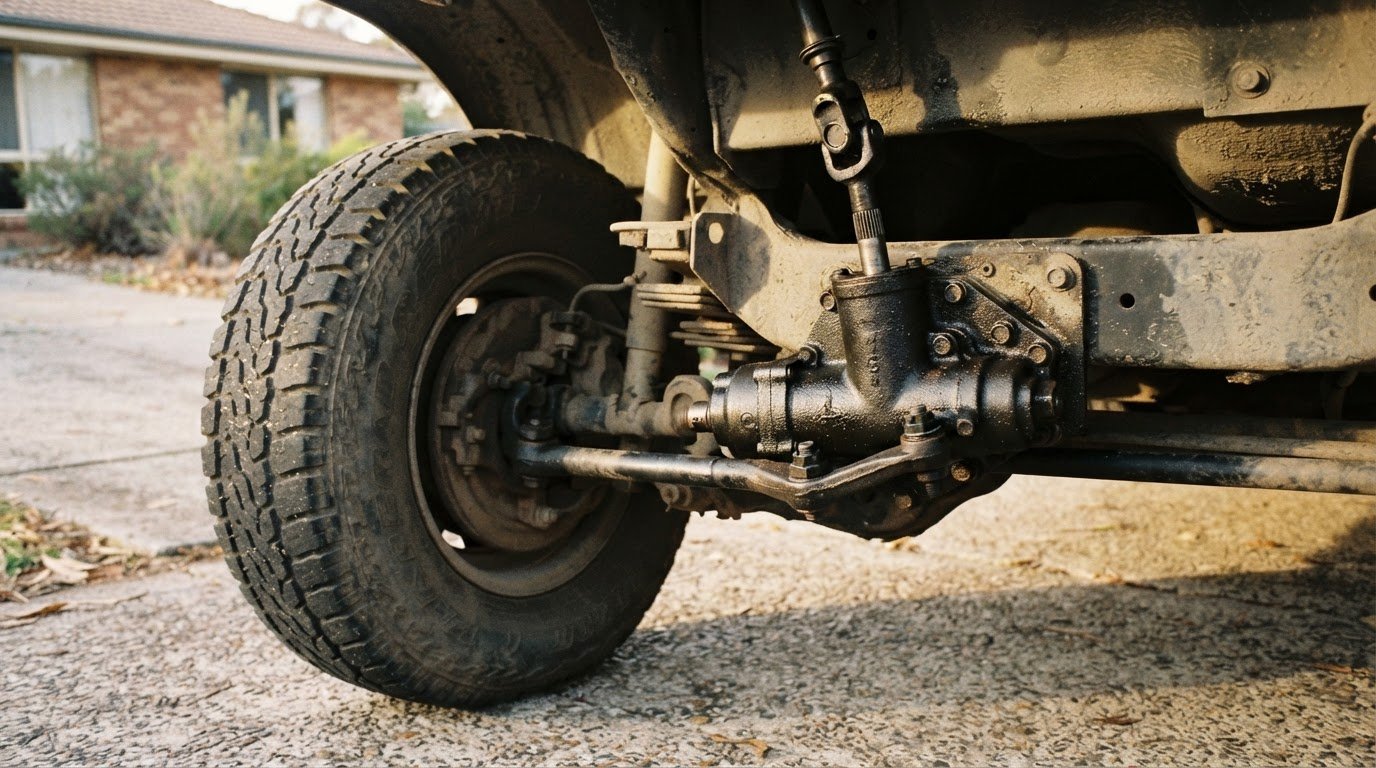
A steering box can have the right ratio and still feel wrong if friction or a mismatched input spline makes steering effort inconsistent. For a heavy duty steering box in Australia, assess steering feel, lumpiness, backlash, ratio and input spline together. The GM Saginaw 525 manual steering box has a 24:1 ratio and a 3/4-inch-30 spline input shaft.
A heavier steering feel does not automatically mean the box is stronger or better suited to the vehicle. Excess friction increases driver effort and fatigue, while a steering conversion should minimise friction without introducing backlash.
This guide explains how steering box operation affects feel and what ratios and input splines tell you about compatibility. It also covers the considerations that matter when assessing boxes for 4WDs, trucks and classic cars, including how compact designs and linkage layout can affect the steering setup.
Key Takeaways
- Assess steering lumpiness alongside friction and backlash. The balance affects steering effort and feel.
- Account for steering linkages and under-bonnet heat when considering a compact power steering box.
- Use the steering ratio to understand steering response, and the input spline to assess the shaft connection.
- Compare steering box designs against the vehicle type and steering layout, including 4WD, truck and classic car applications.
Reducing steering friction and lumpiness
Steering feel depends on friction, backlash and the condition of the linkage. Excessive friction increases driver effort and fatigue.
Heavy-duty, standard and refurbished box differences
A heavy-duty box is selected for a particular application, but its label alone does not prove lower friction or better steering feel. “Standard” describes the original design, while “refurbished” describes a reconditioned unit. Neither category guarantees a particular condition or performance.
Assess the individual box, steering ratio and shaft connection. A worn unit with free play can still feel loose, whatever its category. Matching the box to the application and checking its condition matter more than relying on the heavy-duty label.
Boxes for 4WDs, trucks and classic cars
Options in Australia depend on the vehicle and steering layout. The Cal Custom Vega steering box is a compact, brand-new alternative to the Holden HQ-style box. Its dimensions and connections are important when assessing a classic-car conversion.
A heavy-duty box can be fitted to a road vehicle only if the modification meets the requirements in the relevant Australian state or territory. Whether engineering approval applies depends on the vehicle and modification; the box label alone does not establish approval.
Failure symptoms, fitting risks and replacement
Common warning signs include leaking fluid, free play, and inconsistent or lumpy steering. Wear can result from excessive use or inadequate vehicle maintenance. Replacement may be appropriate when the box’s condition prevents consistent steering operation.
Installation cost depends on the box and the labour involved. The work includes removing the existing unit, fitting the replacement and connecting the steering linkages. Incorrect fitting or adjustment can cause excess friction or backlash, affecting steering feel and control.
Maintenance, rebuilds and warranty
Monitor leaks, free play and changes in steering effort as part of maintenance. A rebuild addresses wear in the existing box; replacement installs another unit. The right option depends on the box’s condition and the vehicle’s steering setup.
Rebuild work should restore smooth movement without introducing excess friction or backlash. Warranty coverage depends on the supplied unit’s terms, so do not assume a rebuilt box and a replacement have identical cover.
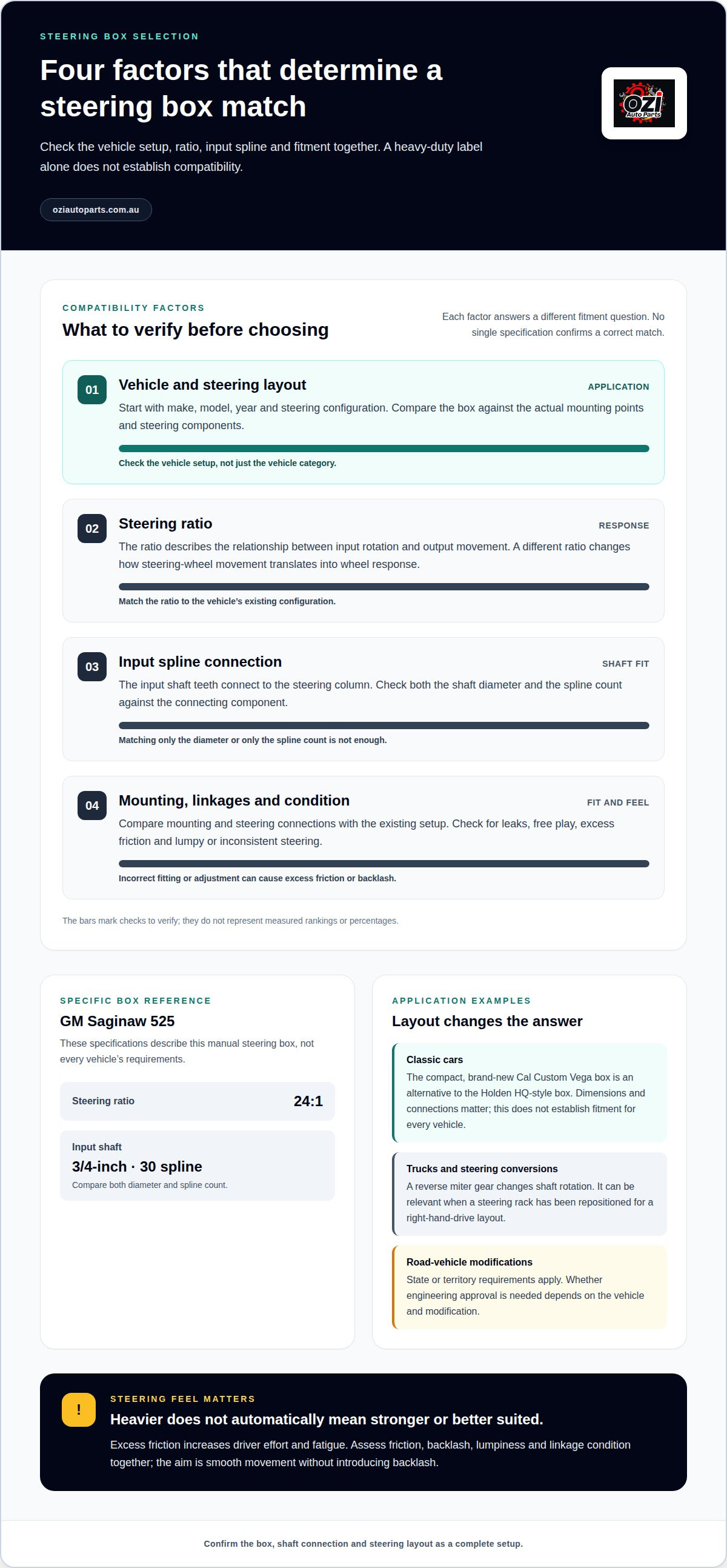
Steering box ratios and input splines
The ratio and input spline details affect steering response and shaft compatibility. Match both to the vehicle’s steering setup.
Steering box ratios
A steering box ratio describes the relationship between input rotation and output movement. It matters because it determines how steering-wheel movement translates into wheel response.
The GM Saginaw 525 manual steering box has a standard 24:1 steering ratio. This specification applies to this box, not every vehicle. A different ratio changes steering response, so match it to the vehicle’s existing configuration rather than choosing by the heavy-duty label alone.
Input spline compatibility
Input splines are the teeth on the steering box input shaft that connect to the steering column. Their size and count must match the connecting component. A mismatch prevents a correct connection, even if the box otherwise appears suitable.
The GM Saginaw 525 manual steering box has a 3/4-inch-30 spline input shaft. Compare both diameter and spline count with the steering column connection. Matching only one detail doesn’t establish a correct connection. The shaft specification distinguishes boxes that otherwise appear similar.
Matching the box to the vehicle
Choose a steering box against the vehicle’s make, model, year and steering configuration. These details narrow the application, but don’t replace checking the ratio and input spline. The GM Saginaw 525’s specifications describe that particular box, not every vehicle’s requirements.
Compare the replacement’s mounting and steering connections with the existing setup, using the steering parts range to identify relevant components. Record original box details and note changes to the steering column or linkage. This gives a fuller compatibility picture than make, model and year alone.
Which heavy-duty steering boxes are available in Australia for 4WDs, trucks and classic cars?
Steering box options depend on the vehicle type and steering layout. For a classic-car conversion, the Cal Custom Vega steering box is a compact, brand-new alternative to the Holden HQ-style box. This comparison offers a specific reference point, but does not establish compatibility with every Holden or other vehicle.
For 4WDs, assess the intended vehicle application and the existing steering arrangement. A box must suit the vehicle’s mounting points and connect with its steering components. A heavy-duty description alone doesn’t show that those details match. Treat make, model, year and modifications as application details, then consider the box design against the actual layout.
Truck steering can involve different linkage arrangements. Miter gear technology used in Australian heavy vehicles has accumulated many millions of trouble-free kilometres. A reverse miter gear changes the direction of shaft rotation, which matters when the steering layout requires a change in rotation rather than a different steering box. Consider the gear’s function and position in the system when selecting parts.
A reverse miter gear can be useful when an original-equipment steering rack has been repositioned for a right-hand-drive position. That example shows why steering layout matters across vehicle conversions. For a 4WD, truck or classic car, compare the box and any associated gear against the vehicle’s steering configuration. Identify whether the rack or linkage has moved, and whether shaft rotation must change. Those details help distinguish an application-specific solution from a box that only appears suitable by vehicle category.
Power steering layouts can add complexity, so assess how their components fit the vehicle. Fluid leaks are common, and compact designs can make higher under-bonnet temperatures a concern.
Ozi Auto Parts
Ozi Auto Parts supplies steering and suspension parts and 4WD upgrade parts for Australian vehicles. These categories are the next step when your steering box assessment points to a replacement or a broader steering-system upgrade.
Use the vehicle’s make, model, year and steering configuration to narrow the application. Compare those details with the box’s ratio, input spline and linkage arrangement. For a 4WD, consider how the steering component fits the vehicle’s upgrade requirements. For other vehicles, the same compatibility details help distinguish a suitable steering part from one that only appears similar.
Ozi Auto Parts supplies brake system parts, driveshafts, and steering and suspension parts for related mechanical requirements. Contact Ozi Auto Parts to discuss the parts relevant to your vehicle.
Plan the next steering decision
Before selecting parts for a steering upgrade, clarify the intended result. Decide whether the priority is correcting inconsistent feel, replacing a worn unit or adapting a changed layout. This keeps the choice focused on the vehicle’s use rather than the “heavy-duty” label alone.
When assessing a heavy-duty steering box in Australia, record the vehicle configuration and reason for the change. This provides a useful reference for later steering or suspension decisions and a practical starting point for discussing parts, without assuming one box suits every build.
For help with the next parts decision, contact Ozi Auto Parts. A clear application goal is a strong starting point for choosing components with confidence.
Frequently Asked Questions
What is a heavy-duty steering box and which vehicles use one?
A heavy-duty steering box is a steering gearbox used in vehicle steering systems where a box layout suits the design. Manufacturers use steering boxes when space is a consideration. In power-assisted versions, a pump supplies fluid, and a valve directs it to a moving piston, which helps turn the steering shaft connected to the steering linkage. This design appears in 4WDs, trucks and classic cars.
How much does steering box installation cost in Australia, and what does the job involve?
Installation cost depends on the box and the labour involved. The work includes removing the existing unit, fitting the replacement and connecting the steering linkages.