
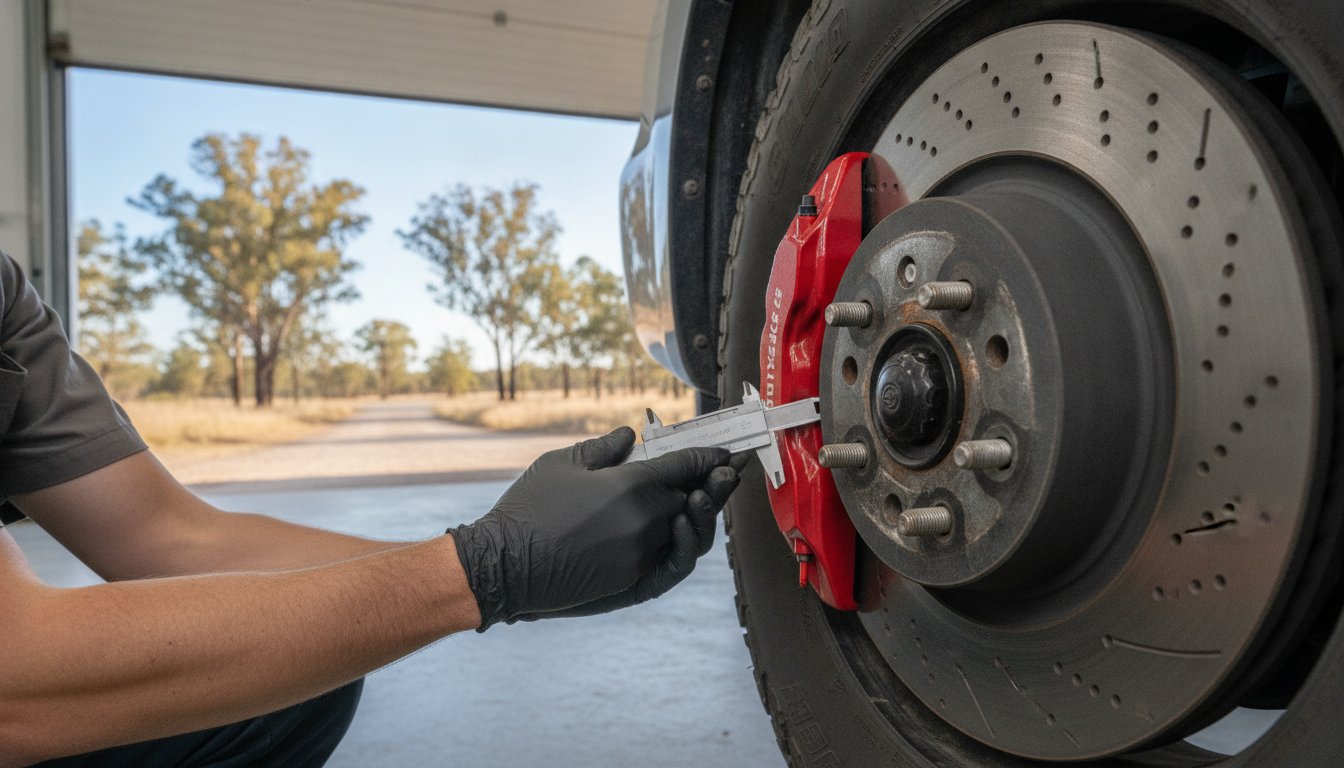
Brake pad failure is rarely a surprise. It's a technical consequence of thermal overload and poor friction material selection. You're likely asking how long do brake pads last australia after experiencing brake fade during heavy towing or noticing uneven wear on a 4WD. Uncertainty regarding thickness limits and sourcing specific parts for Australian models leads to compromised safety. Standard organic pads often fail under local heat and heavy GVM loads.
This guide identifies the mechanical factors governing pad longevity. You'll learn to calculate remaining service life accurately and select compounds designed for Australian conditions. We provide a technical breakdown of friction materials, thickness specifications, and sourcing strategies for high-quality mechanical spares. Expect direct data on material performance and component compatibility for your next brake system overhaul. Technical precision ensures reliable stopping power across every terrain.
Key Takeaways
- Identify the technical variables determining how long do brake pads last australia, including the standard 40,000 to 100,000 kilometre service window.
- Match friction compounds to specific load demands by evaluating the performance differences between ceramic and semi-metallic materials.
- Diagnose system wear through audible sensor alerts and tactile feedback to prevent catastrophic component failure and excessive rotor wear.
- Optimise vehicle safety by sourcing application-specific brake hardware and specialised upgrade components designed for Australian heat and terrain.
Brake Pad Lifespan: Kilometre Expectations for Australian Vehicles
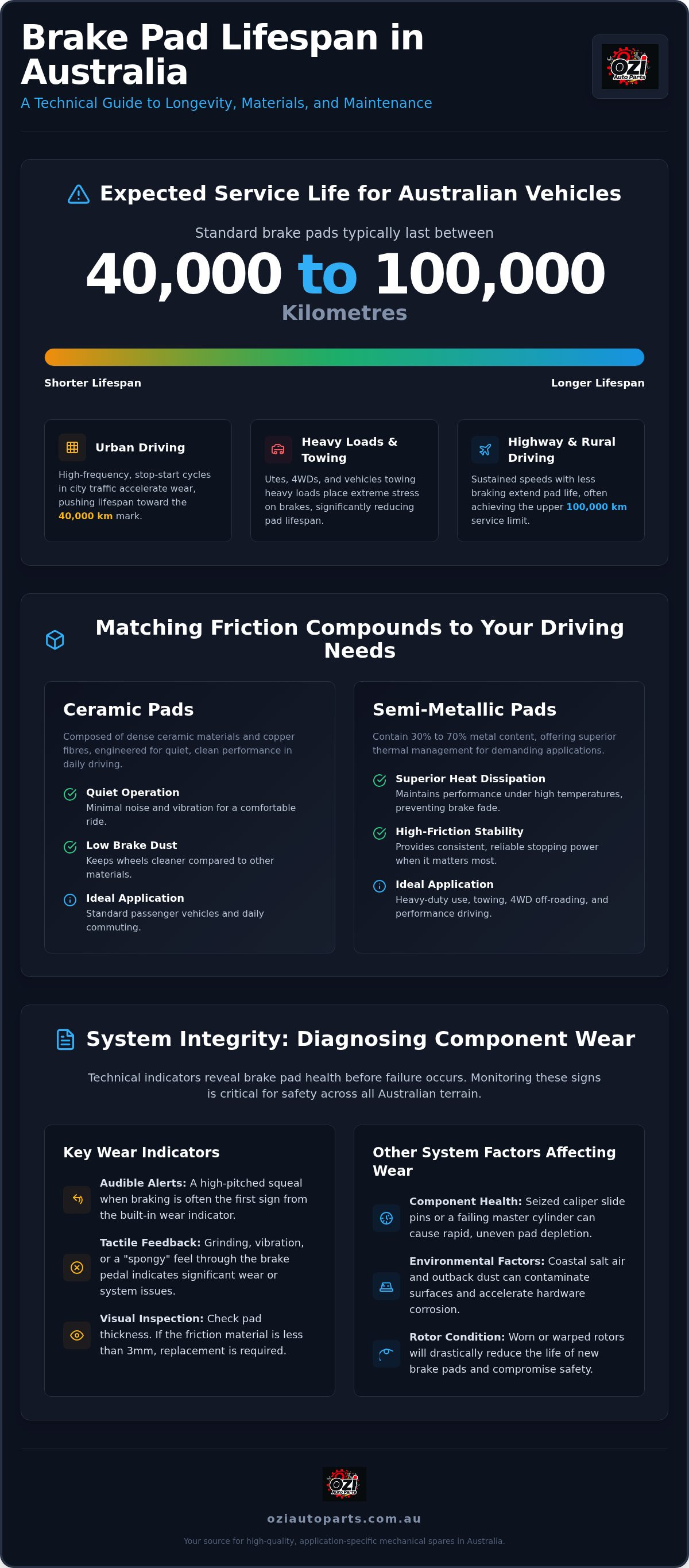
Standard component longevity varies based on application. Owners don't always consider environmental impacts when asking how long do brake pads last australia. On average, standard brake pad lifespan in Australia typically ranges from 40,000 to 100,000 kilometres. Urban driving in Australian capitals involves high-frequency stop-start cycles. This constant engagement accelerates friction material depletion. Highway and rural driving reduces thermal cycling; this extends component life toward the upper 100,000 km limit.
Vehicle mass is a critical variable. Heavy utes and SUVs experience higher kinetic-to-thermal energy conversion requirements. It's a technical reality that places extreme stress on the friction material. Vehicles used for towing or heavy haulage see significantly shorter lifespans. Accurate wear prediction requires assessing these operational loads.
To better understand this concept, watch this helpful video:
Primary Variables Influencing Friction Depletion
Aggressive braking habits increase operating temperatures. This leads to glazing and reduced pad life. Environmental factors like coastal salt air or outback dust contaminate friction surfaces and caliper slide pins. Seized hardware causes uneven wear. Proper lubrication and hardware maintenance are essential for maximising service intervals.
Selecting the correct brake pad components and materials ensures the system handles these stressors. This choice directly influences how long do brake pads last australia in heavy-duty or off-road environments. Mechanical system integrity remains paramount. Master cylinder performance ensures even pressure distribution. Hydraulic failure causes premature depletion of specific pads, necessitating a full set replacement regardless of the remaining material on other corners.
Material Selection: Matching Friction Compounds to Driving Applications
Friction material selection is the primary technical factor determining how long do brake pads last australia. Ceramic compounds utilise dense ceramic materials and copper fibres. They offer low dust and quiet operation. These characteristics are ideal for standard passenger vehicle commuting in metropolitan areas. However, they often lack the bite required for extreme cold or high-heat cycles. Semi-metallic pads contain 30% to 70% metal content. They provide superior heat dissipation and high-temperature friction stability. This material is the standard for heavy-duty applications where thermal management is paramount. All replacement components must adhere to Australian Design Rules (ADR). Compliance ensures vehicle safety and maintains insurance validity in the event of a collision.
Specific Factors affecting brake pad lifespan involve the interaction between the pad compound and rotor surface. It's often the deciding factor in how long do brake pads last australia for commercial fleets. Misaligned materials lead to accelerated wear or rotor scoring. Selecting a compound that matches your specific driving profile prevents premature system failure. Professional-grade hardware ensures consistent pedal feel across varying temperature ranges.
Optimising Braking for Towing and 4WD Use
Standard braking systems often struggle with the increased rolling mass of modified Australian 4WDs. Larger tyres and heavy payloads require an upgrade brake booster to maintain effective clamping force. 4WD vehicles and those towing caravans require heavy-duty friction materials to prevent dangerous brake fade. Pair these pads with high-performance rotors to manage extreme thermal loads during alpine descents. Verify specific vehicle GVM (Gross Vehicle Mass) when selecting materials to ensure stopping distances remain within safe limits. You can browse our range of specialised mechanical spares to find the correct fitment for your heavy-duty application.
System Integrity: Diagnosing Component Wear and Sourcing Spares
System diagnosis bypasses guesswork. It provides the final answer to how long do brake pads last australia on a per-vehicle basis. Technical indicators reveal friction health before failure occurs. Don't ignore subtle changes in braking performance. Accurate monitoring ensures safety across Australian terrain. To see how a professional workshop handles comprehensive vehicle maintenance, you can check out BLACKCAT AUTO for an example of expert care.
Audible indicators include high-pitched squealing from wear sensors. Metallic grinding suggests total material depletion. Tactile feedback like pedal pulsation indicates rotor thickness variation or warped discs. These require immediate attention to prevent hydraulic overload. Prompt component sourcing prevents secondary damage to rotors and calipers.
Uneven pad wear often results from seized caliper sleeve slide pins. This necessitates hardware replacement. Refer to our Master Guide to Automotive Braking for comprehensive system data and technical specifications.
Pedal feel dictates system integrity. A hard brake pedal requiring excessive physical effort typically indicates a failing brake booster diaphragm. This vacuum loss negates pad effectiveness. Ford Falcon BA-BF models frequently require aftermarket booster replacements to restore vacuum assistance. Holden Commodore VT-VY owners should inspect for vacuum leaks if engine idling becomes rough during brake application. These faults accelerate friction wear by forcing inconsistent clamping pressures. Accurate diagnosis ensures you source the correct specialised mechanical spares for Australian model specifications.
Optimising Brake System Performance and Safety
Determining how long do brake pads last australia requires a technical assessment of your specific driving environment and vehicle load requirements. Standard kilometres typically range between 40,000 and 100,000; however, heavy 4WD use and urban stop-start cycles accelerate material depletion significantly. Matching friction compounds to your vehicle's GVM and ensuring hydraulic integrity prevents premature component failure and dangerous brake fade during heavy towing.
Maintain consistent stopping power by sourcing application-specific hardware designed for local conditions. We provide a specialised Australian inventory for Ford Falcon, Holden Commodore, and 4WD models with efficient Australia-wide delivery for all critical mechanical spares. Shop Specialist Brake System Parts and Boosters at Ozi Auto Parts today to ensure your vehicle remains ADR compliant and safe. Technical precision ensures your braking system performs reliably under every load.
Frequently Asked Questions
How long do brake pads typically last on Australian roads?
Immediate replacement is required when friction material reaches a minimum thickness of 3 to 4 millimetres. Key indicators include high-pitched squealing from wear sensors or metallic grinding sounds indicating total depletion. Tactile feedback like pedal pulsation or steering wheel vibration suggests warped rotors or uneven pad wear. These symptoms require urgent inspection of calipers to maintain safe stopping distances.
Does towing a caravan reduce the lifespan of my brake pads?
Towing a caravan significantly reduces brake pad lifespan by increasing the kinetic energy converted to heat during deceleration. The additional rolling mass places extreme stress on the friction material, leading to accelerated wear and potential brake fade. Drivers should conduct frequent visual inspections of pad thickness. Heavy-duty semi-metallic pads are recommended for these applications to manage high thermal loads effectively.
Should I choose ceramic or semi-metallic brake pads for my 4WD?
Semi-metallic pads are the optimal choice for 4WDs due to superior heat dissipation and high-temperature friction stability. They handle the extreme thermal loads of off-road descents and heavy payloads better than ceramic alternatives. While ceramic pads offer low dust, they may lack the initial bite required for heavy-duty Australian terrain. Always verify your vehicle GVM and ADR compliance when choosing compounds.