
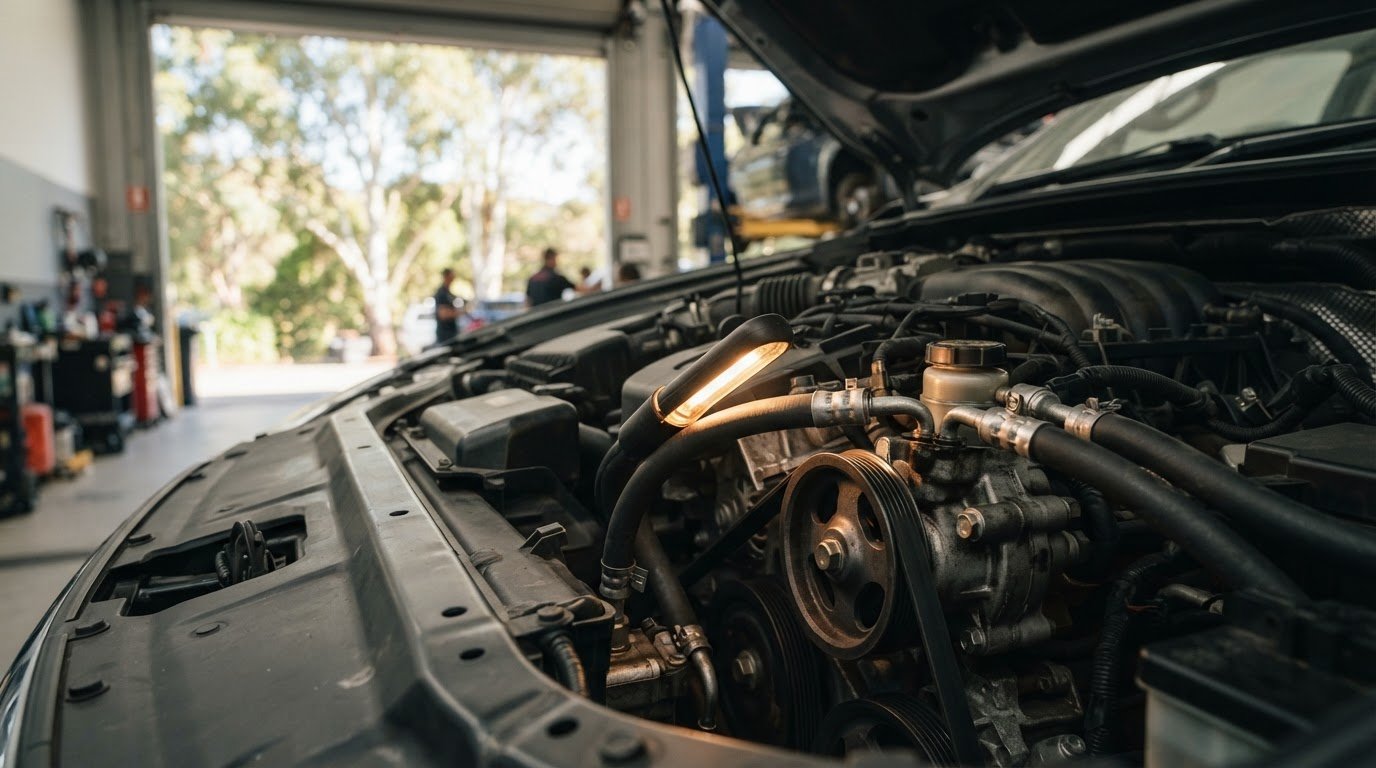
A stiff steering wheel doesn’t automatically mean the pump has failed. Low fluid or a dislodged drive belt can also cause steering problems.
Noisy steering or a wheel that becomes harder to turn is a reason to investigate the system. The pump may be at fault, but the issue could also involve the fluid or drive belt.
This guide explains how a hydraulic power steering pump works, what can cause it to fail and what affects replacement. You’ll also learn which symptoms may point to a pump problem and what to consider when choosing a replacement part for your vehicle.
Key Takeaways
- Hydraulic pumps send pressurised fluid to the steering box or rack through two hydraulic lines; electric systems generate pressure with a motor.
- When replacing a pump, compare the hose fittings, pulley and mounting pattern to select a part suited to the vehicle.
- Trapped air needs to be removed from the hydraulic system during replacement by bleeding the old fluid and refilling the system.
- Ozi Auto Parts supplies steering and suspension parts, with 4WD upgrade parts for customers sourcing related components.
Causes of pump failure
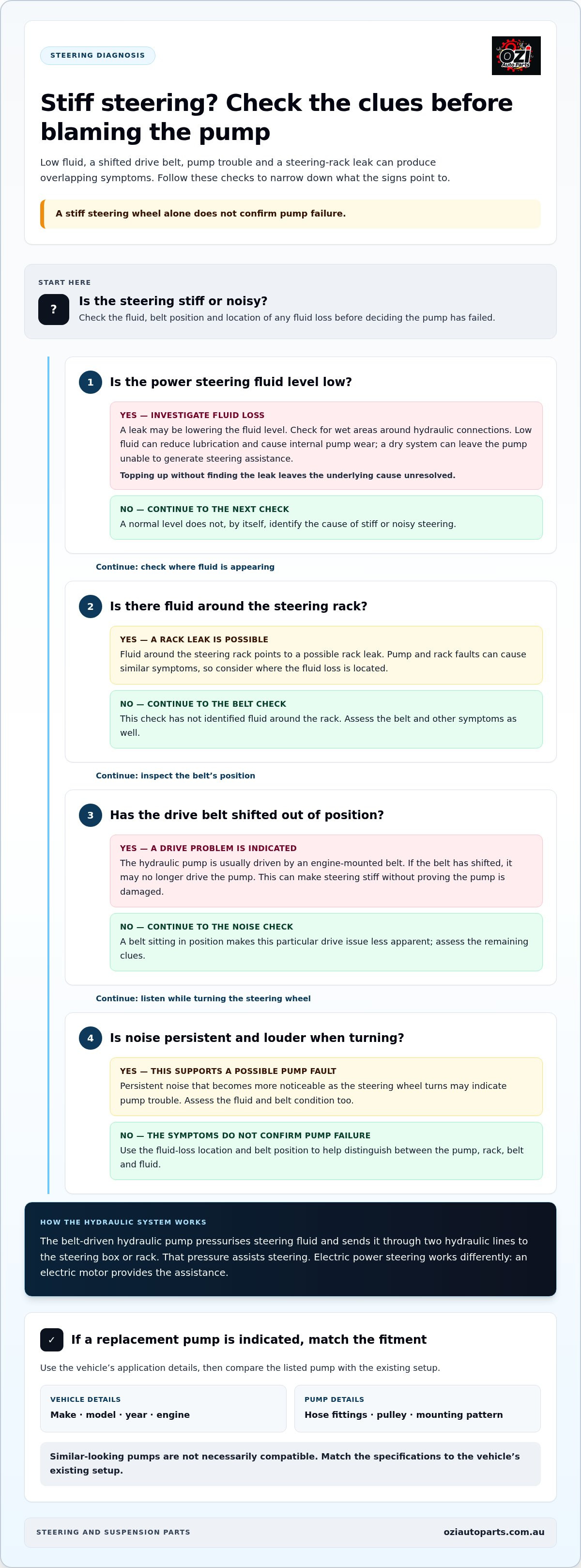
A hydraulic power steering pump relies on fluid to create steering pressure. If the fluid runs low, the pump can lose lubrication and suffer internal wear. A leak may be lowering the fluid level, so topping it up without finding the leak leaves the underlying cause unresolved.
To distinguish between the pump, rack, belt and fluid, compare the symptoms with visible clues. Low fluid suggests a leak in the hydraulic system, while a dislodged belt can stop the pump from being driven. Persistent noise that grows louder when turning may indicate pump trouble, while fluid around the steering rack points to a possible rack leak.
A belt problem can feel like pump failure because either can make steering stiff. The hydraulic pump is usually driven by an engine-mounted belt. If the belt has shifted out of position, it may no longer drive the pump. Check the belt’s position before treating stiffness alone as proof of pump damage.
- Fluid loss: Check the reservoir level and look for wet areas around hydraulic connections. A dry system can leave the pump unable to generate steering assistance.
- Belt displacement: Look for a belt sitting out of position. This points to a drive problem, even if the steering feels like a failed pump.
- Pump noise: Listen for persistent noise that becomes more noticeable as the steering wheel turns. This symptom supports a pump fault, but assess fluid and belt condition too.
Steering rack and pump faults can cause similar symptoms. The location of fluid loss and the belt’s position can help distinguish the likely cause. When choosing a replacement power steering pump in Australia, compare its hose fittings, pulley and mounting pattern with the vehicle’s existing setup.
Hydraulic power steering pump function
A hydraulic pump pressurises steering fluid and sends it through two hydraulic lines to the steering box or rack. This pressure assists steering, making the wheel easier to turn, particularly at low speeds when manoeuvring in a car park. The pump is usually mounted to the engine and driven by a belt.
Electric power steering works differently: an electric motor provides the steering assistance. A hydraulic pump problem can weaken steering assistance, while persistent noise that becomes more noticeable as you turn may indicate pump failure.
New, reconditioned and used pumps differ in condition. A new pump is unused. A reconditioned pump has been used and restored. A used pump is removed from another vehicle, so its wear and service history depend on its previous use.
To identify the correct replacement, match the vehicle’s make, model, year and engine, then compare the pump’s hose fittings, pulley and mounting pattern. For example, a pump listing for a Ford Falcon specifies AU, EL and XH models with a 4.0L Intech engine, and model years 1997 through 2002. Those application details help narrow the match.
Use the fluid type and change interval specified for your vehicle. Find both in the owner’s manual or service information for the exact make, model, year and engine. Fluid requirements and service schedules vary between vehicles, so don’t choose a fluid by colour alone.
For related vehicle components, browse steering and suspension parts alongside your pump selection.
Power steering pump replacement cost
Vehicle access, replacement parts and related work all affect the final cost.
Repairing, Rebuilding or Replacing the Pump
Repair addresses a specific fault, rebuilding restores a used pump, and replacement installs another unit. The right option depends on the pump’s condition and whether its internal components can be restored. A mechanic can assess the fault before deciding between these options. Replacement time varies with vehicle access and the work required. A failing pump can reduce steering assistance, so don’t assume the vehicle is safe to drive normally.
Warranty coverage is set out in the seller’s terms. Check the purchase documents for warranty details and information about any applicable Australian consumer guarantees.
Buying Replacement Pumps in Australia
Australian automotive parts retailers and online parts stores sell replacement pumps. Brands vary by vehicle application and the parts stocked. Match the pump to your vehicle’s make, model, year and engine, then compare the hose fittings, pulley and mounting pattern. A similar-looking pump is not necessarily the right replacement.
Use the vehicle’s application details to narrow the selection, then compare the listed pump’s specifications. Browse the automotive parts catalogue when sourcing components.
What Affects Replacement Cost
Pump access affects labour, while the replacement unit and any additional work affect parts and time. A straightforward installation differs from one that requires extra work to reach the pump or address related faults.
Ask for a breakdown of the pump, labour and any additional parts. This makes it easier to compare the proposed repair with the work identified during diagnosis. The estimate covers pump replacement, not a specific vehicle or part price.
Ozi Auto Parts: Brake System Parts
Ozi Auto Parts supplies Brake System Parts and Steering and Suspension Parts for customers sourcing vehicle components. If diagnosis points to a replacement pump, use the vehicle’s make, model, year and engine details to narrow the selection. Before ordering, compare the pump’s hose fittings, pulley and mounting pattern with the vehicle’s existing setup. These checks help distinguish similar-looking components and reduce the risk of choosing an incompatible part.
Ozi Auto Parts also offers Driveshafts and 4WD Upgrade Parts. These categories serve different replacement and upgrade needs, while steering and suspension components are the closest fit for this topic. For related parts, visit oziautoparts.com.au and browse the available categories.
Plan the next repair step
Use the diagnosis to guide the next decision, rather than relying on the catalogue alone. A matching component is only one part of a repair plan; the installation and any related steering work also need to be considered. This keeps parts sourcing focused on the fault being addressed, rather than replacing components without a clear reason.
When sourcing a power steering pump in Australia, make the parts discussion specific to the vehicle and repair objective. Keep replacement and installation records with the vehicle’s service documents. They provide a reference for future maintenance and help distinguish previous work from a new concern. Parts sourcing and booking a repair are separate steps, so plan for each.
If you’re ready to discuss a parts enquiry, contact Ozi Auto Parts for help. Take the next step with a clear parts requirement.
Frequently Asked Questions
How much does a power steering pump cost in Australia?
There isn’t one price for every vehicle. Pump cost depends on the make, model, year, engine and required specifications. New, reconditioned and used units also differ in condition. Before buying, compare the replacement pump’s hose connections, pulley and mounting points with the vehicle’s existing unit. A vehicle-specific match matters more than appearance.
What is the average cost to replace a power steering pump in Australia, including labour?
The final amount depends on labour, access to the pump and the work required for the vehicle. Ask for an itemised estimate separating the pump, labour and related work. This clarifies what the quoted replacement covers before you approve the repair.
Are power steering pump replacements covered by warranty or Australian consumer guarantees?
Warranty coverage is set out in the seller’s terms. Check the purchase documents for warranty details and any applicable Australian consumer guarantees. The listed warranty requires professional installation and retained receipts.
Where can I buy a replacement power steering pump in Australia, and what brands are available?
Australian automotive parts retailers and online stores, including Ozi Auto Parts, sell replacement pumps. Available brands vary by vehicle application and stock, so match the pump to your vehicle and compare its hose fittings, pulley and mounting pattern.
How long does power steering pump replacement take, and can I drive with a failing pump?
Replacement time varies with vehicle access and the work required. A failing pump can reduce steering assistance, so don’t assume the vehicle is safe to drive normally.