
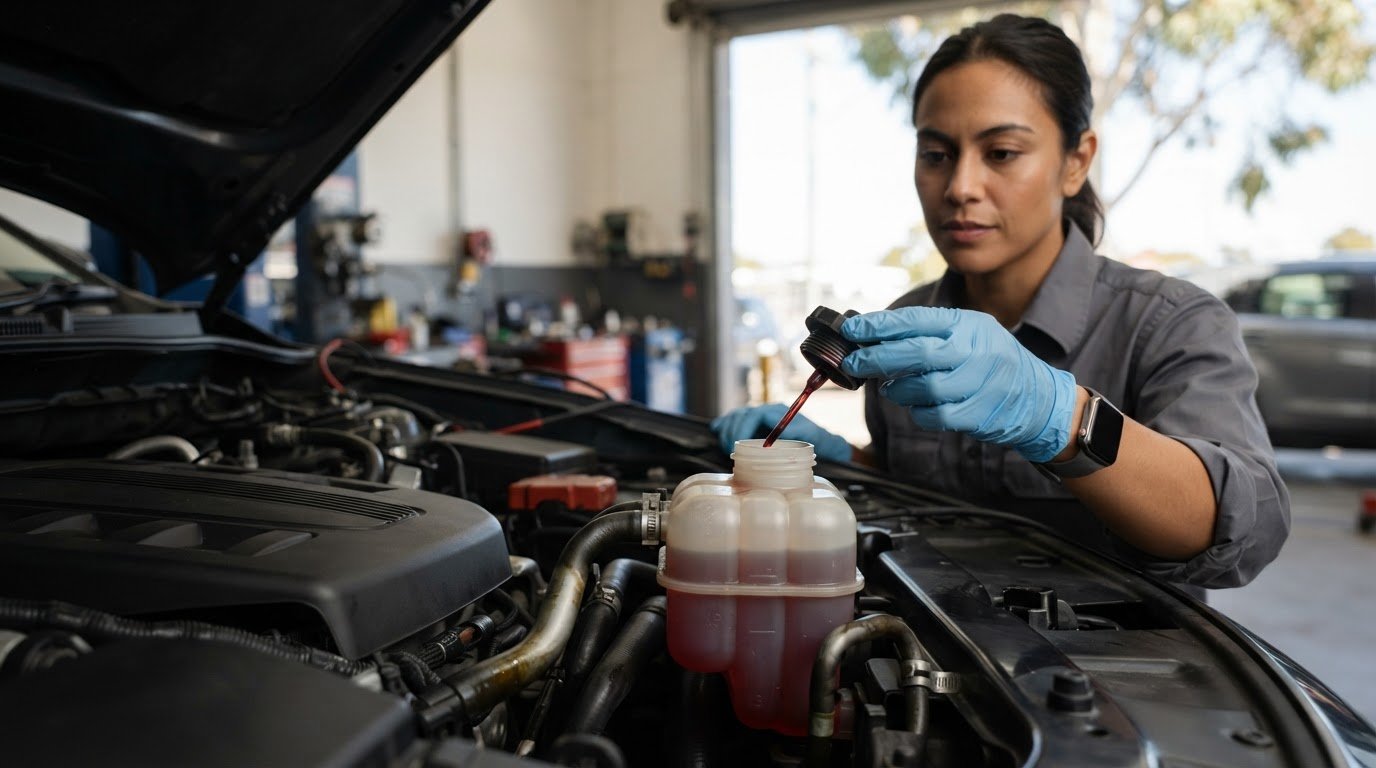
A leaking reservoir can reduce steering assistance if the fluid level falls too low. For power steering reservoir replacement in Australia, the total cost depends on the vehicle and where the reservoir is located. Labour may increase if the pump must be removed. In hydraulic systems, the reservoir stores power steering fluid and is generally near the pump in the engine bay.
A reservoir fault can be mistaken for a pump or hose problem. Heavy steering, whining or squealing while turning, and an oily leak can indicate low fluid, but several parts of the system can leak.
This guide covers what the reservoir does, where to find it, signs of damage and factors that affect replacement costs. It also explains how to identify the right steering part for your vehicle.
Key Takeaways
- Compare replacement estimates by separating the reservoir part from the labour involved.
- Understand how the reservoir supports hydraulic steering and where to look for it under the bonnet.
- Use fluid loss, steering changes and unusual noises as clues to investigate the steering system.
- Match steering and suspension parts to your vehicle before choosing a replacement component.
Power steering reservoir replacement costs
The vehicle’s make and model, reservoir location and access all affect the total. If the pump must be removed to reach the reservoir, labour and replacement time increase. That is why power steering reservoir replacement costs can vary between vehicles, even when the fault seems similar.
Reservoir, hose and pump faults require different parts. Replace a reservoir that is damaged or leaking, and a hose when the leak comes from that hose. A faulty pump needs replacement, not just a new reservoir. A leak can also come from the rack, so identify its source before choosing parts.
There is no single reservoir price for every make and model. A vehicle-specific estimate depends on the part required and the labour involved.
Heavy steering, whining or squealing when turning, and red, oily fluid beneath the vehicle can indicate a leak or damaged reservoir. Low fluid can reduce steering assistance and cause noise. Fluid can also leak from the pump, rack or hoses, so symptoms alone cannot identify the faulty component.
A competent home mechanic may be able to replace some reservoirs with basic hand tools, a drain container and the correct replacement part. The job involves fluid and hose connections, so follow the vehicle’s service procedure. A typical sequence is to remove the old reservoir, fit the replacement, reconnect the hoses, refill the system and bleed it.
Use the power steering fluid specified for the vehicle. Check the hoses during replacement and replace any damaged hoses as required. The correct fluid and a properly bled system help prevent further steering issues.
According to the Australian Competition & Consumer Commission, using a certified independent mechanical workshop or mobile mechanic for servicing or repairs does not void a new-car manufacturer’s warranty. Roadworthiness depends on the vehicle’s condition, so fluid loss and reduced steering assistance need prompt attention.
Choose a replacement through an Australian automotive parts retailer that supplies vehicle-specific steering components. Match the part to the vehicle’s make and model, and confirm the connection points and hose layout before fitting.
Reservoir function and location
In a hydraulic steering circuit, fluid returns from the steering gear to the reservoir before the pump draws it back into circulation. The reservoir gives returning fluid room to settle and helps separate entrained air before recirculation, supporting consistent hydraulic pressure. Electrohydraulic systems also use hydraulic fluid, while fully electric steering has no hydraulic reservoir.
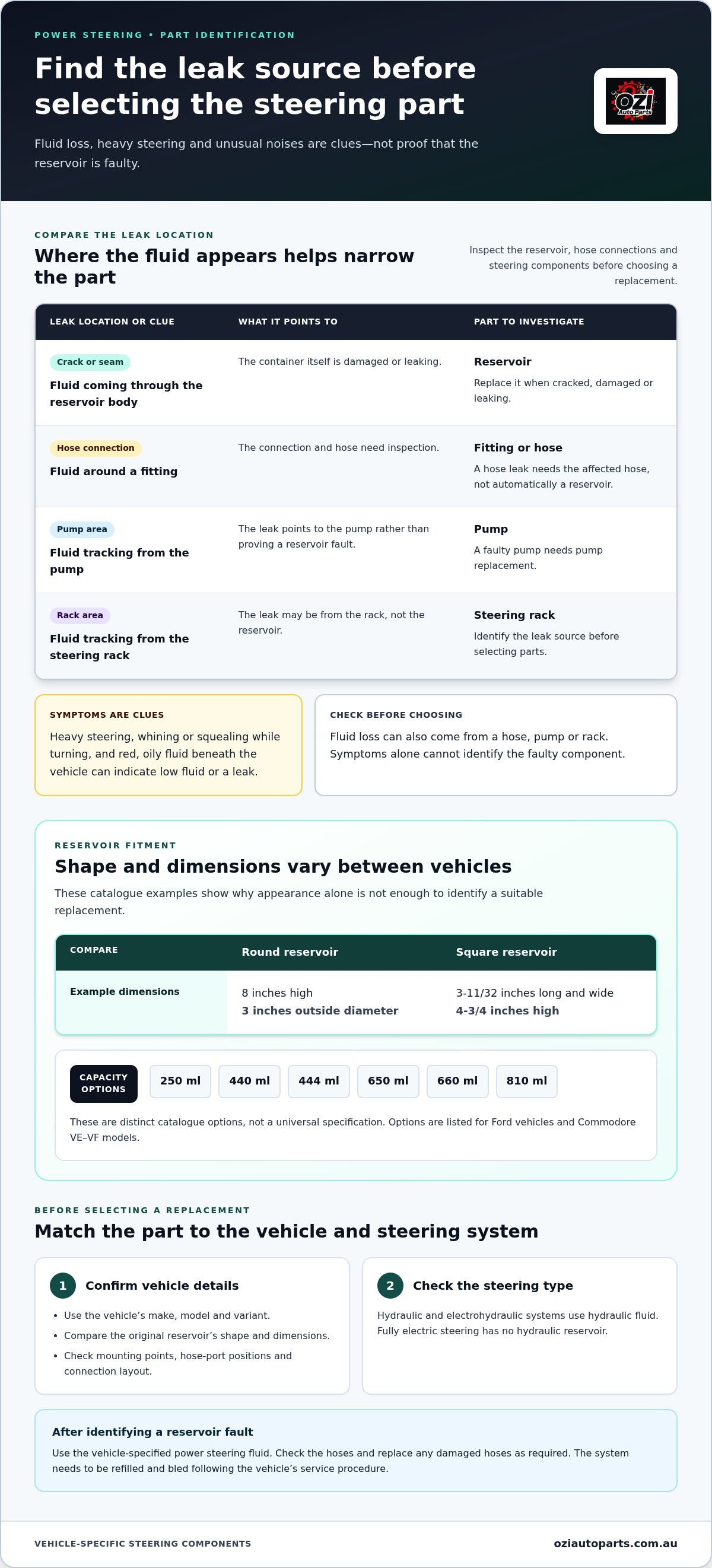
Reservoir design varies by vehicle. A round tank measuring 8 inches high by 3 inches in outside diameter differs from a square reservoir measuring 3-11/32 inches long and wide by 4-3/4 inches high. These dimensions show why appearance alone isn’t enough to identify a suitable replacement. Compare the original component’s shape, mounting points and hose-port positions.
Capacity also varies across reservoir options, including 250 ml, 440 ml, 444 ml, 650 ml, 660 ml and 810 ml. These are distinct catalogue options, not a universal specification. Options are listed for Ford vehicles and Commodore VE-VF models. Use the vehicle’s make, model and variant to narrow the match, then compare the reservoir’s dimensions and connections with the part being replaced.
For a vehicle with hydraulic steering, identify the reservoir by its fluid cap and connected steering lines, then compare the layout with your vehicle information. Explore vehicle steering components when matching a part to the steering system.
How to tell if a power steering reservoir needs replacement
Start by locating the fluid leak rather than assuming the reservoir has failed. Inspect the reservoir body, seams and hose connections for fresh fluid, then follow the steering hoses towards the pump and steering rack. Fluid appearing at another component points to a different fault and requires a different replacement part.
- Fluid coming directly through a crack or seam indicates damage to the reservoir itself.
- Fluid around a hose connection calls for inspection of the fitting and hose.
- Fluid tracking from the pump or rack points to those components, not automatically to the reservoir.
Use the vehicle’s specified method to check the fluid level, then compare it with the level after the vehicle has been used. A continuing drop indicates a likely leak. Note where fluid appears and whether the reservoir’s surface is wet. This can help distinguish an active leak from residue elsewhere in the engine bay.
Replace the reservoir when it is cracked, damaged or leaking. If the container is intact, identify the leaking connection or other steering component before choosing parts. Replacing an undamaged reservoir will not stop fluid loss from a hose, pump or rack.
Once you’ve identified the affected component, browse steering component options suited to your vehicle’s system.
A damaged reservoir may cause heavy steering, particularly at low speed, whining or squealing when turning, or a noticeable red, oily leak under the vehicle. Continuing to drive with low fluid can cause further damage to the power steering system.
Ozi Auto Parts: Brake System Parts
Ozi Auto Parts supplies Steering and Suspension Parts to Australian motorists choosing replacement components. Once you have identified a reservoir fault, match the replacement part to your vehicle’s make, model and steering-system connections. Correct fitment matters: the mounting points and hose connections must align with the vehicle.
Ozi Auto Parts also offers Brake System Parts, Driveshafts and 4WD Upgrade Parts. For a steering-related parts requirement, use the vehicle details and the failed component to narrow your selection. A parts supplier is relevant when you need the component; diagnosing or installing it is a separate task.
Visit oziautoparts.com.au to explore the range or contact Ozi Auto Parts about your parts needs.
Choose the right part for your next step
Before ordering a steering component, gather the vehicle details needed to identify the right part. Record the make, model, variant and engine details shown in your vehicle documents. Compare them with the replacement part information instead of relying on appearance alone. For power steering reservoir replacement in Australia, begin with the vehicle application. Keep any markings from the existing part handy when comparing options.
Separate diagnosis from parts selection. If symptoms continue after a component change, reassess the fault before ordering another part. That helps keep the next decision focused on the cause, not just the visible symptom. Check the details carefully, then explore the Ozi Auto Parts catalogue for your automotive parts needs. A precise match is a practical step towards getting your vehicle back on track.
Frequently Asked Questions
What is the power steering reservoir?
The reservoir is the designated fluid container in a vehicle’s hydraulic steering system. To identify the correct component, check the cap label and the vehicle owner’s manual rather than relying on appearance alone. Reservoir shapes vary, and containers for other systems can also sit in the engine bay. Follow the vehicle-specific instructions when checking fluid levels.
How much does power steering reservoir replacement cost in Australia?
The total depends on the replacement part and the labour needed to access it. For a useful estimate, separate the reservoir price from installation labour and any additional work. Ask for the estimate to state whether pump removal is needed and whether it includes damaged hoses or fresh fluid. These details make quotes easier to compare.
What is the labour cost and replacement time for a power steering reservoir in Australia?
Labour and time depend on the vehicle’s layout and access to the reservoir. Removing the pump adds work when it obstructs replacement. An estimate should specify whether it includes removing components for access, installing the reservoir, reconnecting hoses and refilling the system. This makes clear what the labour charge covers.