
Did you know a vehicle can pass a 2026 roadworthy inspection with brake pads at the minimum legal thickness, only to require a full replacement weeks later? In Queensland and Victoria, the 3mm limit is now a strict baseline. You likely worry about that high-pitched squeal or the vibrating pedal during your commute. It's a valid concern. Ignoring these signals leads to scored rotors and increased stopping distances.
This guide identifies the critical signs of worn brake pads australia drivers must recognise. Clear identification of acoustic warnings and technical wear specifications is essential. We'll cover minimum pad thickness and how to select correct Bendix or DBA replacements for Australian 4WDs and passenger cars. Expect direct data on mechanical failure signs and part selection for local road conditions.
Key Takeaways
- Identify auditory warnings like high-pitched squealing and metallic grinding to prevent rotor scoring.
- Technical specifications for signs of worn brake pads australia including the 3mm legal thickness threshold for 2026 roadworthy compliance.
- Visual inspection protocols for comparing inner and outer pad wear across front and rear axles.
- Friction material selection for city commuting or heavy-duty 4WD applications meeting ADR performance standards.
Common Auditory and Tactile Signs of Brake Pad Wear
Recognising signs of worn brake pads australia drivers experience requires attention to sensory feedback. Modern braking systems use specific mechanical cues to signal component degradation before catastrophic failure occurs. These indicators are your first line of defence against expensive rotor damage.
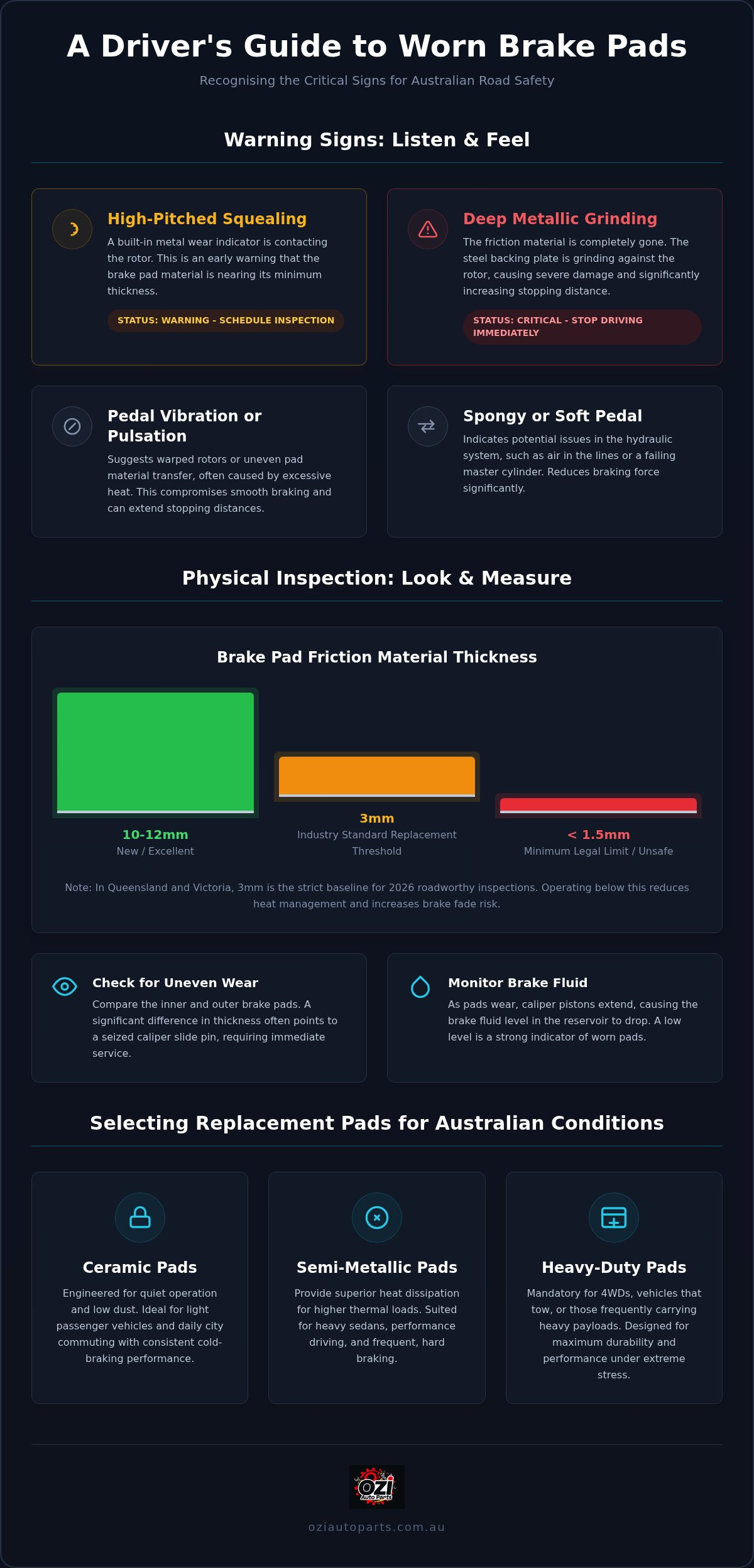
- High-pitched squealing: This noise occurs when a metal tab, the wear indicator, contacts the rotor. It serves as a pre-emptive warning that friction material is nearing the 3mm threshold.
- Deep metallic grinding: This indicates the friction material is fully exhausted. The steel backing plate is now contacting the cast iron rotor, causing immediate gouging.
- Pedal vibration: Pulsation during deceleration suggests warped rotors or uneven pad deposits. This often results from excessive heat cycles common in heavy-duty Australian 4WD applications.
- Spongy pedal feel: A soft or sinking pedal indicates hydraulic air pockets or a failing brake booster. This reduces the mechanical advantage required for emergency stops.
Differentiating Squealing from Metal-on-Metal Grinding
Squealing is a designed safety feature. It alerts you while the vehicle remains operational. In contrast, grinding signifies a critical safety breach. Understanding Brake pad composition and function is vital here; once the metal backing plate is exposed, stopping distances increase significantly. The friction coefficient of steel-on-steel is insufficient for safe Australian road speeds.
Analyse the noise frequency. Constant squealing while cruising that stops when you apply the brakes confirms the wear indicator is active. Grinding that intensifies with pedal pressure is one of the most severe signs of worn brake pads australia motorists encounter. Ground the vehicle immediately to prevent total brake failure and avoid the cost of replacing both pads and rotors.
Physical Inspection and Technical Thickness Specifications
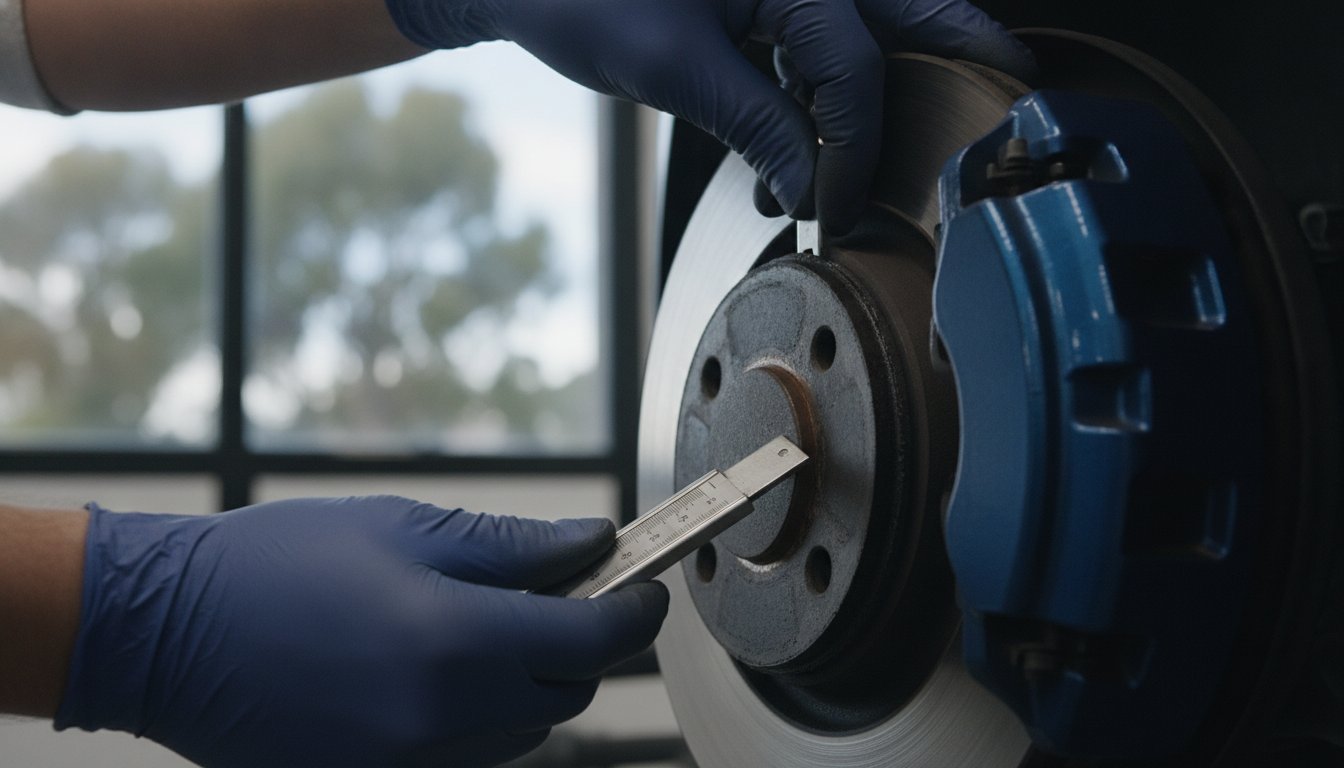
A manual inspection provides the most accurate data for identifying signs of worn brake pads australia technicians look for during roadworthy tests. While the absolute minimum legal friction material thickness in Australia is 1.5mm, the industry-standard replacement threshold is 3mm. Operating below this 3mm limit reduces the pad's ability to manage heat; this increases the risk of brake fade during heavy use or towing.
Visual checks are possible through most alloy wheel spokes without removing the wheel. Compare the thickness of the outer pad against the inner pad. If you notice a significant discrepancy, it often indicates a seized caliper slide pin. This mechanical failure prevents the caliper from floating correctly, causing one pad to drag and wear prematurely. Monitoring your brake fluid reservoir also offers a vital clue. Low fluid levels often correspond to thin pads as the caliper pistons must extend further to compensate for the lost friction material.
Understanding Modern Brake Wear Sensors and Indicators
Modern vehicles utilise two primary alert systems. Electronic wear sensors trigger a dashboard warning when the friction material wears down to a specific point, breaking an electrical circuit. Alternatively, mechanical "scratchers" are small metal tabs that create a constant chirp when the disc is rotating, even without brake application. Recognising these Common signs of brake pad wear allows for timely part sourcing. These systems provide clear signs of worn brake pads australia drivers should not ignore. Replacing pads at the 3mm mark ensures optimal thermal mass and protects your rotors from heat-related warping. If your inspection reveals thin friction material, you can order replacement brake components online for rapid nationwide delivery.
Selecting Replacement Pads for Australian Driving Conditions
Once you identify the signs of worn brake pads australia drivers must act on, selecting the correct friction material is critical. Australian environments range from stop-start city traffic to high-heat outback corridors. Choosing a pad that matches your specific driving profile ensures component longevity and vehicle safety.
- Ceramic pads: Engineered for light passenger vehicles and city commuting. These offer low dust output and quiet operation while maintaining consistent cold-braking performance.
- Semi-metallic pads: These provide superior heat dissipation. They are suited for heavy sedans and high-performance driving where thermal loads are consistently higher.
- Heavy-duty pads: Mandatory for vehicles equipped with 4wd suspension upgrade kits australia and those frequently carrying heavy payloads.
Correct fitment requires precision. You must verify your vehicle make, model, and build date against a comprehensive all brake systems guide. This prevents part mismatch and ensures the replacement components meet ADR 31 or ADR 35 performance standards. Selecting the right friction material is as important as recognising the signs of worn brake pads australia motorists observe during daily use.
Specialised Upgrades for 4WDs and Towing
Heavy-duty applications require specific technical specifications. Towing in high-ambient Australian temperatures causes rapid heat build-up in the braking system. Standard pads often suffer from brake fade in these conditions; heavy-duty variants offer higher fade resistance ratings to maintain stopping power. Pairing premium Bendix or DBA pads with slotted rotors helps clear gases and debris during off-road use. For specific components, consult the online auto parts catalogue to source 4x4-specific inventory designed for rugged terrain.
Maintaining Optimal Braking Performance
Proactive monitoring of the signs of worn brake pads australia motorists encounter prevents rotor damage and maintains roadworthy compliance. Accurate identification of the 3mm friction material threshold is essential. Technical specification matching for ceramic, semi-metallic, or heavy-duty applications ensures safe deceleration under Australian thermal loads. Correct part selection remains the primary factor in system longevity and safety.
Direct Australia-wide shipping ensures your vehicle stays on the road with minimal downtime. Authorised supplier of Bendix and DBA components. Specialist 4WD and mechanical component inventory available for rapid dispatch across all states. These resources facilitate efficient maintenance and part replacement for all major vehicle makes.
Browse our full range of specialised brake system parts at Ozi Auto Parts. Secure your vehicle’s safety with ADR-compliant components delivered to your door.
Frequently Asked Questions
How many kilometres do brake pads usually last in Australia?
Brake pads typically last between 45,000 and 60,000 kilometres under standard Australian driving conditions. This lifespan fluctuates based on vehicle load, driving style, and environmental heat. Heavy 4WDs or vehicles used for consistent towing will experience accelerated wear. Regularly inspecting for signs of worn brake pads australia every 10,000 kilometres ensures you identify depletion before reaching the 3mm legal threshold.
Can I replace just the front brake pads and not the rear?
You can replace front pads independently of the rear set. The front axle manages approximately 70% of the braking force, causing these pads to wear out significantly faster. Always replace pads in complete axle sets to maintain balanced stopping power. This practice prevents the vehicle from pulling to one side and ensures consistent heat dissipation across the braking system.
Why do my new brake pads squeak after installation?
New pads often squeak if the rotors weren't machined or if the bedding-in process was skipped. If the disc surface is not perfectly smooth, the new friction material cannot seat correctly. High-performance semi-metallic pads also produce more harmonic noise than ceramic variants. Verify that anti-squeal shims were installed and specialised lubricants were applied to the backing plates to dampen these vibrations.
Is it safe to drive with the brake wear light on?
Driving with a brake wear light illuminated is not safe. This dashboard alert confirms the friction material has reached a critical thickness, typically between 1.5mm and 2mm. Continuing to operate the vehicle risks catastrophic brake failure and permanent rotor gouging. Address these signs of worn brake pads australia immediately by sourcing ADR-compliant replacement components to ensure your vehicle remains safe for road use.