
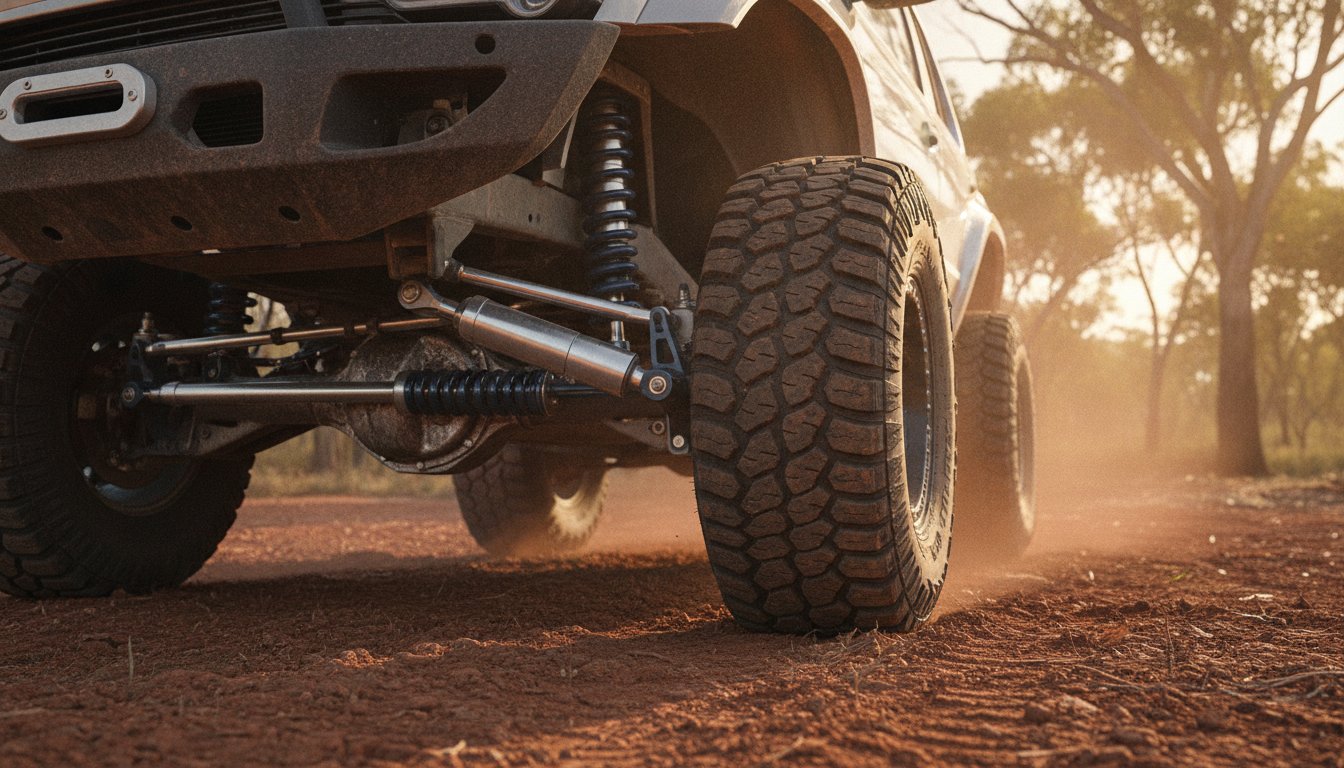
A high-quality steering stabiliser 4x4 is more than a suspension accessory; it is a hydraulic fuse for your vehicle's entire steering geometry. You've likely experienced the violent kickback of a steering wheel on a corrugated outback track or the constant fatigue of fighting deep ruts to maintain a straight line. These aren't just minor inconveniences. Uncontrolled steering feedback accelerates wear on critical components like tie rod ends and ball joints, leading to costly mechanical failures far from the nearest workshop.
We understand that maintaining precision on unpredictable Australian terrain requires hardware that performs under extreme thermal stress. This guide provides the technical insight needed to eliminate bump steer and enhance your 4WD steering control with the right stabiliser setup. You'll learn how to select a unit that offers a smoother steering response while protecting your steering assembly from terminal shock loads. We detail the specific performance upgrades available for 2026 models, focusing on heavy-duty dampers engineered for the harsh local climate. From reducing driver fatigue on long-haul trips to securing your steering system's longevity, this is the definitive technical overview for your next upgrade.
Key Takeaways
- Identify how horizontal hydraulic dampers mitigate lateral shock loads to protect your steering linkage from terminal damage.
- Select the appropriate steering stabiliser 4x4 for your specific tyre diameter, utilising 50mm bore units for 33-inch tyres and above.
- Ensure your chosen damper features superior heat dissipation to maintain performance and prevent oil foaming on corrugated tracks.
- Execute routine inspections for oil leaks and physical housing dents to avoid internal binding and steering failure.
- Assess steering geometry and linkage alignment when pairing stabilisers with lifted suspension or extended driveline components.
Understanding Steering Stabilisers for 4x4 Vehicles
A steering stabiliser 4x4 is a horizontal hydraulic damper designed to manage lateral movement in your steering linkage. It acts as a shock absorber for the steering system, mounting directly between the vehicle chassis and the steering rod. Its primary role is to control the energy generated when front tyres strike obstacles like rocks, ruts, or deep corrugations. Without this damping effect, terrain-induced forces transfer directly through the steering column to the driver's hands, causing fatigue and potential loss of control.
Standard steering setups often struggle once you fit larger rubber. Oversized tyres exert significantly higher leverage on all steering components. This increased rotational mass amplifies every vibration and bump on the track. Installing a heavy-duty steering stabiliser 4x4 is essential for maintaining precision when running 33-inch tyres or larger. The unit absorbs high-frequency feedback, preventing the steering box or rack from taking the full brunt of outback conditions.
Don't treat a stabiliser as a universal fix for existing mechanical faults. It's a hydraulic supplement, not a replacement for sound maintenance. A new damper won't mask tie rod end replacement symptoms or correct an underlying wheel alignment issue. You must inspect your hard parts for wear before upgrading. Fitting a premium damper to a worn system only delays inevitable repairs and can lead to terminal component failure far from the nearest workshop.
How Steering Dampers Control Bump Steer and Vibration
Dampers function by reducing the velocity of steering oscillations. This mechanical damping is critical for live-axle 4WDs prone to the "death wobble" effect. By restricting rapid, uncontrolled side-to-side movement, the unit keeps your steering geometry stable. This results in a more centred, weighted feel during high-speed highway stretches, making the vehicle much easier to track on a straight line.
The internal hydraulic resistance within the unit is speed-sensitive. As the speed of an impact increases, the resistance within the damper rises proportionally. This protects the internal seals and gears of the steering rack or steering box from sudden, terminal shock loads. Key performance benefits include:
- Minimised driver fatigue during long-distance outback travel.
- Enhanced protection for steering box and rack internals.
- Consistent tracking on deeply rutted or corrugated road surfaces.
- Significant reduction in high-frequency steering wheel vibration.
Selecting the Right Stabiliser for Your 4WD Setup
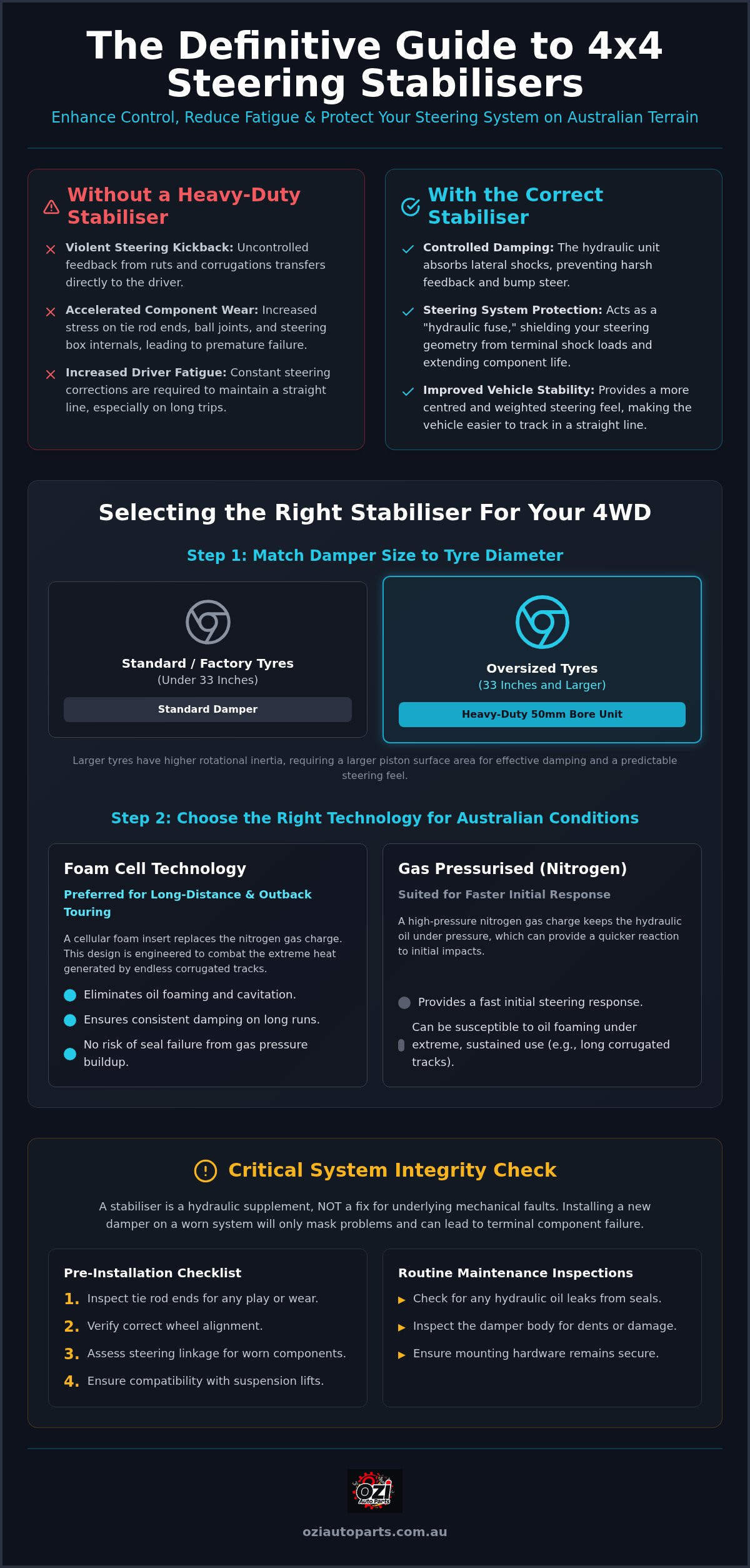
Choosing a steering stabiliser 4x4 requires evaluating your specific vehicle build and intended use. Tyre diameter is the primary metric for sizing. Standard dampers are engineered for factory-spec rubber; however, 33-inch or larger tyres necessitate a heavy-duty 50mm bore stabiliser. The increased surface area of a larger piston provides the necessary damping force to control the higher rotational inertia of oversized wheels. Without this additional resistance, the steering feel remains loose and unpredictable on uneven surfaces.
Australian outback tracks present unique thermal challenges. Constant corrugations generate extreme heat within the hydraulic fluid through rapid cycling. If the damper cannot dissipate this heat effectively, the oil foams. This aeration leads to a total loss of damping consistency. High-performance units feature larger external bodies to increase oil capacity and cooling efficiency, ensuring the steering remains firm during long-haul desert crossings.
Verify your mounting hardware before finalising your selection. Many heavy-duty units require specific aftermarket U-bolts or reinforced brackets to clear larger chassis components. Standard factory mounts are often prone to flexing or shearing under the increased resistance of a high-performance damper. For optimal results, coordinate your selection with 4WD suspension upgrade kits Australia. A balanced system ensures that your steering response complements your spring and shock rates. You can browse our full range of steering and suspension parts to find the correct fitment for your specific 2026 model.
Foam Cell vs. Gas Pressurised Dampers
Foam cell technology is the preferred choice for long-distance Australian touring. By replacing the internal gas charge with a cellular foam insert, these units eliminate oil cavitation. This ensures consistent performance even when the damper is subjected to hours of high-frequency vibration on corrugated roads. The lack of gas also means there is no risk of seal failure due to pressure buildup from heat soak.
Nitrogen gas-charged dampers provide a faster initial response. This is beneficial for technical low-speed rock crawling where immediate feedback is required. Be aware that gas units can stiffen steering feel excessively in colder climates or during the initial minutes of driving. For most heavy-duty Australian applications, a large-bore foam cell unit (50mm+) offers the superior balance of heat management and mechanical durability.
Maintaining Steering Integrity and Component Pairing
Maintaining a steering stabiliser 4x4 requires specific technical oversight. Regularly inspect the unit for hydraulic oil leaks or dented bodies. Physical damage to the external housing causes internal binding; this restricts piston travel and leads to unpredictable steering feedback. A visible film of oil on the damper shaft confirms seal failure, necessitating an immediate unit replacement to restore system damping.
Component pairing is critical for modified vehicles. If your setup includes an extended driveshaft for lifted 4x4, you must re-verify the steering linkage geometry. Ensure the stabiliser does not bottom out or reach full extension before the steering linkage hits the factory full-lock stops. If the damper acts as a mechanical travel limit, the mounting brackets or internal valving will eventually fail under the extreme pressure.
Bushings are a primary point of failure in high-heat environments. Inspect these for perishing or cracking during every scheduled service. Worn bushings allow high-frequency vibrations to bypass the damper, reducing the effectiveness of the entire steering assembly. Replacing perished rubber with high-durometer components ensures precise damping and protects the steering box from terminal shock loads.
When to Replace Your Steering Stabiliser
Mechanical fatigue manifests through specific performance symptoms. Signs of failure include "dead spots" in steering resistance or visible hydraulic fluid on the damper shaft. If you experience increased steering wheel kickback when hitting small bumps, the internal valving has likely worn out. Typical service life for a steering stabiliser 4x4 in Australian off-road conditions is between 60,000 and 100,000 kilometres. Proactive replacement prevents terrain-induced forces from damaging more expensive steering rack and pinion systems.
Optimise Steering Control for Australian Tracks
Effective steering management requires a balance between hydraulic resistance and mechanical geometry. Selecting a steering stabiliser 4x4 based on tyre mass is critical; 50mm bore units are necessary for 33-inch rubber and larger to control increased leverage. Priority should be given to foam cell technology to ensure consistent damping performance during high-frequency cycles on corrugated outback routes. Regular inspection of mounting bushings and seal integrity prevents terminal wear on expensive steering boxes and rack assemblies.
Securing high-quality components ensures your vehicle handles predictably under extreme stress. Ozi Auto Parts is a specialist Australian 4WD component supplier providing direct shipping across Australia. Our technical expertise in steering and suspension geometry supports accurate part selection for both professional and DIY fitment. Browse Heavy Duty Steering Stabilisers and 4WD Spares at Ozi Auto Parts to maintain your vehicle's steering integrity. Prepare your 4WD for the harshest terrain with confidence.
Frequently Asked Questions
Will a steering stabiliser fix the "death wobble" in my Patrol or LandCruiser?
A steering stabiliser will not fix "death wobble" because it only masks the symptoms by dampening oscillations. This violent shaking typically stems from worn panhard rod bushes, loose wheel bearings, or perished swivel hub seals. You must rectify the mechanical root cause before fitting new parts. Installing a heavy-duty unit on a compromised front end leads to premature damper failure and potential steering box damage. Always prioritise hard-part repairs first.
Do I need a steering damper if my 4x4 is not lifted?
You should consider an upgraded steering stabiliser 4x4 even on stock-height vehicles if you frequently traverse corrugated tracks. Factory dampers are built to a price point and often lack the thermal capacity for Australian summer conditions. Upgrading provides better steering wheel isolation and protects your steering linkage from high-velocity impacts on unsealed roads. It is a cost-effective insurance policy for your vehicle's steering box and tie rod ends.
What is the difference between a steering damper and a standard shock absorber?
Steering dampers are horizontal hydraulic units with 50/50 valving, providing equal resistance in both compression and extension. Standard shock absorbers are designed for vertical orientation and usually feature staggered valving to control spring rebound. Using a vertical shock in a horizontal steering application causes aeration and inconsistent performance. This happens because the internal fluid cannot stay in contact with the valving when the unit is mounted horizontally.
Can I install a heavy-duty steering stabiliser myself?
You can install a heavy-duty steering stabiliser 4x4 using basic hand tools and a torque wrench in a standard home garage. Most units are direct bolt-on replacements for the factory damper. Ensure the vehicle is on level ground and the wheels are pointed straight before starting the swap. You must verify that the new unit doesn't bind at full steering lock to prevent internal damage or restricted turning circles during tight manoeuvres.